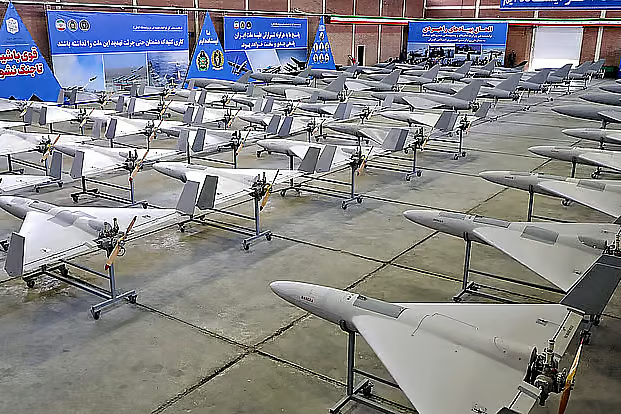
Iran is restoring its military capabilities at a pace even faster than anticipated. In fact, since the ceasefire began last April, it has even commenced the production of drones. US intelligence officials have received reports to this effect.
Two sources familiar with intelligence matters told CNN that Tehran has already begun rebuilding certain segments of its military capabilities that were damaged during attacks by the United States and Israel. Four additional sources stated that the speed of this recovery is significantly greater than initial US estimates.
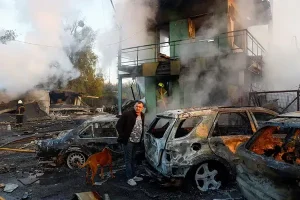
According to sources familiar with the intelligence, many of Iran’s missile bases, missile launchers, and arms factories were destroyed during the ongoing conflict. These facilities are now being brought back online. Should President Donald Trump decide to resume attacks, Iran could still pose a significant threat to US allies in the Middle East.
The progress Iran is making in restoring its military capabilities raises new questions regarding the effectiveness of the US and Israeli attacks. This is because it was previously claimed that Iran’s military capabilities had been completely dismantled—to such an extent that the country would be unable to recover for a prolonged period.
A US administration official told CNN that the production of different types of weaponry may require varying amounts of time. However, the official noted that Iran could fully restore its drone strike capabilities within the next six months. The official further added that Iran has made progress at a rate even faster than intelligence agencies had initially estimated.
Drone attacks currently constitute the primary source of concern for US allies in the Middle East. Should a new conflict erupt, Iran could utilize drones more extensively to compensate for the deficiencies in its damaged missile capabilities. Both Israel and the Gulf nations fall within the operational range of these two types of weaponry; consequently, it would be possible for Iran to launch sustained drone attacks against these countries.
The conflict, which began on February 28, entered a ceasefire phase on April 8. Subsequently, the United States and Iran held one round of talks in Islamabad, but the diplomatic process has since stalled.
US President Donald Trump has repeatedly threatened to launch renewed military operations against Iran if a peace agreement is not reached. Just last Tuesday, he stated that he had been merely one hour away from initiating a fresh bombing campaign. Should war break out, these reconstructed military capabilities of Iran would once again come to the fore.
A source told CNN that there are several key reasons behind Iran’s rapid recovery of its military capabilities. Chief among these is the support provided by Russia and China. Additionally, Iran actually sustained less damage from U.S. and Israeli attacks than was initially anticipated.
Furthermore, even amidst the ongoing conflict, China has continued to supply Iran with various components for missile production. However, due to the U.S. naval blockade, the volume of these supplies has currently diminished somewhat.
Last week, Israeli Prime Minister Benjamin Netanyahu also told CBS News that China is supplying Iran with missile components; however, he did not provide any further details on the matter. Conversely, during a press conference, Chinese Foreign Ministry spokesperson Guo Jiakun dismissed this allegation as baseless.
Recent assessments by U.S. intelligence agencies indicate that, despite sustaining extensive damage, Iran’s ballistic missiles, drones, and air defense systems remain operational—meaning Tehran does not have to start entirely from scratch.
However, a spokesperson for the U.S. Central Command (CENTCOM) declined to comment on this specific issue, stating that the Command does not disclose information regarding intelligence matters.
Pentagon chief spokesperson Sean Parnell told CNN, “The United States military is the most powerful force in the world. We possess every capability to conduct operations whenever and wherever the President deems necessary.” He further added that the U.S. has a proven track record of successfully conducting military operations across various regions, and possesses the necessary arsenal to safeguard the security and interests of its citizens.
Earlier, in an April report, CNN stated that nearly half of Iran’s missile launchers remained intact following U.S. attacks. According to recent intelligence, that figure has now risen to two-thirds. During the ceasefire period, Tehran was able to recover launchers that had been buried underground.
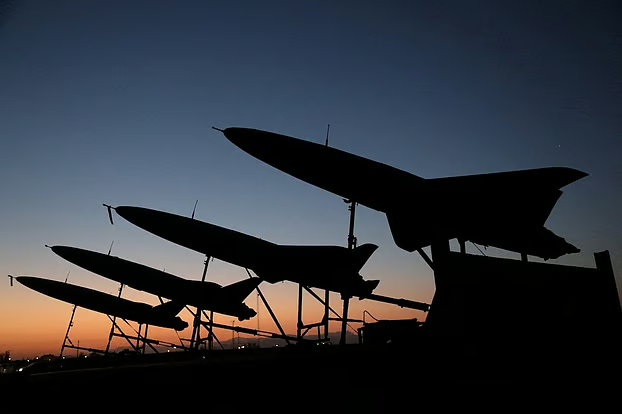
Prior to this, two sources informed CNN that thousands of Iranian drones remain intact—representing approximately 50 percent of the country’s total drone capabilities. Intelligence reports further reveal that a significant portion of Iran’s coastal defense cruise missiles remains intact. This is because, although the United States struck Iranian vessels during its airstrikes, it paid relatively little attention to coastal military installations. These very missiles constitute Iran’s primary tool for effectively paralyzing the Strait of Hormuz.
Overall, recent U.S. intelligence reports indicate that while the conflict has indeed somewhat weakened Iran’s military capabilities, it has failed to destroy them completely. By demonstrating a rapid recovery, Iran has proven its capacity to effectively withstand the long-term repercussions of this conflict.
Iran has also demonstrated remarkable progress—exceeding expectations—in the reconstruction of its defense industrial base. This stands in contrast to the claims made last Tuesday by CENTCOM Commander Admiral Brad Cooper, who asserted that these Iranian facilities had been largely destroyed.
During a hearing before the House Armed Services Committee, Cooper stated that Operation Epic Fury had severely crippled Iran’s ballistic missile and drone capabilities, and had demolished 90 percent of its arms manufacturing facilities—assets that would take Iran many years to rebuild.
However, this statement by Cooper stands in stark contrast to the assessments of U.S. intelligence agencies. Two sources confirmed to CNN that Cooper’s claims bear no resemblance to intelligence reports regarding the scope and timeline of Iran’s military reconstruction capabilities.
A source familiar with recent intelligence assessments stated that the damage inflicted upon Iran’s defense industrial base could set the country back by a few months at most—a delay that would by no means extend into years. The source further noted that certain segments of Iran’s defense industry remain entirely intact, a factor that is further accelerating the process of rebuilding specific military capabilities.