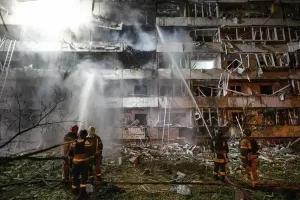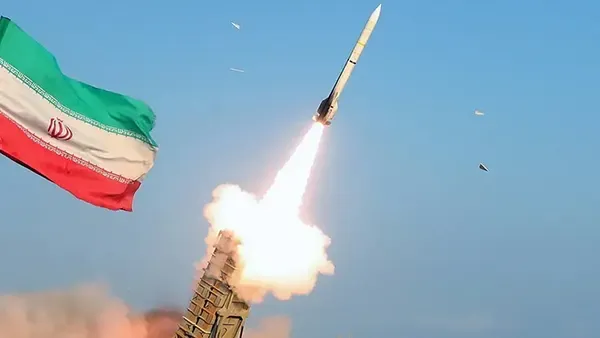
The US forces have launched their third attack on Iran in a week. This has now escalated the intensity of the war in the Middle East. Most recently, on Saturday (July 11) local time, Tehran launched a series of missile and drone attacks targeting US military bases in five Gulf countries due to the massive attack by US forces on Iran.
At the same time, it has announced the closure of the Strait of Hormuz, one of the most important waterways in the world’s energy trade, for an indefinite period.
On Sunday (July 12), Iran claimed that it had attacked US military installations located in Bahrain, Kuwait, Jordan, Qatar and Oman. Tehran said that the operation was carried out in response to the US’s new bombing of southern coastal cities.
Earlier on Saturday, the US carried out a third round of attacks on various radar, missile and drone bases in southern Iran. Iran then accused Washington of violating the memorandum of understanding signed between the two countries on July 17, and that is why it was decided to close the Strait of Hormuz.
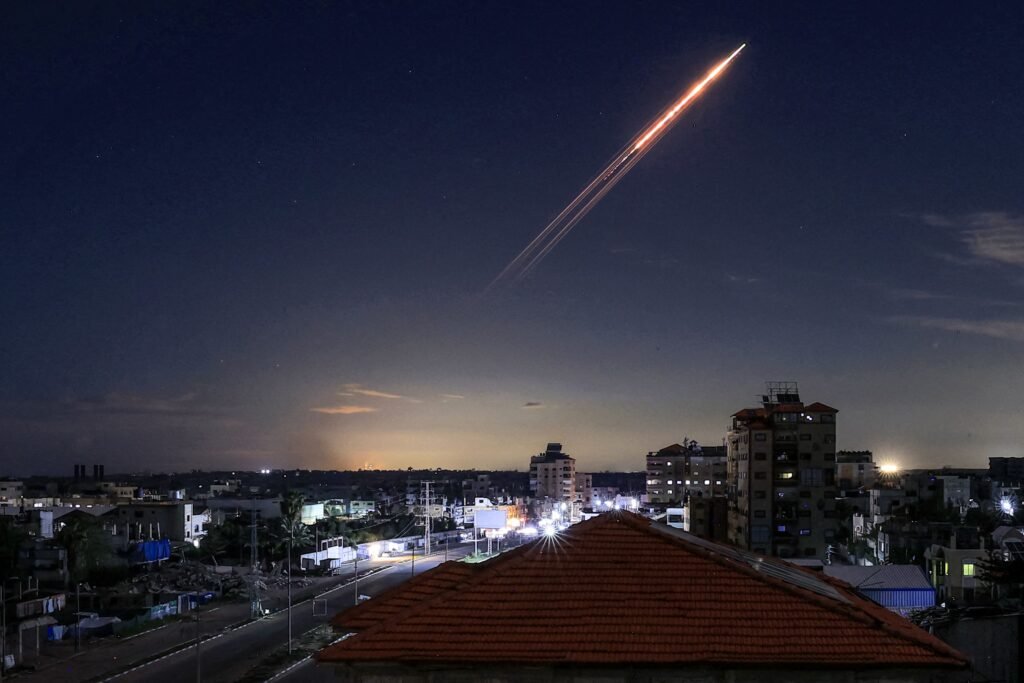
Behind the Iranian attacks on the Gulf countries?
Iran claims that the US Central Command (CENTCOM) targeted US bases in the Gulf region as a countermeasure after it carried out a massive attack on military infrastructure in southern Iran.
Earlier, the US alleged that Iran had fired on commercial ships in the Strait of Hormuz and declared the closure of this important waterway. CENTCOM said that one of the ship’s sailors was missing in the incident.
Meanwhile, Iranian Parliament Speaker and top negotiator Mohammad Bagher Ghalibaf said, “The era of unilateral agreements is over. We said before – protect the agreement, otherwise you will have to pay the price. Now reality is knocking on the door.
How did the current situation arise?
Tensions have not completely subsided due to several ambiguities in the memorandum of understanding between the United States and Iran. On July 6, the IRGC attacked three commercial ships, including a Qatari LNG tanker, off the coast of Oman.
In response, the United States launched attacks on Iranian military targets. Later, when Iran launched missile and drone attacks on US bases in the Gulf region, US President Donald Trump effectively declared the ceasefire null and void.
In such a situation, the IRGC declared the Strait of Hormuz closed indefinitely on Saturday night.
They claim that a container ship was attacked for using an unauthorized route. Iran also reported attacking another ship on Sunday.
Since the start of the new conflict, Iran has been complaining that Gulf Cooperation Council (GCC) member states are aiding the US in its attacks by providing military bases and airspace.
As a result, they have launched attacks on Gulf countries.
Countries attacked by Iran
Oman
The IRGC claims that a major attack was carried out targeting the logistics and fuel supply center of the US aircraft carrier in the port of Duqm, Oman, and destroyed them.
Qatar
Iran claims that it launched a ballistic missile attack on Qatar’s Al Udeid Air Base, destroying the fighter jet maintenance center and command center. However, Qatar’s Defense Ministry said that its air defense system shot down most of the missiles. Three people, including a child, were injured by the debris of the downed missiles.
Kuwait
The Iranian military claims that an explosive-laden drone was used to attack a US Patriot missile defense system, an ammunition depot, and a radar installation.
Bahrain
Iranian forces also attacked Bahrain on the same day. The country claims that the drone attack targeted US communications systems and a radar center.
Jordan
The IRGC said it had launched a ballistic missile attack on Jordan’s Prince Hassan Air Base, destroying a command center and an MQ-9 drone hangar.
What’s happening in the Strait of Hormuz?
Iran said it fired warning shots at a ship on July 6 for using an unauthorized waterway. A second ship was also disabled later.
The IRGC announced that the Strait of Hormuz would remain closed until the end of US interference. Iran claims that the US is trying to create an illegal waterway in this waterway, which is threatening regional security.
About 20 percent of the world’s total energy transport is transported through this narrow waterway. Therefore, the closure of the Strait of Hormuz has created new concerns in the global energy market.
Iran has long said that only its authorized routes can be used in the Strait of Hormuz and that it will manage this waterway only in coordination with Oman.
On the other hand, the United States and GCC countries have rejected Iran’s demand and called for international navigation to be free.
Gulf countries’ response
Following the Iranian attack on Sunday, air raid sirens were sounded in several countries and residents were ordered to stay indoors.
Condemning the Iranian attack, Oman said that all necessary measures were being taken to ensure the country’s security.
In addition, Qatar described the Iranian attack as a clear violation of its sovereignty and territorial integrity and a serious violation of international law.
Doha said Iran would be fully responsible for all legal liabilities and consequences of the attack.
Meanwhile, Kuwait said its air defense systems were intercepting enemy aircraft and that the sound of the explosion was the result of the defense system’s operations.
Bahrain also issued an airstrike warning and urged citizens to remain calm and stay in safe places.