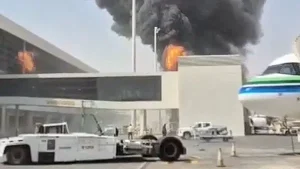
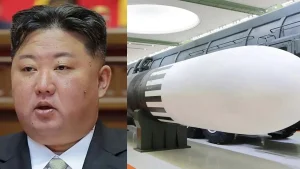
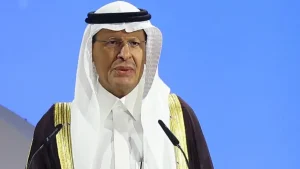
Europe’s oil and gas supplies are facing simultaneous pressure due to conflicts in the Gulf and Eurasia. On Friday, Saudi Arabia informed European refineries not to expect crude oil shipments next month, raising fears that Europe’s energy crisis could deepen. This could have a direct impact on inflation.
Several critical energy supply routes for Europe are currently at risk. Conflicts and tensions in the Eastern Mediterranean, the Red Sea, the Strait of Hormuz, the Black Sea, and the Caspian Sea have strained supply networks.
The advance of Houthi forces in the Red Sea has also sparked new concerns. They seized the port of Mocha on September 10 and the island of Mayun (or Perim) in the Bab al-Mandab Strait on September 11. Reports also emerged on September 14 that they had captured the Greater and Lesser Hanish islands. These areas lie along vital shipping lanes for oil and LNG tankers.
While the Bab al-Mandab Strait remains open, the risk to shipping under Houthi control has increased, as have war-risk insurance costs. Many vessels are now rerouting around Africa’s Cape of Good Hope, adding 10 to 14 days to the journey and driving up supply costs.
Earlier in the year, the closure of the Strait of Hormuz for several months caused a daily drop of approximately 17 to 19 million barrels in global oil supplies. At that time, Europe relied more heavily on supplies from the Atlantic basin and the Caspian region.
Saudi Arabia had managed to mitigate some of the crisis’s impact by transporting oil to the port of Yanbu via the East-West Pipeline. Supply volumes along this route had risen from around 2 million barrels per day at the start of the year to approximately 6 million barrels. However, the pipeline was shut down following a drone attack on a pumping station on September 11. It remains unclear when operations will resume.
Costantinos Stambolis, Chairman of the Institute of Energy for South-East Europe, stated that the energy crisis is evolving into a global financial crisis, with signs of this already visible in Europe. Inflation in the Eurozone has risen to 3.3 percent, with energy sector inflation reaching 14.3 percent.
Risks involving Russia and Kazakhstan
The conflict between Russia and Ukraine is also straining Europe’s energy supplies. Ukrainian attacks have damaged Russian refineries and export terminals, while European sanctions have simultaneously limited access to alternative supplies.
Kazakhstan, a potential alternative source for Europe, is not entirely secure either. Over 80 percent of the country’s oil exports flow through the CPC pipeline, which terminates at the Russian port of Novorossiysk; a Ukrainian attack there could disrupt Kazakhstan’s exports.
A route via the Caspian Sea through Azerbaijan and Turkey could serve as an alternative for Kazakhstan. However, the Baku-Supsa pipeline has a capacity of only 150,000 barrels per day—far below Kazakhstan’s normal export levels. Excess oil could also be transported via the Baku-Tbilisi-Ceyhan pipeline.
Yet, the Caspian route is not without risk; on July 25, a Ukrainian drone struck an Iranian vessel in the Caspian Sea. If Kazakhstan cannot ship oil westward, China could become its primary buyer, further reducing supplies available to Europe.
Pressure from winter weather and new regulations
Weather conditions in the coming winter are also critical for Europe. Forecasts by Rystad Energy and ICIS suggest that the 2026–27 El Niño weather pattern could impact Europe’s energy demand. Even if the winter starts mildly, a severe cold snap in February 2027 could trigger a rapid surge in demand for gas and electricity.
Historical data from ICIS indicates that during strong El Niño events, Europe’s wind power generation can drop by up to 9.8 percent in winter, potentially necessitating increased gas consumption for electricity generation.
Additionally, new EU regulations regarding methane emissions, set to take effect in 2027, could also impact supply. Under the new regulations, gas and LNG importers are required to provide proof that foreign producers meet environmental standards. Many producers lack the necessary equipment and data systems; consequently, the price of gas that complies with these standards could rise.
All in all, Europe’s energy crisis is no longer merely a supply issue; it is also impacting industrial production and inflation. While there is an opportunity to increase reliance on renewable energy in the long term, Europe faces continued uncertainty regarding how to manage the crisis in the short term.