Saudi Arabia’s Energy Minister, Prince Abdulaziz bin Salman, has warned of a stern response to the deadly attacks on the kingdom’s airports and oil and gas facilities. Following recent attacks by Iran-backed Houthi rebels from Yemen, he stated that Saudi Arabia’s reaction would be “equally severe.”
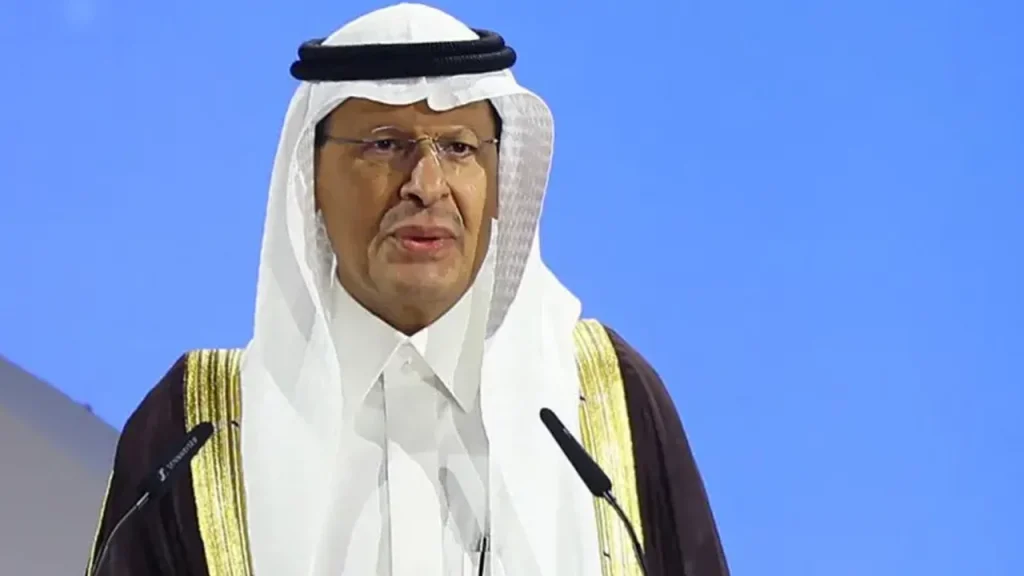
Speaking at the World Petroleum Congress (WPC) in Riyadh, Prince Abdulaziz said, “The events of recent weeks are serious. Our response must be equally serious.”
Many people have been killed in attacks on various Saudi airports over the past few days. Saudi authorities reported that a Pakistani national was killed on Sunday in an attack on a terminal at King Khalid International Airport in the capital, Riyadh. The previous day, 13 people were killed in a Houthi missile attack on another terminal at the same airport; the terminal was closed following the incident.
The Houthis stated that they carried out these attacks in retaliation for Saudi Arabia’s “brutal aggression” against areas under their control in western Yemen. A Saudi-led coalition has been providing air support to pro-government forces fighting the Houthis in various regions, including Yemen’s Red Sea coast.
Explosions were heard again in Riyadh on Monday night. The Saudi-led military coalition announced that it had detected and destroyed a ballistic missile. A Houthi spokesperson claimed that their forces had once again targeted the airport.
Meanwhile, Qatar Airways announced the temporary suspension of flights to Riyadh and the northeastern Saudi city of Dammam. Etihad Airways also reported the cancellation of flights from Abu Dhabi to Riyadh, Jeddah, and Dammam due to the regional situation. It has been indicated that King Khalid International Airport may remain closed until Saturday.
Early Tuesday morning, Houthi military spokesperson Yahya Saree claimed that their forces had shot down a Saudi surveillance drone. Meanwhile, a spokesperson for the Saudi-led coalition stated on Tuesday that two ballistic missiles fired by the Houthis had been intercepted and destroyed. The missiles were aimed at the southwestern Saudi city of Khamis Mushait.
**Four attacks on the airport in one week**
The World Energy Congress began on Sunday at a convention center located approximately 10 kilometers from Riyadh’s airport. The airport has been targeted four times in the past week.
Last Thursday, three Saudi nationals were killed in two separate attacks—one targeting an airport facility and another hitting an aircraft on the ground. Among the victims was a pilot from the national carrier, Saudia.
On Saturday, several more people were killed in a missile strike on Terminal 3. The casualties included four Saudi nationals, two Bangladeshis, and one citizen each from the US, Egypt, Jordan, Syria, Palestine, Sudan, and India.
According to the General Authority of Civil Aviation (GACA), a Pakistani resident was killed on Sunday when a projectile struck Terminal 4. An attack also took place that evening at King Fahd International Airport in Dammam, though no casualties were reported there.
Later, the Saudi-led coalition announced that its forces had intercepted a drone in the Eastern Province and a missile fired toward Khamis Mushait.
Meanwhile, the Houthi-controlled Health Ministry claimed that a child was killed and six others were injured in a Saudi airstrike on a home in the capital, Sanaa, on Sunday.
**‘Saudi Arabia is safe; we will ensure the safety of our guests’**
In his opening remarks at the World Energy Congress on Monday, the Saudi Energy Minister thanked energy sector executives and policymakers for attending the conference despite the attacks.
Prince Abdulaziz said, “As you know, this country is safe. We attach the utmost importance to ensuring your safety.”
However, he acknowledged that energy security cannot be taken for granted. Recent events have put Saudi Arabia’s infrastructure, institutions, people, and crisis-response capabilities to the test.
Expressing resolve to overcome these challenges, he said, “We Saudis are a fearless, resilient, and determined people. We will prove to the world that no matter what situation we face, we will overcome it.”
There was no immediate comment from the Houthis regarding this matter.
However, in a video message on Sunday evening, Houthi military spokesman Yahya Saree claimed that their forces had launched missile and drone attacks on airports in Riyadh and Dammam, as well as on two oil and gas facilities in Saudi Arabia’s Eastern Province.
He claimed these attacks were in retaliation for 124 Saudi airstrikes in Yemen over the preceding 24 hours.
Saree reiterated a warning to airlines and passengers to avoid using Saudi airports and airspace. However, he noted that this warning did not apply to travel to the holy Islamic cities of Mecca and Medina.
Saree stated that their forces would further intensify attacks deep within Saudi territory until the kingdom’s aggression ceases and the blockade on the Yemeni people is lifted.
In his words, the policy of “blockade for blockade” and “escalation for escalation” would be followed. He also warned that supply lines and troop movements of Saudi Arabia’s hostile forces would be targeted.
UN condemns attacks; Trump to decide next steps.
The international community has condemned the attack on Riyadh airport that took place on Saturday. UN Secretary-General António Guterres expressed that he was “deeply shocked” by the incident. He warned that attacks on civilians and civilian infrastructure constitute a violation of international law.
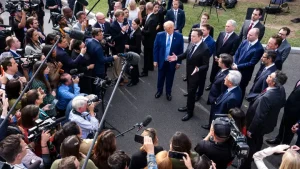
US President Donald Trump stated that he would decide whether the United States would participate in any Saudi Arabian offensive against the Houthis. However, various reports indicate that the US military is already providing intelligence and target-identification assistance to the Saudi-led coalition.
Meanwhile, Iran has expressed “deep concern” over the deteriorating situation. Iran has repeatedly denied allegations of supplying weapons and training to the Houthis. The country has called for “dialogue and discussion” to resolve the current crisis.
**Renewed conflict stemming from the Yemen war**
Civil war broke out in Yemen in 2014, when the Houthis ousted the government from the capital, Sana’a. The conflict intensified in 2015 after a Saudi-led coalition launched a military intervention aimed at restoring the Yemeni government’s control.
An informal ceasefire that had held for four years began to unravel last July. At that time, the Houthis announced a “naval blockade” against Saudi Arabia. Subsequently, they began launching missile and drone attacks targeting Saudi airports, oil facilities, and tankers navigating the Red Sea.
The Houthis claim these actions were taken in retaliation for the Saudi blockade of ports and airports in areas under their control, as well as airstrikes on Sana’a airport. However, the Yemeni government claimed responsibility for the attack on Sana’a airport.
The government stated that the attack was carried out to prevent an Iranian aircraft from landing there without authorization.
Last month, the Houthis launched a surprise offensive along Yemen’s southwestern Red Sea coast, dislodging pro-government forces from areas near the Bab al-Mandab Strait. The strait is located at the southern end of the Red Sea.
The Houthis have stated that they pose no threat to international vessels passing through the area. However, attacks on Saudi Arabian ships will continue.
The conflict over control of the Bab al-Mandab Strait has also contributed to rising global oil prices. Saudi Arabia had come to rely more heavily on the Red Sea for oil exports after the Strait of Hormuz in the Persian Gulf was effectively shut down due to the conflict involving the US, Israel, and Iran.
Last week, the Yemeni government announced the launch of a new military offensive aimed at recapturing all areas held by the Houthis. Pro-government forces claim that, with strong air support from Saudi Arabia, they have rapidly retaken certain areas surrounding the Bab al-Mandab Strait. However, the Houthis have denied losing any territory.