For a long time, Riyadh, the capital of Saudi Arabia, has projected itself as a safe haven amidst the volatility of the Middle East. The city has established a reputation as a prime destination for international business, tourism, and investment. However, that image of security is now facing a major challenge following deadly attacks by Yemen’s Houthi rebels. Anxiety has gripped foreign families living in Riyadh, with many questioning the safety of building a future in Saudi Arabia under these circumstances.
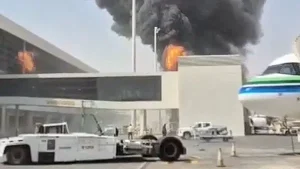
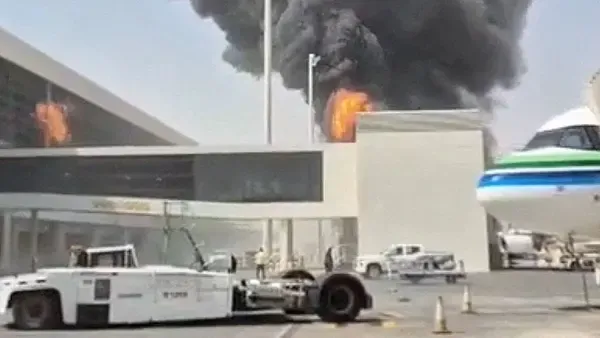
Last Saturday, a Houthi attack on King Khalid International Airport—Saudi Arabia’s main airport—left at least 13 people dead and over 300 injured. Simultaneously, the group launched cruise missiles targeting oil facilities in the country’s eastern region and the airport in Dammam.
The Houthis claim these attacks were in retaliation for Saudi Arabia’s support of government forces in the Yemeni civil war and for Saudi airstrikes on Sanaa airport earlier this year.
CCTV footage broadcast by the Saudi state channel Al-Ekhbariya showed Umrah pilgrims, dressed in white, waiting at the airport for their journey to Mecca. Suddenly, an airport lounge was engulfed in dust. As sections of the ceiling collapsed onto the floor, passengers scrambled to escape and save their lives.
Among the casualties were a religious leader from Bangladesh, a Syrian mother of four, and a US citizen. A second wave of attacks the following day resulted in one more death and injuries to at least 11 people.
Bilal, a 39-year-old British national, told the Middle East-based news outlet *Middle East Eye*, “Pilgrims should never have to fear for their lives while traveling on a religious journey.”
Bilal has been living in Riyadh for at least seven years. He stated that there is no justification for attacks on ordinary people. Regardless of the actions taken by the Saudi-led coalition in the Yemen war years ago, there is no legitimacy to attacks on civilian infrastructure. **A Blow to the Image of a Safe City**
The casualties and injuries resulting from the surprise attack in Riyadh caused an immediate crisis. However, the impact extends beyond the immediate aftermath. The Houthi attack has dealt a significant blow to the image Saudi Arabia has cultivated as a safe destination for international business, tourism, and investment.
Last Sunday, fewer delegates than expected attended a major energy conference in Saudi Arabia. Just two weeks later, the country is scheduled to host the ‘Future Investment Initiative,’ one of its most important business events. Following the recent attack, questions have arisen regarding the extent to which Saudi Arabia can project an image of a stable and secure environment to international investors.
Bilal notes that he holds a well-paid job and enjoys a comfortable life in Saudi Arabia; leaving it all behind would be difficult for him. However, the scale and frequency of the attacks are fueling anxiety among expatriate families regarding the security of civilian infrastructure.
Mohammed, another British national who has lived in Riyadh at various times over the past decade, also used to consider Saudi Arabia a safe place to live with his family. Yet, he is concerned by the failure of missile defense systems to protect the airport—a vital transportation hub.
He told *Middle East Eye*, “My children are also quite frightened by the ongoing events.”
While he has reassured his children of their safety, explaining the situation is becoming increasingly difficult as schools close and some foreigners openly discuss plans to return to their home countries. In Mohammed’s words, “Riyadh no longer feels safe.”
**New Risks to Saudi Arabia’s Economic Ambitions**
The recent Houthi attack has escalated the conflict between Saudi Arabia and the Yemeni rebel group to a dangerous new level. The Houthis control large swathes of northern Yemen.
For a long time, the conflict between Saudi-led forces and the Houthis had remained largely deadlocked. However, the situation began to shift following an attack by Saudi-led forces on Sanaa airport in July. The attack was carried out to prevent a plane carrying Houthi officials from Iran from landing in the rebel-held capital.
In response, the Houthis threatened to impose counter-blockades against Saudi Arabia and announced a ban on Saudi shipping in the Red Sea.
The roots of the current tensions lie in 2014. At that time, the Houthis expanded their power by capitalizing on public discontent following a decision to cut fuel subsidies and the failure of the UN-backed national dialogue aimed at resolving Yemen’s deep political and economic divisions.
Rejecting a proposed new federal structure, the Iran-backed group advanced southward. They eventually seized the capital, Sana’a, forcing the government of President Abdrabbuh Mansur Hadi to retreat.
In March 2015, a Saudi-led coalition launched a military intervention to halt the Houthi advance, initiating a campaign aimed at reinstating the internationally recognized government.
Saudi Arabia and its allies launched extensive military operations using US-made bombs and British-made fighter jets. Hundreds of thousands of people have lost their lives in this conflict due to various factors, including starvation, disease, and the collapse of basic services.
Crown Prince Mohammed bin Salman led Saudi Arabia’s military campaign in the Yemen war in 2015. Later, he initiated efforts to transform the country into a major hub for foreign investment, international conferences, entertainment, and tourism. However, Houthi attacks and the blockade of the Strait of Hormuz—stemming from the conflict with Iran—have jeopardized those ambitions.