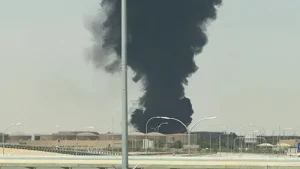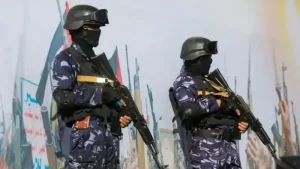
Yemen’s armed Houthi group—also known as Ansar Allah—has been launching successive attacks using ballistic missiles, cruise missiles, and drones deep inside Saudi territory. Even Riyadh’s King Khalid International Airport has been targeted multiple times. The Houthis launched this new military campaign against Saudi Arabia last September.
An attack on the airport last Saturday left 12 people dead and 309 injured. This marked the deadliest attack in Saudi Arabia in over a decade. Following the incident, the country’s civil aviation authority was forced to suspend airport operations and divert all flights. Both the United States and the United Kingdom issued new travel advisories for their citizens.
Earlier this week, the Houthis claimed responsibility for two additional attacks on the airport. On Sunday, they warned the public to avoid Saudi airports.
How Powerful Is the Houthi Arsenal?
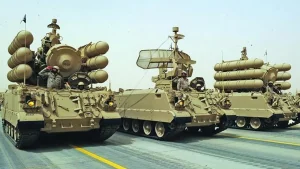
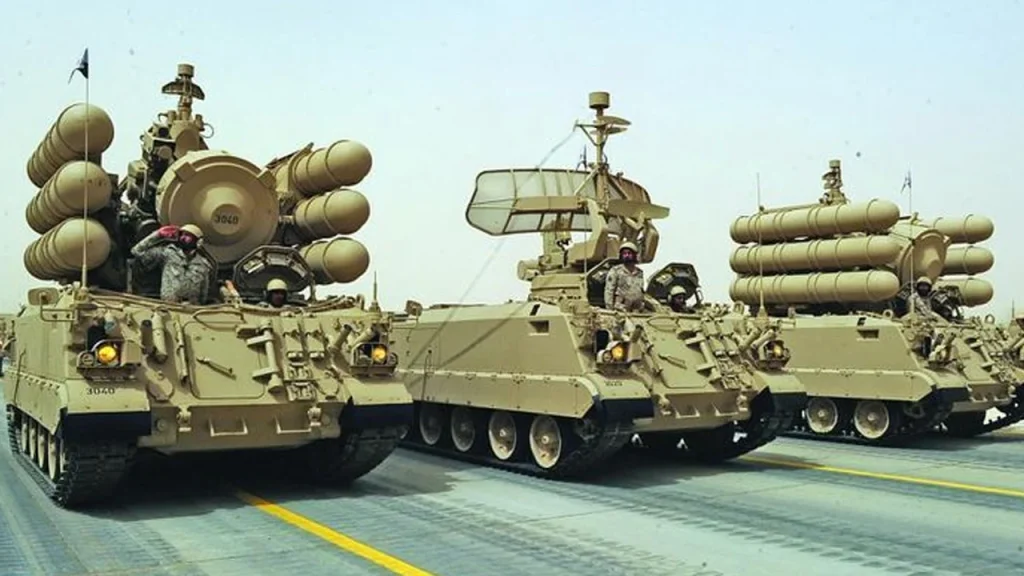
Saudi Arabia possesses one of the world’s best-equipped militaries, featuring a modern, multi-layered air defense system. Last week, Saudi warplanes conducted massive airstrikes on Houthi positions across Yemen. These strikes aimed to halt the recent advances made by the Iran-backed group against Saudi-supported Yemeni government forces.
Meanwhile, the Houthi arsenal has significantly improved since they seized the Yemeni capital, Sana’a, from the government in September 2014. Their drones and missiles have reached as far as Israel, and they have demonstrated the capability to strike specific targets; attacks on Saudi airports and oil facilities serve as proof of this capability.
Since the Saudi-led military intervention began in 2015, the Houthis have launched hundreds of drones and missiles toward Saudi Arabia. However, the exact type of weapon used in last Saturday’s attack on the Riyadh airport remains unknown. Since the start of Israel’s genocidal campaign in Gaza in October 2023, the Houthis have launched attacks against Israel and ships alleged to be linked to it.
One of the Houthis’ key tactics involves the simultaneous use of drones and missiles traveling at varying speeds, making it difficult for the adversary’s air defense systems to cope. Similar tactics were observed during ground warfare in Yemen; prior to seizing the Red Sea coast last month, the group bombarded government positions for weeks before rapidly capturing the area.
The Houthis’ arsenal of advanced weaponry includes the ‘Palestine-2,’ a medium-range ballistic missile. This two-stage, solid-fuel missile is estimated to have a range of approximately 2,000 kilometers and is claimed to possess hypersonic capabilities.
Another missile in their inventory is the ‘Tufan,’ believed to be a rebranded version of Iran’s ‘Ghadr’ missile. Its range is estimated to be between 1,350 and 1,950 kilometers. Some of these missiles are capable of carrying cluster munitions. The Houthis have demonstrated the ability to penetrate Israeli air defenses from a distance of nearly 2,000 kilometers.
They also possess short-range missiles from the ‘Burkan’ and ‘Badr’ series, which are also believed to be of Iranian origin. The Houthis have deployed these missiles in attacks on areas bordering Saudi Arabia.
According to Nawaf Obaid, a senior fellow in the Department of War Studies at King’s College London, the Houthi missile arsenal relies heavily on Iranian weapons technology, though it also incorporates some Chinese technology.
He told Al Jazeera that the Houthis have shown little evidence of significant indigenous technological innovation; their domestic production capabilities are largely limited to manufacturing less sophisticated missiles and drones. Last month, Yemeni government forces alleged that Iran’s Islamic Revolutionary Guard Corps (IRGC) is assisting the Houthis in developing a new type of weapon—a cruise missile capable of hovering over a target before striking.
Where do the weaknesses in Saudi air defense lie?
Saudi authorities claim that their forces shot down several missiles and other airborne objects last week, including two ballistic missiles fired at the capital last Thursday. However, they failed to intercept the missile that struck King Khalid International Airport on Saturday.
Nawaf Obaid told Al Jazeera that it is not unusual for attacks to occasionally penetrate Saudi Arabia’s air defense system, given the country’s vast size and its long border with Yemen.
He noted that even with a multi-layered air defense system, a missile can sometimes slip through the defenses; a single attack might succeed after dozens of others launched by the Houthis have been intercepted.
Wolfgang Pusztai, a security and defense analyst, told Al Jazeera that Saudi Arabia’s ballistic missile defense system was originally designed to counter threats from Iran. However, he believes that with the escalation of Houthi attacks, Saudi authorities are reconfiguring parts of their defense system to counter threats originating from Yemen.
Another major issue is the stockpile of interceptor missiles. Like many of the United States’ regional and global allies, Saudi Arabia faces pressure due to limited inventories of Patriot and Terminal High Altitude Area Defense (THAAD) system missiles. Reports indicate that Saudi Arabia contacted several friendly nations to replenish stocks or secure other forms of assistance after the US and its allies rapidly depleted these missiles during the initial months of the conflict with Iran.
**The Houthis Also Face Limitations**
However, the Houthis themselves are fighting amidst various constraints. They face challenges such as the UN-imposed arms embargo, Saudi Arabia’s long-standing blockade, and the strain of fighting simultaneously across multiple battlefronts in Yemen.
Nawaf Obaid notes that while the Saudi-led coalition holds the military advantage, the Houthis can still capture media attention by occasionally launching attacks on Saudi Arabia.
He further adds that Saudi Arabia bears global responsibilities as the world’s largest crude oil exporter and a member of the G20. Consequently, attacks on the country garner disproportionately high international attention.
The exact number of Houthi missiles remains unknown. As a result, there are questions regarding whether they possess sufficient weaponry to sustain a continuous campaign of attacks against Saudi Arabia. At the same time, the Iran-backed group is utilizing missiles and drones in ground combat within Yemen.
According to Obaid, a significant portion of Saudi airstrikes targets Houthi missile depots, underground facilities, and drone manufacturing plants. These strikes are inflicting severe damage on the Houthis’ military capabilities.
Wolfgang Pusztai estimates that the Houthis’ stockpile of short-range ballistic missiles has dwindled. Consequently, it may be difficult for them to execute large-scale attacks—such as launching a massive volley of missiles and drones—designed to overwhelm the adversary’s air defense systems.
Instead, they might resort to launching single missiles at less protected civilian targets. He believes that this would make it possible to disrupt civil aviation, in addition to enhancing the strategic impact of the attack.