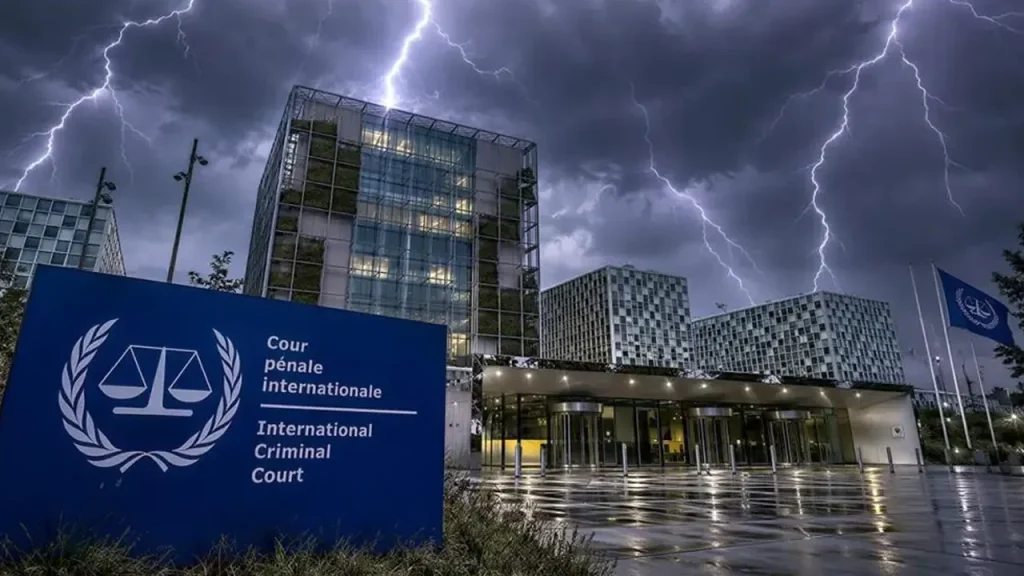
US sanctions threaten to severely disrupt the operations of the International Criminal Court (ICC). If the sanctions remain in place, the institution’s capacity could gradually diminish. Eventually, it might become impossible for the body to function—either as an international organization or as a judicial institution.
The international community’s response to this situation has been weak. While statements condemning the sanctions were issued, no effective measures were taken to safeguard the court. Member states had over 20 months—since US President Donald Trump took office—to prepare for such actions. During this period, initiatives should have been undertaken to bolster the court’s institutional capacity and resilience in the face of crises.
However, it is not yet too late to act. The grace period granted by the US should not be squandered on fruitless discussions; instead, it must be utilized to implement urgent measures to protect the court.
How Sanctions Could Paralyze the ICC
Under the US sanctions, ICC assets and other property interests located within the US—or controlled by US citizens and entities—have been frozen. Unless authorized by the US Treasury Department or covered by specific exemptions, US individuals and entities are prohibited from doing business with the ICC.
US banks, insurance firms, IT companies, and other businesses cannot provide goods or services to the ICC, nor can they accept payments from the court, if doing so risks violating the sanctions. Meanwhile, many non-US entities might also cease providing services to the ICC out of fear of potential US sanctions.
Being cut off from suppliers and service providers could paralyze the ICC’s investigations and prosecution efforts regarding various cases.
However, the sanctions include a 180-day “grace period.” This window allows for the continuation or winding down of certain ICC operations. Covered under this provision are the receipt of funds from member states, as well as the payment of staff salaries, health insurance, and medical services. In addition to these benefits for court staff and contractual employees, provisions have been made to cover expenses such as house rent, utility bills, and costs for routine services.
Furthermore, specific permissions allow for the provision of telecommunications, cloud, and software services, the payment of ICC pension funds, and the delivery of essential services for the welfare of certain detainees.
Washington has framed this waiver period as an opportunity for member states to demonstrate “meaningful progress toward diplomatic and legal solutions” that address U.S. objections. In reality, however, it serves as a tool of overt political pressure designed to compel member states to yield to U.S. demands.
No Room for Compromise in the Guise of ‘Dialogue’
Following the announcement of sanctions, many member states reaffirmed their support for the ICC and criticized the U.S. move. Yet, issuing statements alone is no longer sufficient to safeguard the court.
Such support remains meaningless without a coherent, coordinated strategy to counter U.S. pressure and preserve the ICC’s independence. Mere statements cannot prevent banks from closing ICC accounts, insurance firms from withdrawing coverage, or technology companies from halting services. Fearing U.S. retaliation, other businesses might also sever ties with the court.
The European Union (EU) has repeatedly asserted that the ICC is a cornerstone of international justice and that the court’s independence must be protected from external pressure. On October 10, EU foreign policy chief Kaja Kallas reiterated this stance, describing attacks or threats against the court, its officials, and its collaborators as “unacceptable.”
Despite these pronouncements, the EU has remained effectively passive. This stance appears to stem from fears of further antagonizing Donald Trump and increasing the risk of U.S. tariff impositions.
It is concerning that some member states and the EU have welcomed this humiliating waiver period granted by the U.S. as an opportunity for “dialogue” and a “space for diplomacy” with Washington. But if the stated goal of the United States is to destroy the court, where is the room for a meaningful compromise?
Over the past 20 months, the United States has steadily ramped up pressure on the ICC. If member states and the EU now expect a different outcome, it would be an act of self-deception. Such a stance would betray both excessive subservience to Washington and a lack of self-respect; attempting to appease those exerting pressure only emboldens them to act more recklessly.
Engaging in dialogue under such pressure could lead to demands that the ICC abandon its investigation into Palestine in exchange for the lifting of sanctions. Yielding to US demands—specifically by sacrificing the Palestine investigation to placate the Washington administration—would destroy the court’s independence and impartiality.
This would reinforce the perception that international justice is applied selectively, contingent upon political power. Betraying the ICC’s mandate and the victims awaiting justice would severely undermine the court’s credibility. At the same time, it would weaken the fundamental principle that no one is above the law.
Urgent action is needed now to safeguard the ICC.
The time for effective action is long overdue, yet it is not too late. Member states must adopt a principled stance and remain steadfast. Instead of engaging in futile dialogue with a hostile non-member state like the United States, begging for leniency, or making concessions that are impossible for the Court or its supporters to accept, the focus must be on safeguarding the ICC and ensuring its operations continue.
Member states must publicly commit to increasing the Court’s budget. They must ensure the ICC has the necessary funds, resources, and infrastructure to withstand political and economic pressure.
Simultaneously, effective legal measures must be implemented to protect the Court, its officials, and its associates from the extraterritorial impact of US sanctions. This requires enacting counter-legislation to prevent compliance with such sanctions and establishing safeguards to stop banks and institutions from withdrawing services due to perceived financial risks. Palestinian civil society organizations targeted for cooperating with the Court’s investigations must be afforded similar protection.
The EU should immediately activate its “Blocking Statute.” This would make it illegal for EU institutions and businesses to comply with US sanctions. While this step alone will not solve every problem, it can play a vital role in shielding the ICC from the impact of sanctions.
Several EU member states and Members of the European Parliament have urged the European Commission to apply this statute to anti-ICC sanctions as well. They have demanded assurances that these protective measures remain effective even if comprehensive sanctions are imposed on the Court. There is no room for further delay on this matter.
At the same time, member states must rapidly finalize arrangements for alternative banking, payment systems, and digital infrastructure. This will enable the Court to continue accessing essential services. These initiatives should not be viewed as isolated or temporary measures; rather, a coordinated and long-term framework must be established to counter political pressure. If the international community remains silent while watching the United States destroy the ICC, it may become impossible for any international court—or even any national court—to function independently, free from fear or bias, in the future.