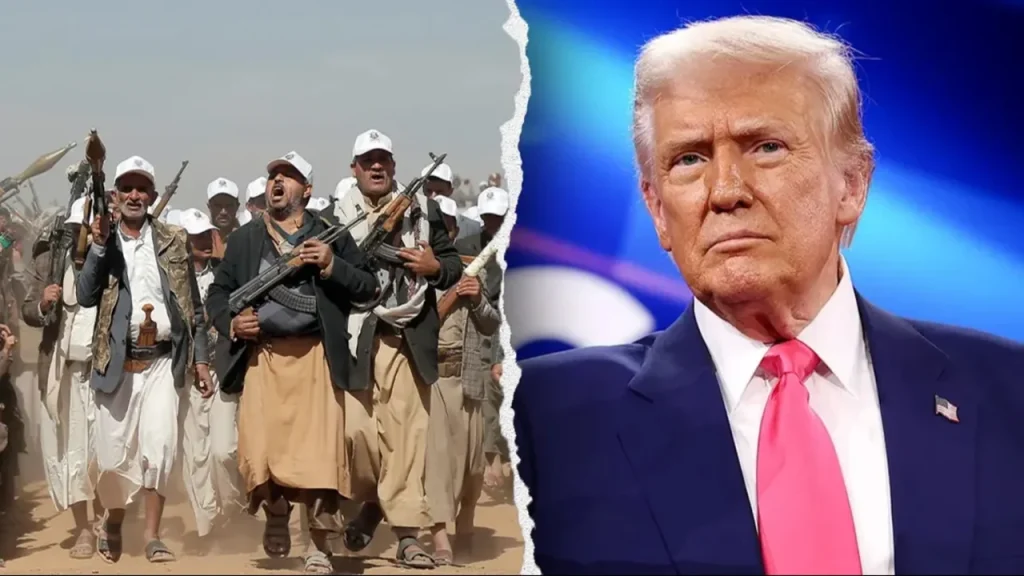
The rapid military advance of the Iran-backed Houthis has placed the Bab-el-Mandeb Strait—a vital Middle Eastern maritime chokepoint—largely under their control. This development has created an opportunity for Iran to exert greater strategic influence over two key oil transit routes in the Middle East.
This situation has created a new crisis for US President Donald Trump. The ongoing conflict with Iran has dragged into its seventh month. Rising fuel prices in the US resulting from this conflict have jeopardized the Republican Party’s chances of retaining control of Congress in the November midterm elections. Meanwhile, despite suffering military and economic setbacks, Iran has maintained its unyielding stance.
According to Stephen Wertheim, a senior fellow at the Carnegie Endowment for International Peace, Trump had adopted a strategy weeks ago aimed at increasing economic pressure on Iran while keeping military conflict at a level that would not cause significant harm to the US economy. The Houthi advance has derailed that plan.
A major challenge for the US now is that if the Houthis close the Bab-el-Mandeb Strait, it could deal a fresh, severe blow to fuel supplies and global trade. However, launching a direct military operation against them is risky for Washington, as the US military is already heavily engaged in the protracted conflict with Iran.
Potential Catastrophe if Bab-el-Mandeb Closes After Hormuz
Disruptions have already occurred in the Strait of Hormuz amidst the ongoing conflict with Iran. Prior to the conflict, approximately one-fifth of the world’s total oil supply was transported through this route.
If the Bab-el-Mandeb Strait were also to close, it would place even greater strain on global energy and trade systems. Analysts estimate that such a closure could disrupt an additional 7 percent of the global petroleum supply and about 12 percent of global trade. David Schenker, a researcher at the Washington Institute for Near East Policy and a former Assistant Secretary of State during Trump’s first term, stated that the worst-case scenario would be Iran gaining control over both the Strait of Hormuz and the Bab-el-Mandeb—two of the world’s vital energy supply routes. In his view, this would grant Iran immense strategic leverage.
Risks Involved in Operations Against the Houthis
According to analysts and former officials, Trump faces a difficult decision: whether to deploy U.S. forces—and utilize limited stockpiles of air-defense munitions—to push back the Houthis, or to leave the burden of confronting them entirely to Saudi Arabia and its allies (such as the Yemeni government based in the south).
The Houthis seized Yemen’s capital twelve years ago, and despite a Saudi-led military intervention, they have not been dislodged. Direct action against the Houthis would effectively unravel an agreement Trump brokered last year, under which the U.S. pledged to halt airstrikes against the group in exchange for an end to attacks on Red Sea shipping. Such a move would also expose U.S. military forces to the threat of missiles launched from Yemen.
Moreover, it would place an additional strain on the U.S. military.
U.S. officials note that combating the Houthis could require significant naval and air power and might necessitate diverting U.S. intelligence assets; this is because Houthi positions have shifted over the past year, making the precise identification of their locations critical.
If U.S. Navy ships and aircraft are required to shoot down Houthi drones and missiles, the already dwindling stockpiles of U.S. munitions and air-defense interceptors could face a critical shortage.