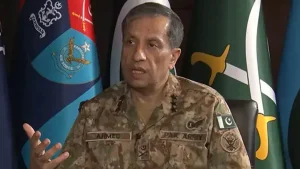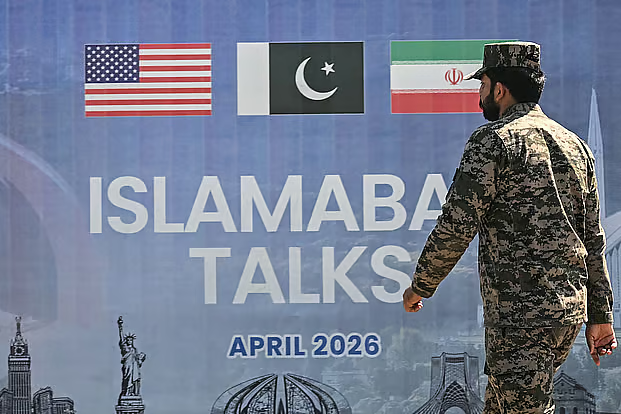
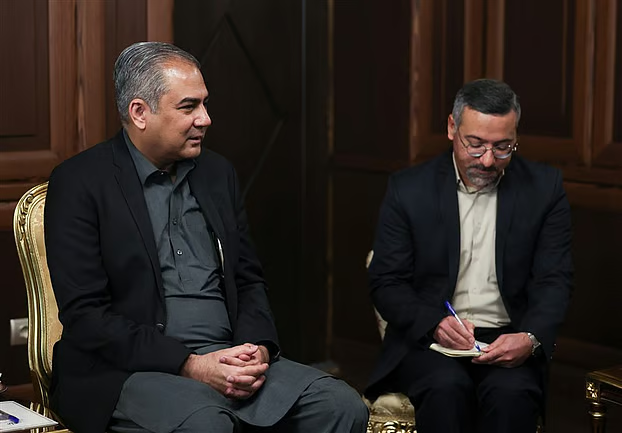
Pakistan’s Interior Minister, Syed Mohsin Naqvi, held a meeting with Iranian Foreign Minister Abbas Araqchi to discuss a cessation of hostilities; however, the core disputes between Washington and Tehran—specifically regarding uranium stockpiles and control over the Strait of Hormuz—remain unresolved.
According to Iran’s semi-official news agencies, Tasnim News and ISNA, this meeting took place in Tehran today, Friday—just two days after the United States conveyed its latest message to Iran. An ISNA report stated that Pakistan initiated these discussions with the specific objective of ending the conflict and bridging the divide between the two parties by establishing a concrete framework for resolution.
US Secretary of State Marco Rubio told reporters last Thursday that some “positive signs” have emerged from the talks. However, he emphasized that no resolution would be possible if Tehran attempts to impose any form of toll on traffic through the Strait of Hormuz.
Since the outbreak of hostilities on February 28, Iran has effectively halted most shipping traffic through this vital international waterway. Rubio cautioned, “I don’t want to be overly optimistic just yet. Let’s wait and see what unfolds over the coming days.”
A senior Iranian source informed Reuters that while the major points of contention between the two sides have somewhat narrowed, uranium enrichment and control over the Strait of Hormuz remain the primary unresolved issues.
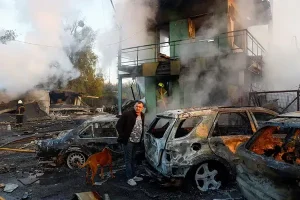
The conflict has inflicted severe disruption upon the global economy. Surging oil prices have sparked fears of runaway inflation across the globe. Prior to the commencement of hostilities, approximately one-fifth of the world’s total oil and liquefied natural gas (LNG) supplies were transported through the Strait of Hormuz.
Amidst the uncertainty surrounding the peace negotiations, the US dollar today—Friday—hit its highest level in six weeks, while oil prices also continued their upward trajectory.
Commenting on the conflict in the Middle East, Tony Sycamore—a market analyst at IG, a UK-based multinational financial services provider—stated, “The war is now entering its twelfth week. Six weeks have also elapsed since the ceasefire went into effect.” “However, I still do not feel that we have come close to reaching any permanent solution between the United States and Iran.”
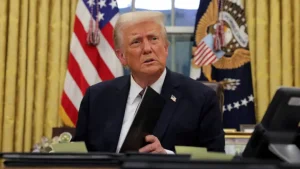
Speaking to reporters at the White House yesterday, Thursday, U.S. President Donald Trump stated that the United States would ultimately seize Iran’s stockpile of highly enriched uranium.
Washington claims that Iran intends to use this uranium to develop nuclear weapons, whereas Tehran maintains that it is being kept solely for peaceful purposes.
Trump remarked, “We will seize it. However, we have no need for it ourselves. Once we acquire it, we will likely destroy it. But they will not be permitted to keep it in their possession.”
However, prior to these remarks by Trump, two senior Iranian sources informed Reuters that the country’s Supreme Leader, Mojtaba Khamenei, had issued a directive stating that this uranium would under no circumstances be allowed to leave the country.
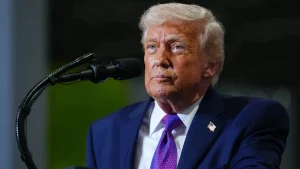
Sharply criticizing Iran’s plan to levy tolls on vessels utilizing the Strait of Hormuz, Trump asserted, “We want to see this waterway remain open. We do not want any tolls. It is an international waterway.”
Trump is currently facing domestic political pressure ahead of the midterm elections scheduled for this coming November. American citizens are outraged over rising fuel prices, and Trump’s approval ratings have hit rock bottom.
Earlier this week, Iran submitted its latest proposal to the United States. According to Tehran’s account, this proposal essentially reiterates the same conditions—all of which Trump had previously rejected. These conditions include: control over the Strait of Hormuz, compensation for war-related damages, the lifting of sanctions, the unfreezing of frozen assets, and the withdrawal of U.S. troops.
Global Energy Crisis
The International Energy Agency (IEA) has stated that this conflict has triggered the most severe energy crisis in global history. The agency warned yesterday that, due to peak summer demand for fuel during the upcoming months of July and August—coupled with a shortfall in supplies from the Middle East—the market could spiral into an extremely precarious state.
Prior to the outbreak of hostilities, between 125 and 140 vessels transited through the Strait of Hormuz daily; that figure has now plummeted to near zero. Iran has stated that it intends to open this strait to friendly nations that comply with its conditions. This may, however, entail the payment of certain fees.
However, U.S. Secretary of State Marco Rubio has characterized the imposition of such fees as completely illegal and a threat to the world.
President Trump and Israeli Prime Minister Benjamin Netanyahu have stated that the primary objectives of their campaign are to halt Iran’s support for regional militias, dismantle its nuclear program and missile capabilities, and bring about the downfall of the Iranian regime. Yet, despite severe airstrikes, Iran has managed to retain its stockpile of enriched uranium and maintain the capability to launch attacks against neighboring countries using missiles, drones, and proxy militias.