US President Donald Trump has threatened punitive measures against any entity providing financial benefits or cooperation to Iran, a move aimed at economically isolating the country. He announced this harsh step while calling for an economic campaign against Tehran, marking a new attempt to leverage US economic power to implement his foreign policy. Al Jazeera reported this development.
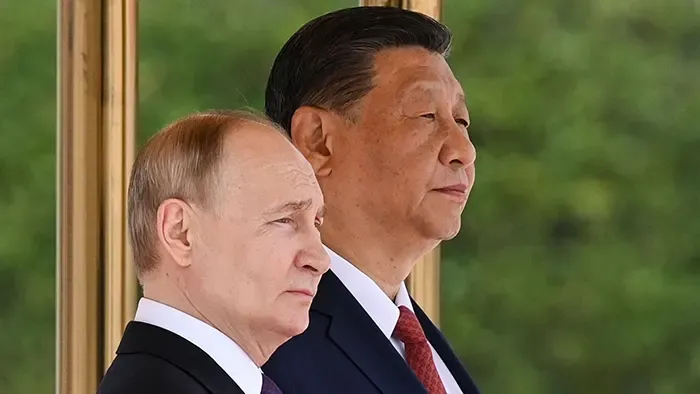
However, analysts note that US leverage over China and Russia—two of Iran’s key trading partners—is extremely limited. Since Russia is already subject to extensive US sanctions, it operates outside the US-led economic framework. Meanwhile, China has repeatedly demonstrated that it does not hesitate to disregard US sanctions when it comes to securing its own economic interests. Paul Musgrave, an assistant professor at Georgetown University in Qatar, stated that it would be extremely difficult for Trump to effectively implement this pressure campaign. He noted that Trump is attempting to unilaterally impose a coordinated sanctions regime that historically requires multilateral cooperation—specifically involving the five permanent members of the UN Security Council, including China and Russia. In a post on Truth Social, Trump claimed that this economic move against Iran would be the most devastating campaign ever waged against any nation in history.
He stated that countries assisting Iran in evading US sanctions—through activities such as oil smuggling, currency exchange, cash transfers, currency conversion, or the use of shell companies and vessel registrations—would face severe economic consequences. Earlier that same day, the United Arab Emirates announced an indefinite trade ban on Tehran. Nader Habibi, a professor of Middle East economics at Brandeis University, indicated that the US had strongly pressured the UAE to impose trade restrictions and might now attempt to exert similar pressure on China, Iran’s largest trading partner.
However, US plans to disrupt trade relations between China and Iran could face significant obstacles. In 2025, China purchased 80 percent of Iran’s oil exports. Furthermore, the majority of Chinese refineries processing this oil operate independently and do not rely on the US financial system. Moreover, imposing sanctions on major Chinese banks over allegations of settling Iranian transactions could deal a significant blow to bilateral relations. Yu Jie, a senior research fellow at Chatham House, stated that Trump’s threat would not alter the existing trade relationship between China and Iran. She noted that just as Beijing seeks to maintain a temporary truce or stability with Washington, Trump is also keen on keeping relations with China stable. Chinese Foreign Ministry spokesperson Lin Jian stated that imposing new sanctions would not solve any problems; he called for resolving the crisis through diplomatic and political channels. The US also wishes to avoid a deterioration in relations with Beijing ahead of Chinese President Xi Jinping’s potential visit to Washington next month.
On the other hand, Iran’s parallel strategic relationship with Russia presents a different challenge for Washington. For years, Moscow and Tehran have forged trade and military ties while bypassing Western sanctions. The two nations signed a 20-year partnership agreement, leading to a surge in trade to $4.8 billion within the first eleven months of 2025 alone. Reports even indicate that Russia has supplied Iran with drone components, ammunition, and TNT via the Caspian Sea.
Strongly condemning the new US sanctions, Iranian Foreign Minister Abbas Araghchi described them as a continuation of failed US policies. Writing on social media, he stated that this US “economic terrorism” poses a severe threat to the global economy and national sovereignty. Meanwhile, as a member of the BRICS bloc, Iran is exploring alternative economic avenues. Abdolnaser Hemmati, Governor of the Central Bank of Iran, announced plans for Iran to join the BRICS New Development Bank to create financing opportunities outside Western markets and initiatives to increase bilateral transactions using the member nations’ own currencies.