





The European Union (EU), Britain, and several developing nations have rejected the core agreement at the UN’s COP-31 climate conference, held in Antalya, Turkey. Following two weeks of intense negotiations, the conference’s primary agreement collapsed dramatically after the proposed draft failed to make any mention of fossil fuels. This was reported by The Guardian.
Although the talks were scheduled to conclude on Friday, they extended until Sunday afternoon. The draft agreement—dubbed the “Antalya Pact” and prepared by the conference’s co-presidents, Turkey and Australia—failed to garner the consensus required for adoption. Speaking on behalf of the EU, Ireland’s Minister for the Environment, Darragh O’Brien, stated that the proposed agreement failed to meet the demands of the moment. It did not even reference fossil fuels—the primary driver of climate change. He made it clear that the EU would not accept any outcome that lacks a scientific basis or sidesteps the issue of fossil fuels. His remarks were met with applause in the conference hall, with Panama, the Marshall Islands, and Norway voicing similar objections.
The Antalya Pact included calls for the electrification of economies, financial support from wealthy nations to help poorer countries tackle the climate crisis, and efforts to keep global warming below 1.5 degrees Celsius. However, despite demands from over 130 countries, the draft contained no commitment to “phase out” or “move away from” fossil fuels. Instead, it included a controversial provision for “Carbon Capture and Storage” (CCS) technology—a move that environmentalists argue will only prolong the use of fossil fuels.
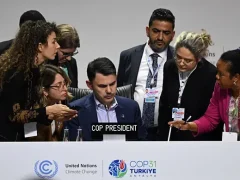
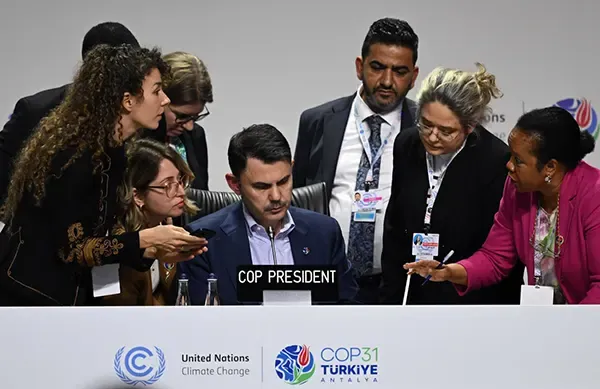
Murat Kurum, the Turkish minister serving as the conference president, acknowledged the lack of consensus, stating that they had not sought to impose any decisions on any party. As there was no unanimous agreement on the document, the core agreement was not adopted. However, to prevent the entire conference from ending in complete failure, decisions were reached on several related issues—including providing support for workers in high-carbon industries to transition into a low-carbon economy. Meanwhile, Saudi Arabia has advocated for the inclusion of CCS (carbon capture and storage) technology in the draft. On the other hand, although they expressed reservations regarding certain points, the Africa Group, China, and Pakistan did not oppose the agreement.