



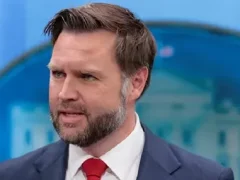


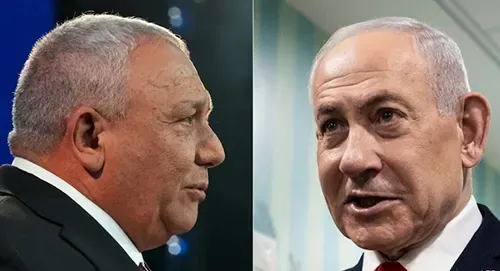
Gadi Eisenkot, tasked with forming Israel’s next government, has invited Benjamin Netanyahu’s right-wing Likud party—currently part of the caretaker administration—to discussions on forming a coalition. This was announced by Eisenkot’s party on Saturday. In a statement, the centrist ‘Yeshar’ party noted that the talks, set to begin on Sunday, reflect a sincere commitment to forming as broad a government as possible. This report comes from the news agency AFP. Eisenkot, a former military chief, has until next month to complete the task; he was given the mandate to form a new government after no side secured a clear majority in the elections held last October.
Meanwhile, disagreements have emerged within Eisenkot’s broader political camp regarding the formation of a coalition. Leaders within the camp are divided over whether to align with ultra-Orthodox Jewish parties or seek an understanding with Arab-majority parties. There are also differences of opinion regarding the possibility of forming a ‘national unity’ government that includes Netanyahu’s camp. The ‘Yeshar’ party statement indicated that, as part of an effort to explore every avenue for forming a new government, party chairman Gadi Eisenkot has directed his negotiating team to invite representatives from the Likud party. The meeting scheduled for Sunday will mark the beginning of an extensive series of discussions. Naftali Bennett, a key figure in Eisenkot’s political camp and a former Prime Minister, called on Saturday for the formation of a ‘Zionist unity’ government under Eisenkot’s leadership. At the same time, he emphasized that his party would not participate in any government that includes Netanyahu or his political alliance.
On the other hand, Netanyahu is actively pushing for the formation of a national unity government, arguing that such an administration is essential to ensuring Israel’s security.
Immediately following Eisenkot’s announcement, the Likud party clarified its own position regarding the formation of a unity government with his camp. The party has demanded an end to all personal attacks and provocations, as well as the withdrawal of political boycotts against Netanyahu and the government, as a prerequisite for forming such an administration. Eizenkot has expressed a positive stance toward forming a government that includes members of Netanyahu’s Likud party; however, he has previously made it clear that he will not serve in any government led by Netanyahu.
The Likud party has further stated that the formation of a unity government must be formalized through a joint declaration. Participation would be open to parties that support the existence of the State of Israel as the nation-state of the Jewish people. Notably, the party has stipulated that no Arab political parties may be included. Netanyahu and his allies have repeatedly criticized leaders of Arab parties, alleging that they refused to label Hamas a “terrorist group” following the October 7, 2023, attacks on Israel—though, in fact, the leaders of these Arab parties did condemn the attacks. The Likud party has also proposed several policy conditions for the formation of a unity government, including: recognizing Israel as the nation-state of the Jewish people; opposing the establishment of a Palestinian state; maintaining Israeli “security zones” in Syria, Lebanon, and Gaza; and reaching a broad agreement with ultra-Orthodox Jewish leaders regarding the mandatory conscription of members of their community into the military.
On Friday, Eizenkot pledged that he would not allow negotiations over the formation of a government to drag on. He further indicated that if efforts to establish a broad-based government fail, he is prepared to propose the formation of a minority “national emergency government” to be put to a vote in the parliament.