





China is employing a combination of economic pressure and military strategy to hinder the development of India’s military and economic capabilities. In particular, Beijing is seeking to limit India’s influence in South Asia by strengthening its military ties with Pakistan. China’s role during the conflict between India and Pakistan last year serves as an example of this strategy. This is according to the latest report from a special commission of the United States Congress.
The 2026 annual report by the U.S.-China Economic and Security Review Commission states that China views India as one of its primary rivals. To prevent India’s rise, Beijing is exerting pressure across various domains, including the economic, technological, and military spheres.
The report, titled “Another Front for China: India and the Future of U.S. Strategy in the Indo-Pacific,” notes that India is one of the few nations outside of U.S. military alliances that possesses the economic and military capacity to compete with China. India’s growing strength could be vital for the United States in maintaining the balance of power in Asia. Furthermore, India could play a significant role as an alternative to China’s supply and production networks.
The report warns, “China understands this and is actively working to curb India’s rise across various fronts.”
Economic Leverage to Keep India Under Pressure
According to the U.S. commission, economic pressure is China’s most effective tool for countering India. By leveraging its control over raw materials for critical industries, as well as technology and technical expertise, Beijing is obstructing the development of India’s competitive manufacturing capabilities.
To this end, China has imposed restrictions on the export of essential industrial materials to India—a move aimed at exerting economic pressure on New Delhi and stifling the country’s industrial and technological progress.
China’s Support for Pakistan During the “Operation Sindur” Incident
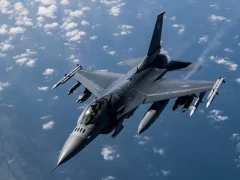
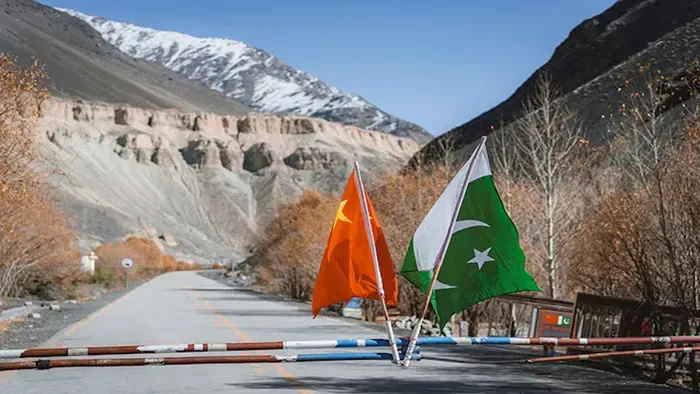
The report also expresses concern regarding the deepening military relationship between China and Pakistan. Specifically, it highlights the conflict between India and Pakistan that unfolded in May of last year, centered around what is referred to as “Operation Sindur.” The report states that China’s growing military power, combined with its long-standing support for Pakistan, has heightened India’s concerns regarding a coordinated, two-front military threat. The conflict in May 2025 demonstrated how China can bolster Pakistan’s military capabilities during a crisis, even without directly participating in the hostilities.
Notably, in April of last year, following the killing of 26 civilians in Jammu and Kashmir, India launched ‘Operation Sindoor’ against Pakistan. New Delhi held Pakistan-backed terrorists responsible for the attack.
Earlier this year, China acknowledged for the first time that it had provided on-the-ground technical support to Pakistan during ‘Operation Sindoor.’ The U.S. commission’s report highlights this as a significant example of China-Pakistan military cooperation.
China’s Attempt to Expand Influence in the Indian Ocean
The U.S. commission notes that China’s increasing presence in South Asia poses another major challenge to India’s strategic position. The report indicates that China’s efforts to expand its military and naval footprint in the Indian Ocean are part of a broader strategy to exert influence over vital maritime trade routes and strategic chokepoints. This could undermine India’s long-standing strategic advantages in the region.
Furthermore, China is attracting South Asian nations through infrastructure development and economic partnerships. The lack of viable alternatives, coupled with Beijing’s immense financial resources, provides China with a distinct advantage—a trend that threatens to further weaken India’s influence in South Asia.
U.S. Seeks Greater Military Coordination with India
To counter China’s regional influence, the U.S. commission has recommended strengthening cooperation with India. The report suggests that Congress could direct the U.S. Secretary of Defense and the Chairman of the Joint Chiefs of Staff to collaborate with their Indian counterparts on enhancing capabilities for underwater military operations, as well as surveillance and intelligence gathering regarding the maritime domain.
The report emphasizes the need to move beyond mere joint military exercises and instead foster long-term, effective military coordination. This includes the exchange of intelligence and surveillance data, joint monitoring of the movements of Chinese warships and submarines, and enhancing capabilities to address maritime security threats.
Furthermore, it has been recommended to launch an “Indo-American Strategic Leadership Exchange Program” to foster long-term relationships among emerging leaders from the defense, government, business, and academic sectors of both nations.
This report from the U.S. commission makes it clear that Washington views India as a key strategic partner in countering China’s influence in South Asia. At the same time, Beijing’s military cooperation with Pakistan and China’s presence in the Indian Ocean have become major considerations for the United States’ Indo-Pacific strategy.