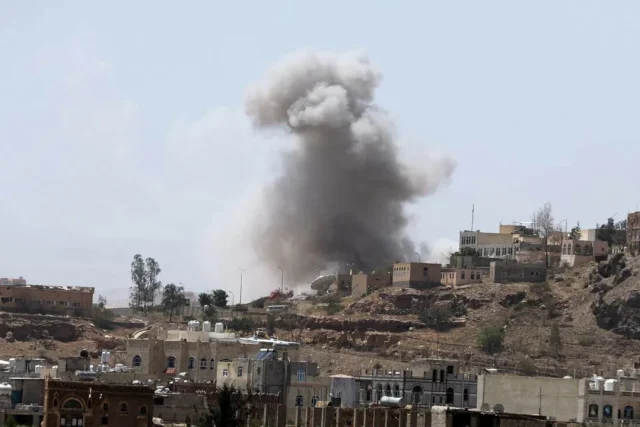
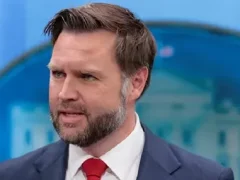

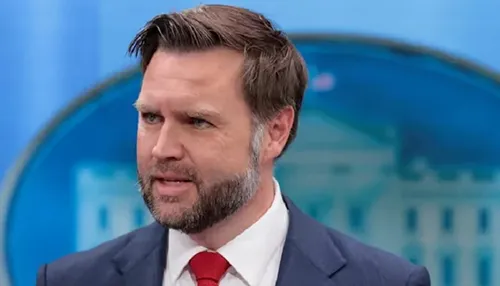
President Donald Trump had urged Vice President J.D. Vance to publicly express support for U.S. military strikes against Iran. However, Vance did not heed this call. When asked on Friday whether he would have authorized an attack on Iran to prevent the country from developing nuclear weapons, Vance avoided giving a direct answer. He also remained vague about whether he would make the same decision in the future, according to a report by the news agency Reuters. During a press conference at the White House, sitting alongside Trump, Vance noted that the decision to strike Iran last February was Trump’s. In his words, “My job is to support the President of the United States.”
Vance’s remarks reflect the complex internal political dynamics within the U.S. regarding a potential war with Iran. In a candid assessment following the Republican Party’s historic defeat in the midterm elections, Vance identified the war as the primary reason for the party’s loss. He also called for the United States to disengage from the conflict with Iran. Many have interpreted his comments—shared on social media—as a departure from Trump’s stance, especially as Vance considers a potential run in the 2028 presidential election. Vance wrote, “The reason we lost is the war. The President himself said as much last night. If you believe that the price paid for this war—including the loss of control over the Senate for the next six years—was worth it, then make that argument. Explain why paying this price was necessary.”
On Friday, Trump stated that he was not displeased with Vance’s assessment. However, he noted that a crucial element was missing: an acknowledgment that the attack on Iran was necessary, and an affirmation that Vance himself would have made the same decision under similar circumstances. “Those who work for me are entitled to their own opinions,” Trump said. “But I know the Iranians—and frankly, they’re crazy.” Later, at a press conference, Vance was asked whether the significant loss of seats by Republicans in Congress—a consequence of the war with Iran—was worth it. In his response, he did not explicitly endorse the military operation. Vance stated, “What I have said is that it is absolutely critical for us to achieve the goal of preventing Iran from acquiring nuclear weapons. The country is the world’s leading state sponsor of terrorism. If they possessed nuclear weapons, they would use them as a tool for coercion—or, God forbid, they could launch an attack, killing thousands, perhaps even hundreds of thousands, of innocent people.” He added, “I believe the responsibility for making such decisions lies with the President. The President has stated that he would take the same action again, and my objective—and my duty—is to support the President of the United States.”
Vance has long opposed a war with Iran. He also served as Washington’s primary envoy for advancing peace negotiations; last summer, he brokered a preliminary agreement for a temporary ceasefire, though it collapsed shortly thereafter. In recent weeks, Vance had even sent personal correspondence to hardline leaders in Tehran, seeking to resume talks. However, shortly after he shared his assessment of the war following the election, Trump halted these initiatives, instructing the Vice President to focus instead on domestic policy.
Meanwhile, Trump returned home on Thursday, concluding a four-day diplomatic tour of Asia. During the final leg of the trip, he participated in an unprecedented three-way meeting with Chinese President Xi Jinping and Russian President Vladimir Putin. Trump’s engagement with the leaders of these two American rivals—and the warm reception exchanged—drew criticism. Upon arriving in China, Trump embraced Xi Jinping, and he referred to Putin as “my friend.” White House officials, however, have framed the meeting as an example of mature, statesmanlike diplomacy. They argue that Trump’s personal rapport with the leaders of nations that are adversaries of the United States is, in fact, a reflection of Washington’s global power and influence.
Vance remained in the United States during Trump’s Asia tour; he was a vocal supporter of the trip and one of its primary advocates. In a press conference on Friday, he jokingly remarked that staying behind in the U.S. while Trump was on his tour felt like the 1990 family comedy film Home Alone.