

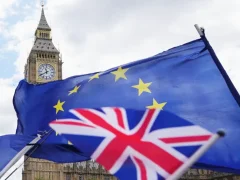

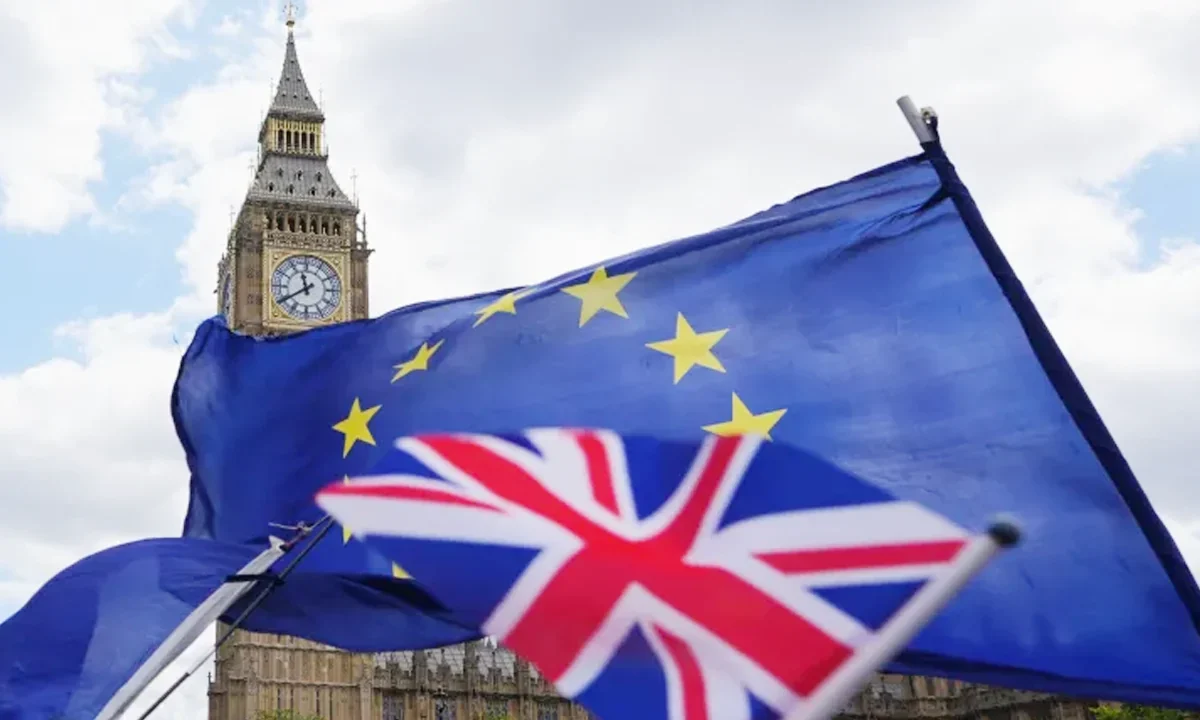
A decade after Brexit, the United Kingdom is taking steps to reshape its relationship with the European Union (EU). To this end, leaders from the UK and the EU are meeting today, Friday, in Brussels, the capital of Belgium. The meeting is expected to see the signing of several agreements covering trade in food products, carbon emissions, and opportunities for the movement and employment of young people.
UK Prime Minister Andy Burnham is set to meet with European Commission President Ursula von der Leyen and European Council President António Costa. This marks the second high-level summit between the two sides since the UK officially left the EU in 2020.
While last year’s summit was described as establishing a “stable foundation” for rebuilding relations between London and Brussels, Friday’s meeting is being framed as the beginning of a fresh effort to reconstruct the partnership.
Earlier this week, Burnham stated that it is an “obvious truth” that the UK has suffered more harm than benefit as a result of Brexit. In 2016, the UK held a referendum on whether to leave the EU, with 52 percent of voters opting to depart—though the referendum itself was not legally binding.
Burnham’s remarks suggest that reforming the relationship with Brussels is a top priority for his government.
Among the topics on the agenda, one of the most significant potential agreements concerns the cross-border trade of animals, plants, and related products. According to UK estimates, removing the current controls and restrictions on these goods could yield an economic benefit of £5.1 billion ($6.7 billion) annually.
An agreement regarding carbon emissions trading is also possible. Under such an arrangement, the UK and the EU could mutually exempt each other’s goods from carbon border tariffs—a provision that could apply to products such as steel. An agreement regarding mobility and employment opportunities for young people is also expected to be signed. Under the proposed deal, 100,000 EU citizens would be granted the opportunity to live and work in the UK for up to three years. Reciprocally, 100,000 UK citizens would be able to live and work in EU member states. Initially, the UK had proposed limiting this opportunity to half that number.
Meanwhile, the EU is demanding that tuition fees for EU students at UK universities be set at the same level as those for domestic students. Currently, tuition fees for domestic students are, in many cases, only about one-third of what international students are charged.
However, London has only agreed to a “significant reduction” in these fees, leaving a point of contention between the two sides.
Furthermore, the UK seeks to participate in the EU’s “Made in Europe” framework. Brussels has expressed interest in discussing this, but it would require the UK to adhere to EU policies.
Accepting these terms could prove politically challenging for Burnham, as there remains a significant segment of the UK population that opposes the European Union. Consequently, any initiative to deepen ties with Brussels could also invite domestic political opposition.