






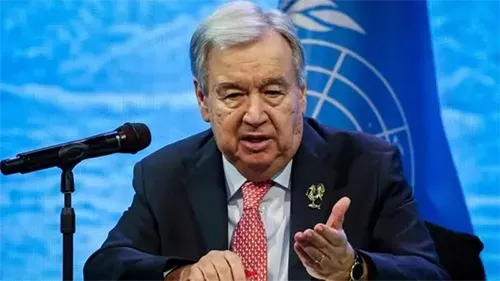
UN Secretary-General António Guterres has described the ruling delivered by the International Court of Justice (ICJ) against Myanmar as a milestone for international justice. He stated that a culture of impunity for the horrific crimes committed against the Rohingya people cannot be allowed to persist. In a statement, Guterres noted that the court’s ruling is final and binding, with no possibility of appeal; therefore, Myanmar must take the necessary steps to comply with the decision. He further emphasized that breaking the cycle of impunity and ensuring accountability in Myanmar is essential for establishing national cohesion and achieving sustainable peace.
Meanwhile, Gambian President Adama Barrow has hailed the ICJ ruling as a historic day for international justice. A statement issued by the Office of the President of The Gambia commended the courage of the Rohingya survivors and witnesses, with President Barrow noting that their testimony played a crucial role in achieving this outcome—a testament to the success of long-standing perseverance. It is worth noting that The Gambia filed the case against Myanmar at the ICJ in November 2019, alleging violations of the 1948 Genocide Convention.
On the other hand, Myanmar has yet to provide an official response to the court’s ruling regarding the allegations of genocide against the Rohingya population. As he left the ICJ premises in The Hague, Myanmar’s representative, Ko Ko Hlaing, was approached by the BBC Burmese Service for comment; however, as he stepped into a waiting vehicle, he simply said, “No comment.” Myanmar has consistently denied the allegations of genocide, claiming instead that its security forces were conducting operations in response to attacks by armed groups. The court, however, found that the scale and nature of the military operations far exceeded what was necessary to address such threats, concluding that the operations reflected an intent to destroy a significant portion of the Rohingya population.