




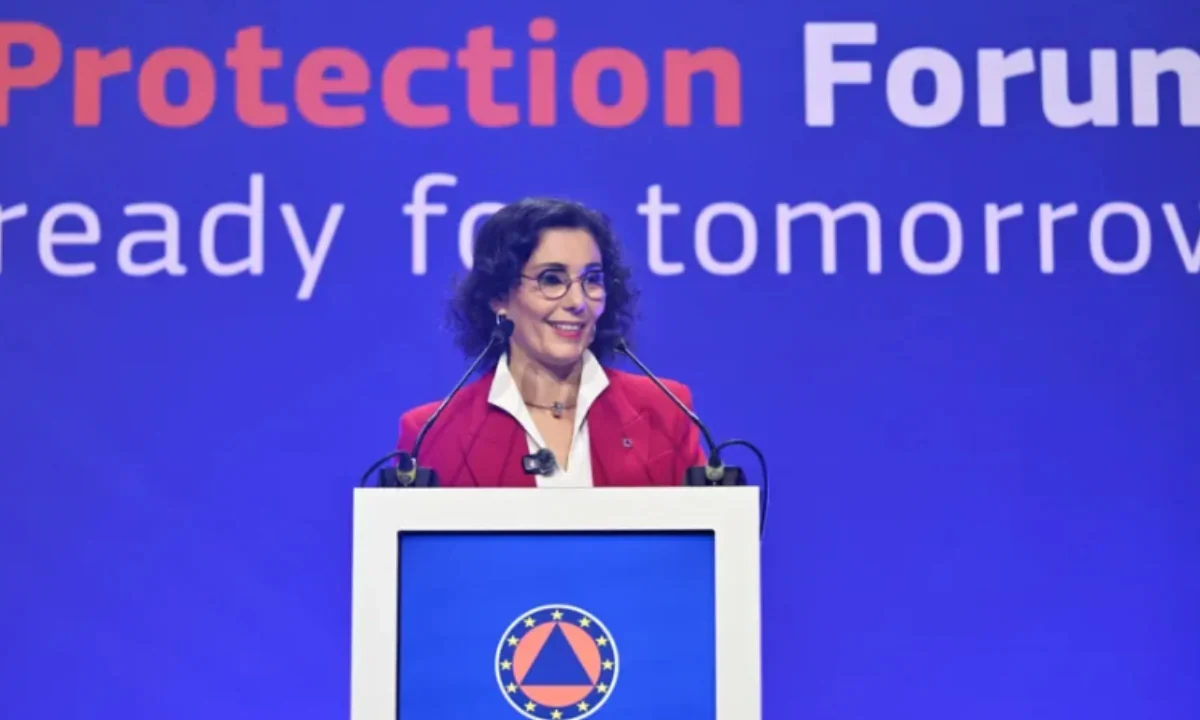
As the intensity of winter increases, the humanitarian situation in the Gaza Strip is deteriorating further. In light of this, European Union (EU) Commissioner Hadja Lahbib has called on Israel to allow humanitarian aid to enter the territory on more days and to establish clear, predictable rules for the delivery of such assistance.
She made these remarks while speaking to journalists in Brussels, Belgium, ahead of a meeting of EU foreign ministers on Monday. Lahbib stated that a humanitarian catastrophe is unfolding in Gaza, with the onset of winter making the situation even more dire.
She noted that approximately 70,000 tents in Gaza have been submerged by floodwaters. Displaced families are forced to live under the open sky or in makeshift tents amidst freezing temperatures and rain. She further mentioned that children are dying from winter-induced hypothermia.
Lahbib emphasized the need to facilitate the entry of essential humanitarian supplies into Gaza, including shelter materials, heavy machinery, engine oil, and spare parts. She pointed out that certain items—classified as “dual-use” (goods that can serve both civilian and military purposes)—are currently permitted to enter only one day a week.
She urged for aid access to be granted on more days each week, governed by reliable and predictable regulations. She remarked that there are currently no written rules in place for the delivery of such supplies.
The EU Commissioner also called on Israel to adhere to international humanitarian law.
Displaced Families Devastated by Flooding
Recent heavy rainfall and flooding in Gaza have exacerbated the suffering of displaced people. Many families are living in dilapidated tents. With a lack of adequate shelter, warm clothing, and protection from the cold, children and the elderly are at particular risk.
According to preliminary estimates from the UN Office for the Coordination of Humanitarian Affairs (OCHA) on November 13, approximately 46,000 families in Gaza may have been affected by the rains. However, this figure is subject to change as the situation continues to be assessed. In a statement released on November 14, the EU demanded the opening of all border crossings into Gaza and guaranteed unhindered access for humanitarian aid and reconstruction efforts. The organization noted that, due to shortages of essential shelter, medicine, and medical supplies—compounded by restrictions on entry—the people of Gaza still lack the conditions necessary for a humane existence.
Lahbib addresses the situation in Ukraine and Syria
Speaking to journalists, Lahbib also highlighted the situation in Ukraine. She alleged that Russia is targeting the country’s heating, water, and electricity infrastructure, effectively using winter as a weapon of war.
She announced that, as part of its support for Ukraine, the EU will provide 500 generators, shelter materials, and other emergency supplies. Additionally, the €20 million in emergency aid allocated in early September will continue. She further noted that Norway will supply four temporary bridges, and France will provide 200 buses.
Regarding Syria, Lahbib stated that the EU has pledged a record €210 million in humanitarian aid for the country this year. Approximately 15 million people in Syria depend on humanitarian assistance, and 8 million remain displaced.
Furthermore, she mentioned that recent escalations in Yemen have led to the displacement of over 300,000 people, making it increasingly difficult to deliver relief to those in desperate need. Lahbib also noted that, last week, relief supplies were delivered to Sanaa and Aden through an EU humanitarian air bridge.
Sources: Middle East Monitor, Anadolu Agency, European Commission, and the UN Office for the Coordination of Humanitarian Affairs (OCHA)