The United States has withdrawn 12 B-1 bombers from a British airbase in the face of a potential attack threat. However, the Trump administration has declined to release details regarding the nature of this threat. Responding to questions from journalists, President Donald Trump dismissed the move as insignificant. Similarly, US Secretary of State Marco Rubio described the event as routine, noting that the Pentagon redistributes its military assets as needed.
Yet, for those monitoring the global deployment of US military power over the seven months since the war with Iran began, this served as yet another clear example of retrenchment. Time and again, Trump and his Secretary of Defense, Pete Hegseth, have been compelled to withdraw military forces from the Middle East and Britain.
The war with Iran has exposed numerous vulnerabilities in the American military apparatus that were unimaginable just a year ago. It stands as a bitter lesson regarding the unintended consequences of a war initiated at Trump’s own volition.
Trump had intended for the attack on Iran to serve as a demonstration of the US military’s formidable might. This followed earlier operations—such as the successful bombing of three Iranian nuclear facilities in June 2025 and the capture of Venezuelan President Nicolás Maduro from his bedroom in Caracas in January. Trump had anticipated that the war with Iran would be similarly swift and easy to conclude.
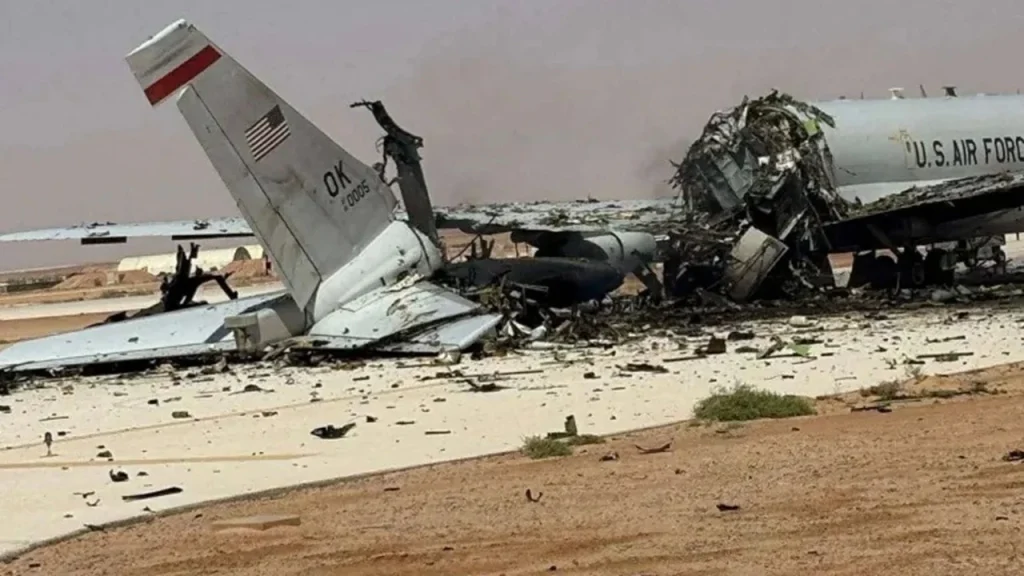
Instead of projecting strength, however, the conflict has laid bare the limitations of US military power. Several US military bases in the Middle East have been shut down, and operations at a British base have been curtailed; the logistics network at the British base, in particular, has collapsed.
US bombers still retain the full capability to strike their targets, but doing so would require flying directly from the United States—a process that would entail significantly higher costs and longer transit times.
US naval fleets remain capable of patrolling the Arabian Sea, just outside the Persian Gulf. However, supplies and fuel must be transported to them from the island of Diego Garcia in the Indian Ocean, located 2,200 miles away. This process entails significant additional costs and adds weeks to the timeline.
Most importantly, the rapid withdrawal of US military forces has taught Iran and other adversaries that they can maintain their capabilities even while confronting the military might of a superpower. Meanwhile, Trump and Hegseth are attempting to reduce troop levels in Europe. Concurrently, they have been forced to relocate troops and military assets away from the Middle East and Britain.
On Monday, US and British officials stated that commanders swiftly moved bomber aircraft from a British base after receiving specific and credible intelligence. The intelligence indicated that Iran-backed operatives were planning a drone attack from just outside the base’s perimeter.
The suspected attackers may have been inspired by a daring operation conducted by Ukraine last year. In that instance, Ukraine secretly launched drone strikes from cargo trucks deep within Russian territory, damaging a dozen aircraft.
That attack, along with others, has fundamentally altered perceptions regarding the Pentagon’s military vulnerabilities. Merely stationing troops beyond the range of conventional missiles is no longer sufficient; drones and cyber weapons have transformed the nature of the battlefield.
President Trump claims that Iran’s entire navy was destroyed in initial military operations and that the country’s dilapidated air force has been rendered ineffective. At the same time, the nation stands on the brink of economic crisis; a naval blockade has halted oil exports, severely damaging the economy.
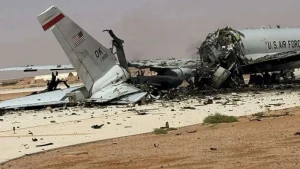
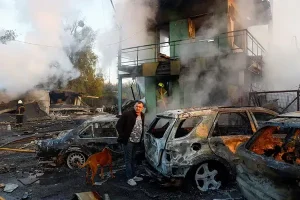
Yet, despite all this, the Iranians have not been stopped. They have forced US aircraft and troops to retreat from bases once considered safe to locations further away from Iran. US personnel have been withdrawn from bases in Bahrain, Kuwait, the United Arab Emirates, and Qatar—bases that fall within the range of Iranian missiles and drones. Some of these bases have sustained such severe damage that there is little interest within the Pentagon in rebuilding them. If Congress allocates the necessary funds, these bases would be relocated further away.
The situation regarding maritime routes is even more complex. The United States has failed to ensure “freedom of navigation” through the Strait of Hormuz and parts of the Red Sea—despite the fact that ensuring such freedom has been a primary justification for maintaining a US military presence in the Middle East for the past half-century.
Dana Stroul, who served as the Pentagon’s top official for Middle East policy during the Biden administration, noted that the sudden withdrawal of a dozen bombers to the United States would have both domestic and international repercussions.
The Pentagon is considering establishing new bases in Israel and Jordan, though this would require Congressional approval. Renovating or constructing these bases from scratch would take several years. Last Wednesday, while addressing troops, Hegseth spoke of establishing massive new military bases within the United States itself, but he did not address the issue of the Middle East.
However, when Trump announced an attack on Iran on February 28, no such plan existed. He had initially sought a victory within a few days, a timeframe he later extended to five or six weeks. Trump demanded “unconditional surrender” and declared Iran’s “total defeat” just three weeks into the conflict.
In a recent event, he stated that Iran would “capitulate” immediately following the midterm elections.
Meanwhile, in retaliation for an attack, Iran launched strikes against US bases across the Middle East. This forced the US to relocate many troops to various hotels and office buildings in the region. The incident raised questions regarding the Trump administration’s state of preparedness for war.
Iran managed to pinpoint the locations of US troops, some of whom were staying in hotels lacking adequate security. Consequently, Iran began targeting those locations as well. The attacks were not limited to military installations; a CIA station in Saudi Arabia was also struck. However, it remains unclear whether the Iranians deliberately targeted that facility or hit it coincidentally while attempting to strike a diplomatic site.
Mohammad Ayatollahi Tabaar, a professor at Texas A&M University, noted that Iran has adopted a strategy of “escalating tension and persistent aggression” against the United States. As a result, instead of seeking a settlement with Washington, Tehran may further target the economies of US regional allies and the global energy market.
Senator Christopher S. Murphy, a Connecticut Democrat and member of the Foreign Relations Committee, visited the Persian Gulf region this week to inspect the damage to US bases. He stated on social media that he was denied entry to the Al-Udeid base. A Pentagon spokesperson said Murphy had been informed prior to his visit that he would not be allowed to enter the base.
The issue of US bases has become so sensitive for the Pentagon that it has refused to provide Congress with estimates regarding the cost of repairing or rebuilding the damaged facilities. Lawmakers suggest that these costs could run into the billions of dollars.
In the meantime, Central Command—which oversees military operations in the Middle East—has initiated serious planning to reconfigure and reorganize its military installations in the region. Jack Reed, the Rhode Island Senator and top Democrat on the Armed Services Committee, stated last month, “Financial costs are rising by billions of dollars each month. Yet, the administration is not acknowledging the ammunition shortage we are facing. At the same time, it is not admitting to the costs of rebuilding bases severely damaged in Iranian attacks.”
All in all, the conflict with Iran has exposed various aspects of U.S. military vulnerability that were unimaginable even a year ago.