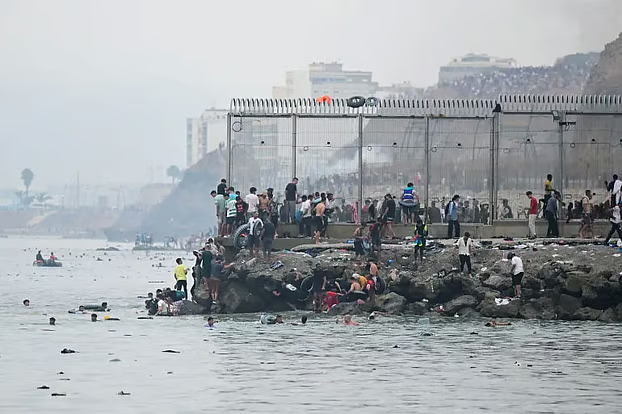
Thousands of people have crossed the border from Morocco into the Spanish enclave of Ceuta over the past 24 hours. At least 57 migrants died while attempting to cross the border during this period. Amidst this situation, Spanish Prime Minister Pedro Sánchez visited Ceuta.
Juan Jesús Vivas, the regional president of Ceuta, confirmed the deaths of the 57 migrants to reporters on Friday. However, he did not provide details regarding the cause of their deaths.
Juan Jesús stated that approximately 60,000 people entered Ceuta from Morocco using both land and sea routes. Many swam around the border fences that extend into the sea.
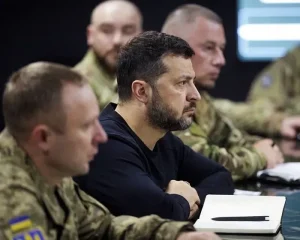
Spanish Prime Minister Pedro Sánchez visited Ceuta today. He stated that his government is utilizing all available preparations and capabilities to handle the situation.
Sánchez described this border crossing event as a “violation” of Spain’s territorial sovereignty. He noted that authorities are expediting the process of returning the migrants who arrived this week. Spain’s Interior Ministry reported that, as of Friday, approximately 25,000 people had been sent back to Morocco from Ceuta.
Rashid Sabihi, a leader of the local labor union representing Civil Guard officers in Ceuta, described the situation as a “severe humanitarian crisis.” Rashid said that thousands of migrants, including unaccompanied children, are sleeping on sidewalks, while many others are wandering the streets aimlessly.
Rashid told a news agency that many of the deceased had drowned. Several people also died after being trampled at a border checkpoint while trying to cross the barrier at Tarajal, a beach in a suburb near the Moroccan border.
The Moroccan government had deployed water cannons at the entry points to Ceuta in an attempt to push people back. Following clashes with angry crowds, the burnt-out wreckage of a bus and seven cars was seen at the scene.
Video footage from Thursday shows a large number of people crossing the beach border fence and walking onto local streets. Most of them are Moroccan nationals, with young people making up the majority. However, there were also many families accompanied by women and small children.
Melilla is another Spanish enclave in North Africa. Together, the cities of Ceuta and Melilla form the only land connection between the European Union and Africa. People seeking to reach Europe often attempt to enter in large groups through these two border points.
To reach Ceuta, migrants often swim from the Moroccan city of Fnideq, covering a distance of approximately five kilometers to reach Spanish territory. Many also attempt to cross via the nearby town of Belyounech, as the distance is somewhat shorter along that route.
“Dangerous crossings must stop”
Authorities in Ceuta see a link between this sudden surge in border crossings and a recent ruling by the Spanish Supreme Court. Delivered earlier this month, the ruling stated that authorities could not immediately deport migrants arriving by sea without due legal process. However, this ruling does not apply to those entering Spain by scaling border fences or crossing overland.
On Friday, Sánchez stated that criminal networks had spread rumors regarding the court ruling, triggering the influx of migrants. He added, “Discussions with Moroccan authorities revealed that human trafficking rings interpreted the Supreme Court ruling to suit their own ends. In the last few hours, that distorted interpretation has spread like wildfire.”
However, rights activists in Morocco have expressed skepticism about the ruling’s role in the surge. They argue that the majority of the migrants were unaware of such legal decisions.
European Commission President Ursula von der Leyen described the situation in Ceuta as “unacceptable” on Friday.
Writing on social media, von der Leyen stated, “We cannot allow anyone to enter our (European) Union without adhering to our rules. These dangerous crossings must stop immediately. Trafficking networks must be dismantled.” “Arrangements must be made to repatriate migrants quickly, while adhering to our established rules.”
Meanwhile, German politician Friedrich Merz welcomed Spain’s stance of barring migrants without valid documentation from entering the European mainland. He added that his government is maintaining constant communication with the Spanish administration.
France is also in contact with Spanish and Moroccan authorities. Sources close to French President Emmanuel Macron indicated that Paris is ready to assist Spain if necessary; such support could be provided through Frontex, the European border and coast guard agency.
Earlier, French Interior Minister Laurent Nuñez stated that France would tighten controls at its border with Spain following the recent situation.
Writing on the social media platform X, Nuñez announced that he had ordered an immediate strengthening of controls at the Spanish border on Thursday night. He also announced the deployment of rapid-response border guard units to conduct intensive searches.
The impact of this border crisis has already reached Italy, another major destination for migrants. Italian Prime Minister Giorgia Meloni has threatened to suspend the Schengen Agreement—which allows for open borders—with Spain, even though the two countries do not share a direct land border. Meloni stated that this measure would be taken to protect national borders and ensure the safety of citizens.