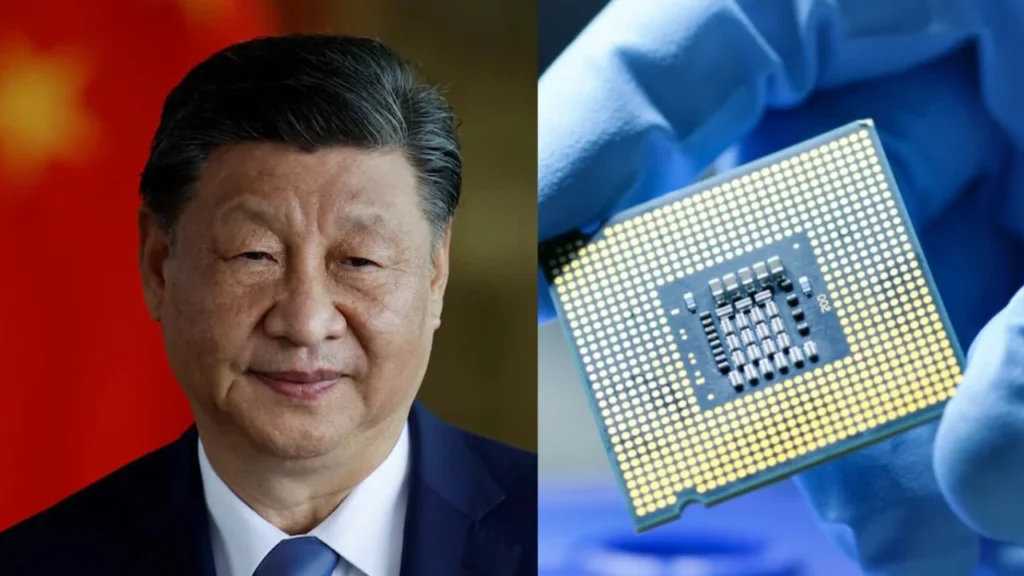
While the United States and its allies have long held sway over advanced semiconductor technology, China’s recent, steady progress has ignited new discussions within the global tech industry. The country’s success in manufacturing advanced lithography machines using indigenous technology and its achievements in chip fabrication signal a new era of competition in the semiconductor sector.
Recently, Reuters reported that China has commenced commercial production of its own immersion Deep Ultraviolet (DUV) lithography machines. The state-owned Shanghai Aishengna Electronic Technology Group is spearheading this project, having developed the technology by pooling the expertise of engineers from various Chinese lithography companies.
Meanwhile, Chinese researchers claim to be on the verge of developing their own Extreme Ultraviolet (EUV) lithography technology. Should this claim prove successful, it could mark one of the most significant technological shifts in the semiconductor industry in decades.
The Significance of DUV and EUV Technologies
Lithography technology is currently crucial for the production of advanced semiconductors. While DUV technology—combined with sophisticated engineering techniques—can produce chips down to the 7-nanometer scale, EUV technology is virtually indispensable for manufacturing cutting-edge processors at the 2, 3, and 5-nanometer levels.
The Dutch company ASML has long held a virtual monopoly in the commercial market for this advanced technology; the EUV machines they manufacture are considered among the most complex industrial machines in the world.
China Undeterred by Sanctions
From the administration of former US President Donald Trump through to that of President Joe Biden, multiple restrictions have been imposed on the export of advanced chips, chip-manufacturing equipment, and software to China. Consequently, companies such as Huawei and Semiconductor Manufacturing International Corporation (SMIC) lost access to advanced foreign technologies. However, following these restrictions, China has prioritized the semiconductor sector as a matter of national strategic importance. The country has invested billions of dollars over several decades into research, manufacturing, machinery, materials, and workforce development.
Huawei’s 7-nanometer chip: A significant signal
Huawei unveiled its ‘Mate 60 Pro’ smartphone during US Commerce Secretary Gina Raimondo’s visit to China in 2023. Subsequent analysis revealed that the phone’s 7-nanometer processor was manufactured by the domestic firm SMIC. Analysts viewed this achievement as one that defied widespread expectations, as many had assumed that sanctions would make it impossible for China to produce such a chip.
Beijing is building a comprehensive semiconductor ecosystem
China’s goal extends beyond creating just one or two successful chip companies; it aims to build an entire semiconductor ecosystem. The country is investing simultaneously across all segments, including chip design, manufacturing equipment, materials, memory chips, and fabrication.
ChangXin Memory Technologies (CXMT) has rapidly emerged as one of the world’s major DRAM memory chip manufacturers. Meanwhile, Yangtze Memory Technologies (YMTC) has established a significant position in the production of advanced NAND flash memory.
New challenges for Western companies
If China achieves self-sufficiency in lithography technology, ASML risks losing one of the world’s largest markets. Simultaneously, US-based chip manufacturing equipment makers—such as Applied Materials, Lam Research, and KLA—could face intensified competition. Additionally, memory chip manufacturers like South Korea’s Samsung and SK Hynix are closely monitoring China’s progress. Global Chip Industry May Split into Two
According to some experts, the global semiconductor industry could eventually split into two distinct technological ecosystems: one led by the United States and its allies, and the other centered around China. However, the US currently holds the top global position in advanced chip design, while Taiwan’s TSMC leads in cutting-edge chip manufacturing, and ASML dominates in EUV technology.
A New Reality of Competition
Analysts believe that China has not yet reached the pinnacle of the global semiconductor race. Nevertheless, recent progress demonstrates that it is difficult to stifle a nation’s technological ambitions in the long run solely through sanctions. Consequently, alongside the US’s singular influence, China’s rise is now emerging as a pivotal reality in the landscape of global technological competition.