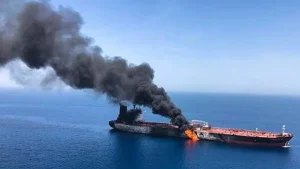
Saudi Arabia is preparing for a major military operation to break the blockade imposed by Yemen’s Houthi rebels on its oil exports in the southern Red Sea. Yemeni sources indicate that the operation could be conducted via sea routes and, if feasible, by land in central Yemen.
Saudi forces have already been observed withdrawing from eastern Yemen; this withdrawal is believed to be in preparation for a ground offensive. Simultaneously, Riyadh has intensified efforts to form a multinational naval coalition to safeguard commercial shipping in the Red Sea and the Bab al-Mandab Strait.
On Thursday, the Saudi Ministry of Defense announced that 14 countries—including Bangladesh, Turkey, Pakistan, Egypt, Sudan, and Djibouti—had issued a joint statement supporting the proposed multinational maritime defense coalition. Furthermore, Riyadh has invited the United States and influential European nations—such as the UK, Germany, France, and Italy—to join the alliance.
It is worth noting that a European Union (EU) naval security mission named ‘Aspides’ is already operational, tasked with ensuring safe navigation in the Red Sea.
Vast stretches of the Red Sea coast, including the Yemeni capital, Sana’a, are currently under the control of the Iran-backed Houthis. On July 20, the Houthis announced a maritime blockade against Saudi ships, though they denied plans to impose levies on all types of vessels.
The Houthis maintain that they will lift their blockade only if Saudi Arabia lifts its blockade on Yemen. Saudi Arabia had intervened militarily in the Yemeni civil war in 2015 in support of the UN-recognized government.
Analysts observe that the Red Sea route has become crucial for Saudi oil exports because the Strait of Hormuz—located on the other side of the Arabian Peninsula—has become compromised due to conflict involving Iran. Prior to the tensions with Iran, approximately 80 percent of Saudi crude oil was transported through the Strait of Hormuz. However, currently, more than half of their oil is being transported via pipeline to the Red Sea port of Yanbu for marketing.
Recently, Houthi rebels have intensified attacks against Riyadh. On July 25, they claimed responsibility for an attack on strategic oil infrastructure within Saudi Arabia. Prior to this, the Saudi air force had struck Houthi positions at the Yemeni port of Hodeidah, and a Saudi commercial vessel had been attacked in the Red Sea.
To address the ongoing situation, Saudi Defense Minister Prince Khalid bin Salman held an urgent meeting last Wednesday with US President Donald Trump and JD Vance. However, Saudi Arabia has made it clear that while it is prepared to defend its oil industry, it does not wish to escalate the conflict with Iran. Riyadh believes that the dispute between Washington and Tehran can still be resolved through diplomatic means.
At the same time, Saudi Arabia launched airstrikes in Iraq last Wednesday in retaliation for attacks on Saudi oil facilities. At least 20 people were killed in the strikes.
President Donald Trump claimed that this joint US-Saudi operation was carried out with the consent of the Iraqi government, although Baghdad has not confirmed the veracity of this claim.
Yemeni sources have reported that Saudi forces are massing to retake the central-southern province of Al-Bayda, which had been seized by the Houthis in 2020–21. It is believed that tensions in Yemen could subside if an agreement to reopen the Strait of Hormuz is reached through the mediation of Oman and Iran.