Oil exports—Iran’s primary source of revenue—have been disrupted by sustained U.S. sanctions. Consequently, while the country’s leaders project confidence regarding a potential conflict with the U.S., the lives of ordinary citizens are becoming increasingly difficult. Many are losing the ability to afford basic necessities or even pay their rent.
Speaking on camera in Tehran, restaurant owner Behnam Riazi said, “I am forced to sell goods at a very slim, negligible profit margin. Yet, I cannot close the business, because then I would be unemployed.”
Riazi noted that he cannot raise food prices because his customers lack the means to pay more.
It remains unclear to what extent Iran’s economic crisis might push the country toward a diplomatic settlement.
However, sources in the U.S., the Middle East, and Iran indicated last week that the economic crisis has played a partial role in driving recent diplomatic efforts.
Iranian officials have repeatedly expressed fears of unrest spreading across the country and have harshly suppressed even the slightest signs of dissent.
Yet, those who spoke to Reuters indicated that they are so overwhelmed by daily struggles that they have neither the time nor the mental bandwidth to even consider protesting.
Hediyeh, a housewife over sixty from northern Iran, relies on her husband’s government pension. She can no longer afford her own medication, let alone the adult diapers required for her elderly mother, who suffers from Alzheimer’s disease.
Most Iranians who spoke to Reuters via phone or messaging apps requested anonymity. They asked to keep their identities hidden due to fears of facing punishment for speaking to foreign media.
A teacher identified only by the initials “A.J.” also permitted the use of only his initials. He stated that he is often unable to purchase the necessary medication for his mother. After schools shifted to online classes due to the war, she left Tehran to live with her mother and siblings in a village in the north.
Nazanin, a 34-year-old psychotherapist from Sanandaj—the capital of Kurdistan province—said she had tried to quit smoking many times in the past but failed; however, she was forced to give it up this time because the price of cigarettes had risen.
Proliferation of the Black Market and Bribery
Those with the means are sourcing goods and services through the black market, bypassing conventional channels. While this has expanded the black market, it has also driven up costs.
One individual reported paying a surgeon $200 in cash to bypass the bureaucratic procedures required for a surgery.
Another person mentioned that demands for bribes by police officers have become more frequent; he noted having to pay a higher bribe than usual after being stopped at a checkpoint without his identification documents.
Job Losses in the Private Sector
An architect identified as ‘AA’ stated that even relatively affluent Iranians are now cutting back on their spending.
“Compared to their previous lifestyles, they have all become poorer,” he said.
Last week, one of his car tires went flat, but he could not afford to buy a new one immediately. He is also concerned about a potential fuel crisis in Iran.
He fears that such a crisis could disrupt supply chains and lead to widespread economic chaos.
Meanwhile, the war has triggered massive job losses in the private sector. A woman from Tehran, identified as ‘MH’, said she lost her job in the purchasing department of a local company this month.
“Thank God, we can still afford the internet,” she said. “So, we can stay in touch online and perhaps even watch a movie.”
Bijan, a 40-year-old former engineer, now earns a living by tutoring students. He and his wife have moved out of their Tehran apartment to an area outside the capital that he describes as “half-slum.” The couple has exhausted almost all their savings. Now, they are planning to move to another city where they hope the cost of living will be comparatively lower.
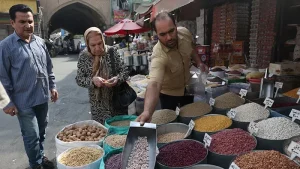
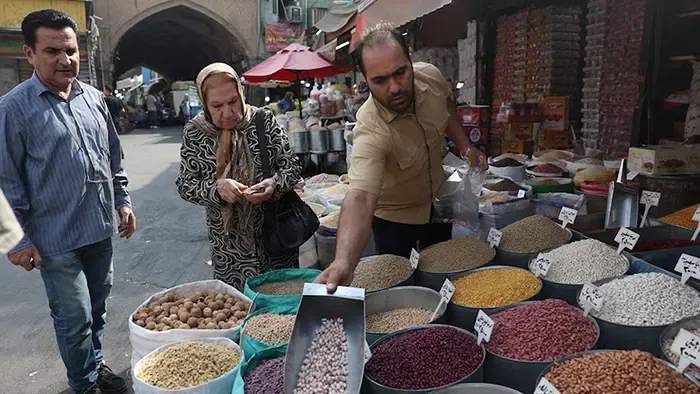
Shopkeepers are the ones who best understand the extent to which the standard of living in Iran has declined.
Speaking on camera in Tehran, Ramin Yousefnia noted that all the customers at his grocery store have cut back on their purchases.
“People who used to buy five or ten of an item can now only afford to buy two,” he said. He added that there is no point even talking about savings anymore; this is the reality now.