



On the eve of the US midterm elections, Democratic candidate Abdul El-Sayed and Republican candidate Mike Rogers made a final push in their campaigns for a Senate seat in Michigan. On Monday evening, both candidates held separate rallies, seeking support from voters. This fiercely contested election could also play a pivotal role in determining control of Congress.
Despite various dramatic developments in the final stages of the campaign, El-Sayed remains ahead in the polls. A survey released on Sunday by The New York Times and Siena College shows him with 53% support among likely voters, compared to 42% for Rogers—giving the Democratic candidate an 11-percentage-point lead. The poll has a margin of error of 3.6 percentage points.
On Monday night, former Congressman Rogers appeared at a rally in Rochester Hills. Taking the stage to the sound of Tom Petty’s “I Won’t Back Down,” he framed the election as a battle for the “heart and soul” of the United States.
Addressing his supporters, he asked, “Are you ready to fight for freedom tomorrow? Are you ready to send a message to the rest of the country that we are the ones who defeated the Democratic socialists?”
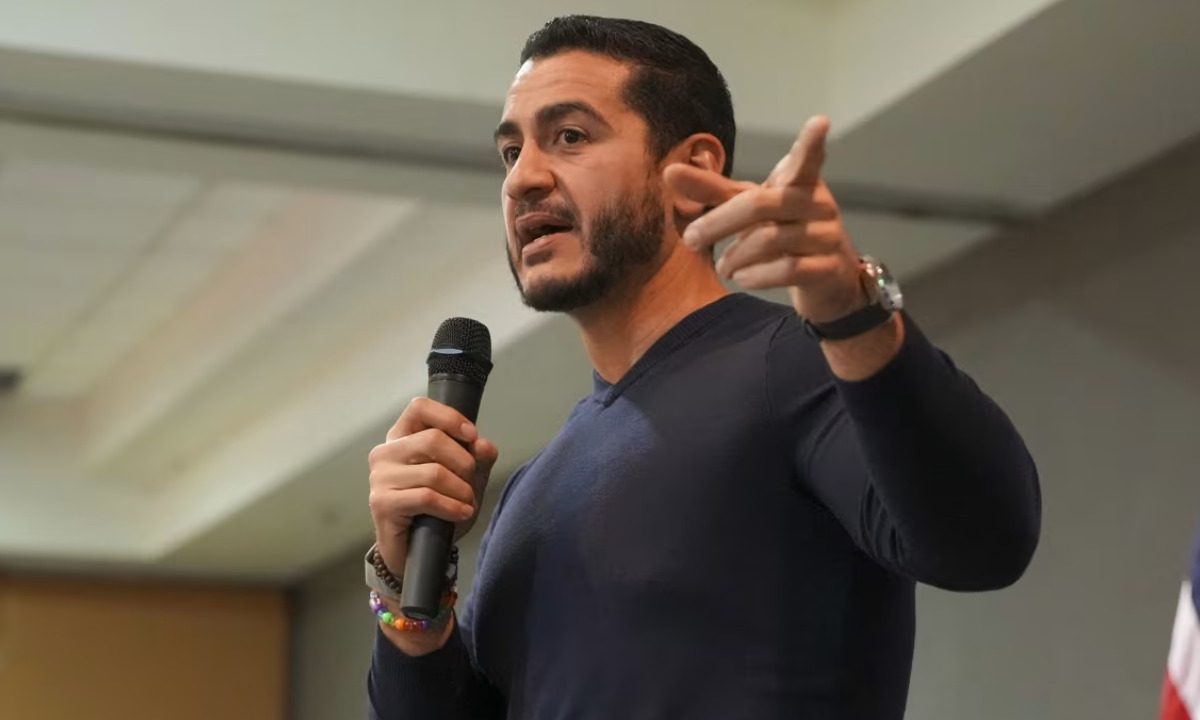
Meanwhile, at a rally in Detroit attended by members of the United Auto Workers (UAW) union, El-Sayed emphasized his commitment to lowering the cost of living. He also addressed the Islamophobic rhetoric and personal attacks directed at him during the final days of the campaign.
“When fuel prices are high and people are struggling to afford basic necessities, it is only natural that anyone seeking to win an election should talk about the costs of fuel and everyday goods,” El-Sayed said at the rally. “But they don’t want to talk about these issues.” ‘They want to talk about me—about my name, about my religious beliefs.’
El-Sayed’s family immigrated to the United States from Egypt. President Donald Trump has emerged as a primary source of the Islamophobic rhetoric directed at him. Trump claimed that if El-Sayed were elected, the United States would face a ‘flood of jihadists.’ On several occasions, he deliberately mispronounced El-Sayed’s name, referring to him as ‘Abdul Ramadan,’ and at other times, he mocked him by highlighting his middle name, ‘Mohammad.’
Responding to these attacks, El-Sayed stated, ‘I’m not concerned with whether Trump knows my name or not—because after tomorrow, we’ll make sure he calls me “Senator.”’
However, just before the election, a significant challenge for El-Sayed has emerged from within the Democratic camp itself. Congresswoman Haley Stevens, who lost to him in the Democratic primary, publicly endorsed the Republican candidate, Rogers, on Sunday. Her decision has sparked widespread discussion within the American political landscape.
On Monday, in a lengthy post on the social media platform X, Stevens explained her position. She noted that her decision was influenced by an advertisement—unrelated to El-Sayed’s own campaign—which linked U.S. support for Israel to the rising costs of everyday goods. She also alleged that she had been sidelined by El-Sayed’s campaign.
Stevens wrote, ‘I have many disagreements with Mike Rogers. But Michigan must elect a senator, and there is no room to remain neutral. Having concluded that Abdul El-Sayed is not fit to serve in the U.S. Senate, I was faced with the question of whom I should support.’
Stevens also took a jab at fellow Democrats who criticized her for her endorsement. Furthermore, she hinted at taking on a role in the party’s future leadership once her current term concludes this coming January. In her words, “We can build a stronger, more inclusive, and bolder Democratic Party—and I plan to lead that effort.”
When the support of several Democratic leaders—including Stevens—for Rogers was mentioned at her rally, the crowd responded with applause. Rogers described Stevens’ decision as an act of “extraordinary courage,” prompting supporters to begin chanting, “Haley!”
All in all, the Senate race in Michigan has evolved beyond a simple contest between candidates from the two parties. With the emergence of Islamophobic rhetoric directed at Al-Sayed, debates over the cost of living, and internal divisions within the Democratic camp, the final stretch of the campaign has become increasingly intense.