Iran will not show any flexibility regarding its nuclear program. A senior Iranian official stated that even if the United States were to agree to reopen the Strait of Hormuz in accordance with Iran’s proposal, Tehran would not make any concessions on its nuclear program. He made these remarks in an interview with Reuters on Friday, speaking on condition of anonymity.
The official indicated that the Strait of Hormuz would remain closed until the United States accepts all of Iran’s conditions.
Under Iran’s proposal, specific measures must be taken in exchange for reopening the strategically vital Strait of Hormuz. On Thursday, Iranian Foreign Minister Abbas Araghchi stated that a ceasefire must be implemented across all fronts, including Lebanon, within seven days. Simultaneously, the United States would need to lift the naval blockade on Iranian ports, release frozen Iranian funds, and withdraw oil sanctions imposed on the country.
This proposal from Iran emerged amidst escalating tensions in the Middle East. During the seven-month-long conflict between Iran and the United States, Yemen’s Houthi forces—backed by Iran—have launched missile and drone attacks on Saudi Arabia.
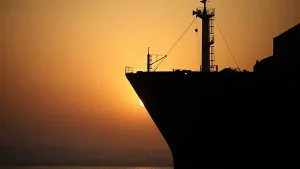
The Strait of Hormuz has now become a key bargaining chip in efforts to resolve the US-Iran conflict. Tehran seeks relief from US sanctions that are straining its economy, while Washington desires unhindered shipping access through this vital global oil supply route.
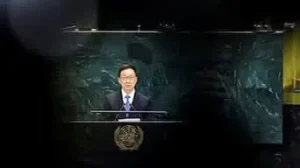
Speaking to reporters on the sidelines of the UN General Assembly session on Thursday, Iranian President Masoud Pezeshkian expressed hope that an agreement to end the conflict with Washington could be reached before the US midterm elections on November 3.
Tehran has stated that it is prepared to engage in detailed discussions regarding its nuclear program only after the United States meets its conditions.
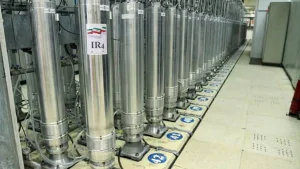
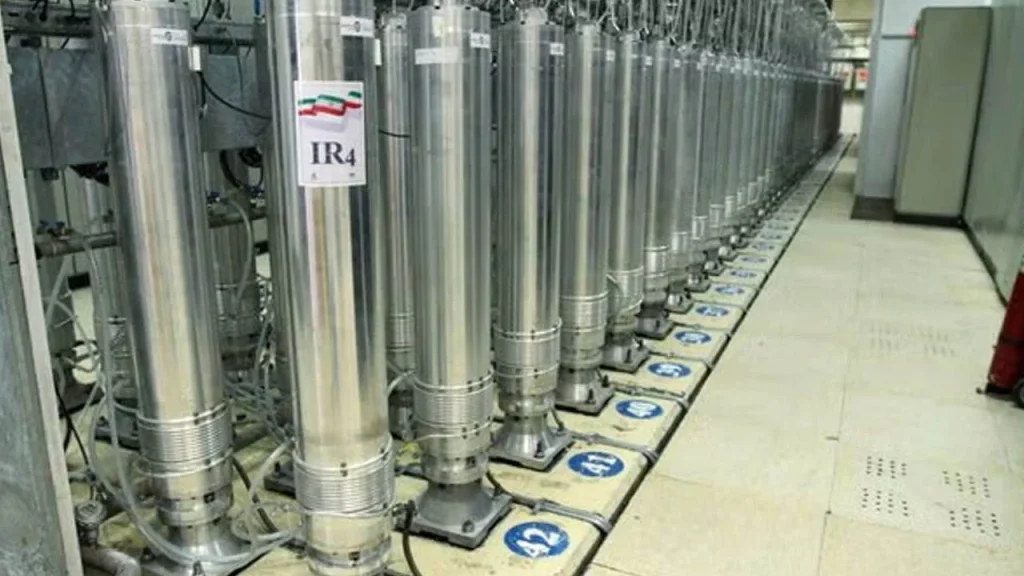
However, the Iranian official emphasized that Iran would not make concessions on issues such as the right to enrich uranium or the export of highly enriched uranium—matters that rank among the United States’ primary demands. Israel, the United States, and other Western nations have long alleged that Iran is attempting to develop nuclear weapons. They have specifically highlighted Iran’s enrichment of uranium to levels as high as 60 percent—far exceeding the requirements for civilian use and approaching the approximately 90 percent enrichment level needed for nuclear weapons. However, Iran has consistently denied plans to build nuclear weapons.
According to International Atomic Energy Agency (IAEA) estimates, as of June 2025—when Israel and the United States launched attacks on Iran’s nuclear facilities—the country possessed 440.9 kilograms of uranium enriched to 60 percent. It remains unclear how much of this stock currently remains.
Iranian officials have, however, indicated that the country might agree to lower the concentration level of its highly enriched uranium.
Source: Reuters