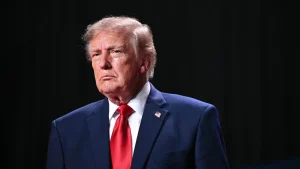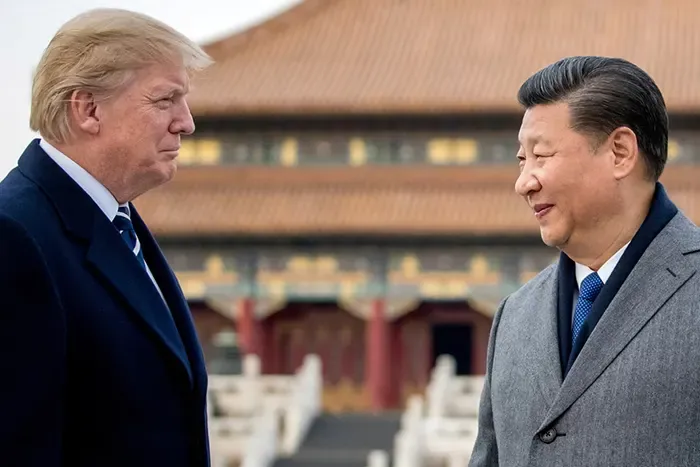
US President Donald Trump and Chinese President Xi Jinping are set to meet face-to-face in a highly anticipated summit. They will convene amidst intense technological rivalry, trade conflicts, and the complex geopolitical equations of the Middle East. As Xi begins his historic visit to the US this Wednesday, key agenda items for the two leaders include AI safety and extending the duration of the current, fragile trade truce. This marks the Chinese President’s first official state visit to US soil since 2015. The Guardian reported this news.
A New Technological Frontier: The AI Race
Control over the artificial intelligence sector now lies at the heart of the rivalry between the two superpowers. While the US attempts to curb Beijing’s progress by imposing restrictions on the export of advanced semiconductors and chips, China is advancing at an unprecedented pace in developing indigenous technologies and proprietary models. Massive data centers are springing up one after another—even alongside potato fields on the vast plains of the remote Ulanqab region in Inner Mongolia. Chinese tech giants like Huawei, ByteDance, and DeepSeek are constructing hundreds of such facilities in these areas to ensure AI integration across 90 percent of the nation’s industries and society by 2030. By prioritizing low-cost, open-source technologies, Beijing is striving to rapidly catch up with Washington.
Divergent Stances on AI Safety
While top US tech executives are calling for regulations to address the potentially catastrophic risks posed by rapidly advancing AI technology, Trump’s stance is highly aggressive. He recently stated clearly that whoever wins the race for artificial intelligence will rule the world. Consequently, he is unwilling to slow down US progress in an effort to outpace China. However, mindful of global risks, UN Secretary-General António Guterres has urged Washington and Beijing to initiate regular dialogue, akin to the practices of the Cold War era. As an initial step, the US Treasury Department has proposed establishing a protective bilateral mechanism for the rapid exchange of information in the event of any major artificial intelligence-related accident.
Read more:
New law in Bangladesh undermines human rights protection and empowers oppressors
Fragile trade truce and negotiations
The one-year temporary trade truce agreed upon by Trump and Xi during their meeting in Busan, South Korea, last year is set to expire on November 10. Under that agreement, Beijing had agreed to maintain the supply of rare earth minerals to the US and slightly reduce reciprocal tariff rates. Discussions regarding extending the truce for another year will take place during this high-level meeting. Additionally, a framework has been drafted for both sides to reduce mutual tariffs on non-essential goods worth $30 billion. However, Democrats have sharply criticized Trump’s stance on suspending the sale of $14 billion worth of US arms to Taiwan, arguing that it amounts to granting an unwarranted concession to Xi.
Iran conflict and geopolitical equations
Since the onset of Trump’s military campaign against Iran, US sanctions on Tehran have been further tightened. Washington is exerting pressure to bring China—Iran’s largest oil buyer and trading partner—under the scope of these sanctions. However, to avoid open conflict, Beijing is engaging in quiet, behind-the-scenes negotiations and has slightly reduced its oil imports to help control global inflation.
Grand event at the White House
Trump plans to personally welcome the Chinese President upon his arrival at a military base in Maryland. This will be followed by a lavish reception on the White House South Lawn, featuring a formal salute by US Marines and a military flyover. Top Silicon Valley tech executives—including Elon Musk, Jeff Bezos, Tim Cook, Sundar Pichai, Sam Altman, and Jensen Huang—have been invited to a special dinner scheduled for Thursday night. According to observers, despite the pomp and warm welcome, the likelihood of a major, definitive agreement emerging from the meeting is quite slim due to fundamental geopolitical and technological disputes.