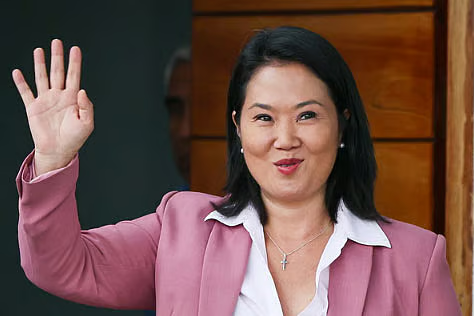
Conservative candidate Keiko Fujimori is leading by a narrow margin in the final vote count of the second round of Peru’s presidential election. With 100% of the votes counted, Fujimori secured 50.13% of the vote, while her rival, leftist Roberto Sánchez, received 49.86%.
The election proceeded to a second round (run-off) because no candidate secured 50% of the vote in the initial round held last April. Authorities spent several weeks reviewing contested ballots from the second round, which took place on June 7. The National Electoral Jury (JNE), the country’s electoral commission, is scheduled to officially announce the results on July 3.
Meanwhile, following the news that the vote count was complete, Keiko stated in a post on social media platform X (formerly Twitter) yesterday (Monday) that she is awaiting the official announcement from the National Electoral Jury. She wrote, “We are getting closer to embarking on a journey of order and hope for the people of Peru.”
Keiko is the 51-year-old daughter of the late President Alberto Fujimori, who served 16 years in prison for human rights violations.
Last week, Keiko stated that her goal is to unite a nation “divided into two camps.” She also pledged to reduce crime and eliminate the extreme inequality that currently exists.
On the other hand, Sánchez is voicing strong opposition to the election results. The leftist senator declared that he would not recognize a Keiko-led government, although he failed to provide any evidence of electoral fraud in her favor. Sánchez also announced plans to file a legal challenge in the coming days to prevent the official announcement of the results.
Sánchez has led “defend the vote” rallies in the capital, Lima, and called on his supporters to stage further protests in the days ahead. This could further prolong the country’s political crisis.
Keiko is set to assume office on July 28, becoming the country’s tenth president since 2016.
After three unsuccessful attempts to become president, victory has finally come within Keiko’s grasp. This has not only consolidated the trend of Latin America shifting towards the right but also ensured the return of one of Peru’s most influential political families of the last three decades—a family accused of engaging in divisive politics.