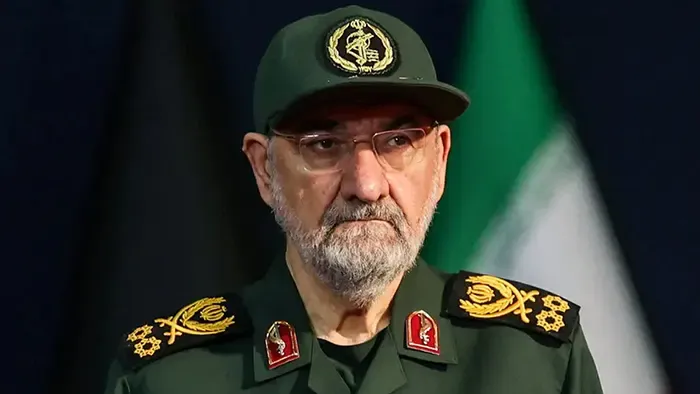
More than five months into the ongoing conflict with the United States, Iran has appointed Mohsen Rezaei as the head of its Supreme National Security Council (SNSC). Rezaei is known as a hardliner and is a close ally of the country’s Supreme Leader, Ayatollah Mojtaba Khamenei.
Rezaei succeeds Mohammad Baqer Zolqadr. The council, which coordinates Iran’s security and foreign policy, is chaired by President Masoud Pezeshkian. Meanwhile, Zolqadr has been appointed as a political advisor to Supreme Leader Khamenei.
Revolutionary Guard Commander at Age 27
Rezaei joined the Islamic Revolutionary Guard Corps (IRGC) shortly after the 1979 Islamic Revolution. He became the commander of the IRGC in 1981 at the age of just 27. He led the force for 16 consecutive years, serving as commander for the majority of the Iran-Iraq War (1980–1988).
Under his leadership, the IRGC’s ground, naval, and air capabilities expanded. Rezaei is a prominent member of the generation of IRGC commanders who rose from clandestine activities during the revolution to hold key positions within Iran’s security apparatus.
Even after stepping down as IRGC commander, he remained an active and significant figure in Iran’s political and security spheres. He has run for the presidency of the Islamic Republic on multiple occasions.
He served as the Vice President for Economic Affairs from 2021 to 2023 during the administration of hardline President Ebrahim Raisi.
Rezaei holds a PhD in Economics from the University of Tehran. Last March, after assuming the role of Supreme Leader, Mojtaba Khamenei appointed Rezaei as a military advisor. Mojtaba succeeded his father, the late Ayatollah Ali Khamenei; Ali Khamenei was killed at the onset of the US-Israel war against Iran. Rezaei has frequently made public statements throughout the ongoing conflict. He has expressed deep skepticism regarding the subject of the discussions and issued a stern warning to the United States.
In April, Rezaei stated that if the US were to launch a ground offensive in Iran, it would be “great,” because Iran could then take “thousands of hostages” and demand “one billion dollars for each hostage.”
At the time, he also remarked, “I am by no means in favor of extending the ceasefire. This is my personal opinion.”
Last June, prior to Iran signing a memorandum of understanding aimed at ending the conflict, Rezaei noted that the agreement contained ambiguities that needed clarification. On June 27, he accused the US of violating the agreement by stoking tensions in the Strait of Hormuz.
Rezaei’s close relationship with Mojtaba Khamenei also played a significant role in his new appointment. On Sunday, the country’s Supreme Leader appointed him as his representative to the SNSC via a decree.
In explaining the appointment, Khamenei cited Rezaei’s “valuable experience,” including his long military career.
Active in the anti-Shah movement
Rezaei had been active against the Pahlavi monarchy—which was overthrown in 1979—since his teenage years. He was arrested and imprisoned in 1973 by SAVAK, the Shah’s security agency.
In the 1970s, Rezaei played a role in founding and developing Mansouroun, an armed group opposed to the Pahlavi monarchy. Several members of that group who had been imprisoned later rose to the top leadership of the IRGC, alongside Rezaei.
Controversy over his role in the Iran-Iraq War
Rezaei’s role in the Iran-Iraq War remains a subject of debate in Iran. Critics have questioned his involvement in several costly military operations that resulted in heavy Iranian casualties. One such operation was Karbala-4, launched in December 1986.
That operation was conducted with the aim of breaching Iraqi defenses and advancing toward Basra. In 2018, Rezaei reignited the controversy by posting about Karbala-4. He claimed that Operation Karbala-4 was conducted to mislead the enemy prior to Operation Karbala-5.
He later clarified that Karbala-4 was initially planned as a genuine military operation; however, after the operation failed, Iran utilized it as a tactic to deceive the enemy before launching Karbala-5. Following those remarks by Rezaei, he faced criticism from war veterans, families of fallen soldiers, and senior Iranian political figures.