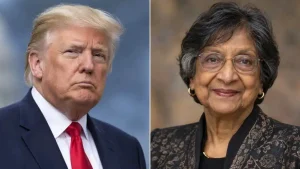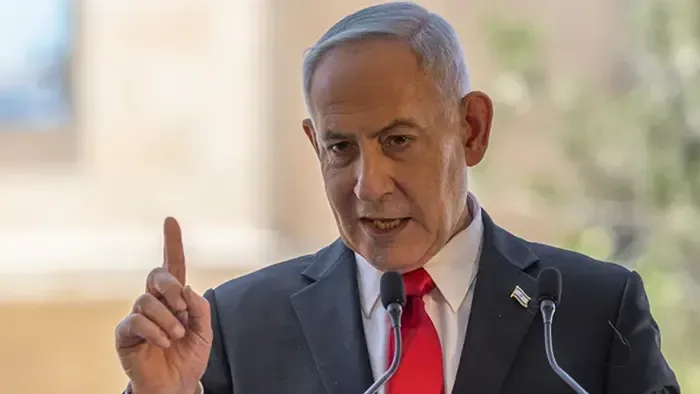
Israeli Prime Minister Benjamin Netanyahu has rejected the US-led peace plan for Gaza. His decision has sparked fresh concerns regarding the future of Gaza’s fragile peace process. At the same time, there are fears that the suffering of the more than two million Palestinians living in Gaza will be further prolonged.
The US-brokered 15-point plan stipulates that Hamas must lay down its arms. In exchange, Israeli troops would be withdrawn from Gaza in phases, and administrative control of the territory would be handed over to a technocratic Palestinian committee, supported by an international security force.
However, even after US President Donald Trump announced the Gaza peace plan last year, Israel has continued to carry out deadly attacks almost daily. Despite claims of a ceasefire agreement being in effect, Israel maintains military control over more than 70 percent of Gaza’s territory.
Yesterday (Sunday), Netanyahu effectively stalled the diplomatic process by stating that Israeli troops would not withdraw from Gaza until Hamas is “truly disarmed.”
This stance emerged just weeks before a crucial election in Israel.
Fear of Renewed Attacks in Gaza
Netanyahu’s announcement has triggered widespread anxiety in Gaza. The faint optimism regarding the peace process that had emerged recently has largely evaporated, while fears of renewed, intense attacks have mounted.
Read more:
Who is Mohsen, Iran’s new top security official?
Iyad al-Qara, a political analyst in Gaza, said, “Unfortunately, a sense of fear has set in, because this is linked to the possibility of Netanyahu resorting to killings, bombardment, and strikes on targets near the ‘Yellow Area’ once again.”
The unilaterally designated boundary known as the “Yellow Line” effectively functions as an Israeli buffer zone, further confining Palestinians to a smaller area.
Gaza’s government media office has also described the situation as dire. In their view, Netanyahu’s stance is a calculated strategy to prolong the war.
In a statement, they described these positions as a “clear and open revolt against the path of negotiations and their outcomes,” deliberately obstructing the road to peace and deepening the humanitarian catastrophe in Gaza.
The office further alleged that Netanyahu’s remarks demonstrate Israel is using the negotiation process as a “false political cover” to buy time for implementing its destructive plans while continuing the war.
Consequently, the US-brokered ceasefire is now at risk of total collapse.
Hamas pledges to remain in talks
Following Netanyahu’s remarks, Hamas announced it would remain committed to the diplomatic process under the US-led “Board of Peace” and international stability forces. However, the organization simultaneously demanded that all parties be held accountable for adhering to the agreement.
In a statement, Hamas called upon the mediators, guarantors of the agreement, and the Board of Peace to fulfill their responsibilities. It also demanded measures to prevent any violations that could derail the implementation of the deal.
Iyad Al-Qarra warned that if mediators fail to exert pressure on Israel, Palestinians could face a “worst-case scenario”—effectively the end of negotiations following Netanyahu’s rejection.
‘Forced displacement’ a red line for Egypt
Netanyahu’s stance on Gaza’s future has also sparked a strong regional reaction. Egyptian Foreign Minister Badr Abdelatty warned that the threat of forcibly displacing Gaza’s population remains real.
Speaking to Egyptian media, he stated that rendering life within Gaza impossible cannot be termed “voluntary displacement.”
He remarked that forcing the people of Gaza to leave under such circumstances constitutes a “red line” for Egypt, as well as for Arab and Islamic nations. Abdelatty made it clear that Egypt would “neither accept nor allow” the displacement of Gaza’s population. At the same time, he criticized the failure to implement the first phase of the agreement. He expressed particular concern over the failure to meet the minimum target of allowing at least 600 aid trucks into Gaza daily.
‘A Pretext to Create Chaos’
According to political analysts, the demand for Hamas’s complete disarmament prior to the withdrawal of Israeli troops is not a genuine security requirement; rather, it is a calculated tactic to stall the implementation of the agreement.
Mahjoob Zweiri, an expert on Middle East affairs, stated that Netanyahu’s primary objective is to prevent the restoration of a normal Palestinian social order in Gaza.
In his view, Netanyahu does not want Gaza to revert to the state it was in on October 6, 2023—meaning a situation where there is no Hamas rule, no Palestinian governance, no weapons, and no normal life.
According to him, this implies turning Gaza into an area “unfit for human habitation.” Zuwairi further noted that setting complete disarmament as a prerequisite is a deliberately impossible condition; this is because there is no comprehensive inventory of the weapons present in an environment like Gaza, nor is there any neutral and credible party capable of verifying the existence of such arms.
He also warned of a potential reaction from the United States, suggesting that an “expected diplomatic storm”—and a form of diplomatic conflict—could arise between Netanyahu and Donald Trump.
Israel intends to stick to its displacement plan
Nihad Abu Ghosh, an expert on Israeli affairs, believes that Tel Aviv’s sudden shift in stance regarding Gaza reveals the country’s true strategic priorities.
In his view, Israeli officials were aware of the details of the peace plan but had assumed that Hamas would reject it. He stated, “The core issue is that Israel does not want to abandon the option of displacement.” According to him, even when objections are raised regarding specific details or other matters, they essentially reflect Israel’s underlying stance of displacing the population from Gaza.
He further added that Netanyahu intends to turn his current refusal into a binding precedent for any future Israeli government.
Is political survival also part of Netanyahu’s calculations?
Analysts believe the timing of Netanyahu’s decision is crucial. With elections approaching in October, there are significant questions surrounding his political future.
Netanyahu, the leader of the Likud party, has been facing multiple corruption charges since 2019; a conviction in these cases could lead to imprisonment.
Adel Shaded, an expert on Israeli affairs, suggests that Netanyahu had been waiting for an opportunity to say “no” to US President Trump on such a significant scale. Through this move, he aims to maintain control over his election campaign, political discourse, and public opinion.
In his view, Netanyahu wants to demonstrate to the Israeli public that he is the only leader capable of taking a firm stand against the US administration.
Another expert, Suleiman Bisharat, believes Netanyahu is also leveraging the Gaza issue to exert pressure on the US regarding broader regional matters.
As he puts it, it is evident that Netanyahu sought to alter the dynamics of all issues—starting with Gaza—because he views the Gaza issue as the foundation for all other matters.
Analysts suggest that securing his political future by projecting himself as a “hero” to right-wing Israelis could also be a key objective behind Netanyahu’s stance.