A new security equation in the Middle East has created the potential for further strengthening the strategic partnership between India and Israel. A recent mutual defense agreement involving Saudi Arabia, Pakistan and Turkey—known as the “Mecca Pact”—is compelling Delhi and Jerusalem to re-evaluate their strategic calculations.
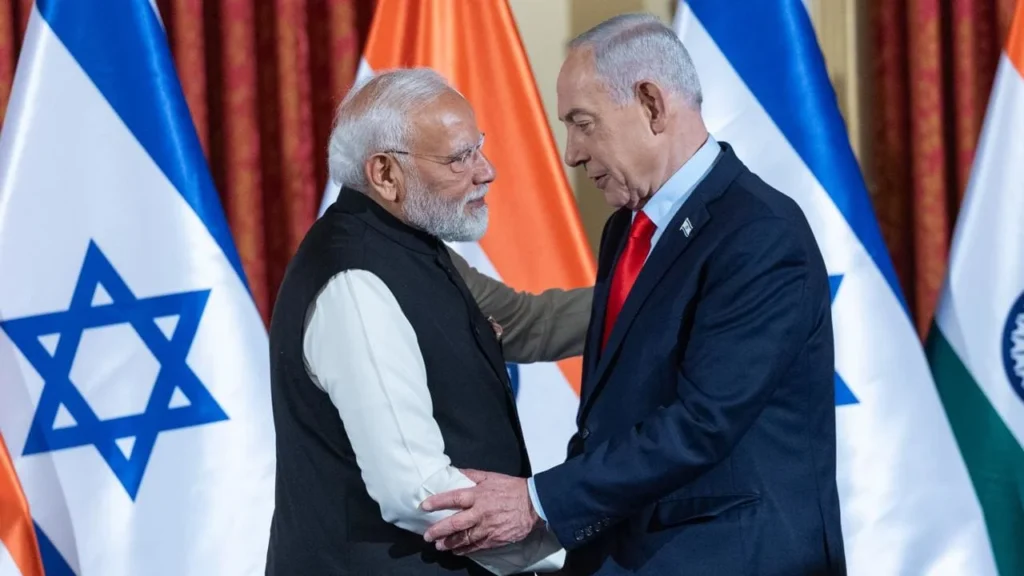
Against this backdrop, the timing of the recent telephone conversation between Indian Prime Minister Narendra Modi and Israeli Prime Minister Benjamin Netanyahu has gained significant importance. Last Thursday, Modi announced on the social media platform X that he had exchanged views with Netanyahu regarding the current situation in West Asia. He also noted that the two leaders reviewed progress on various aspects of the India-Israel “special strategic partnership.” Modi shared the message in both English and Hebrew, and Netanyahu reposted it.
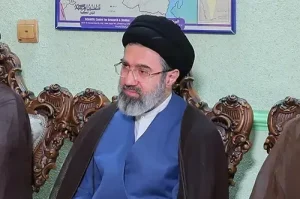
The very next day, Saudi Arabia, Pakistan, and Turkey signed a comprehensive mutual defense agreement in Mecca. Pakistan’s Foreign Ministry confirmed that the pact includes a clause modeled after Article 5 of NATO; this means an attack on any one member of the alliance would be treated as an attack on all members.
Consequently, the true context behind the Modi-Netanyahu call has become clearer. Analysts believe that the potential for a major shift in West Asia’s security architecture meant the implications of this new alliance likely featured prominently in the leaders’ discussions.
A New Equation Outside the US Security Framework
For a long time, the United States has advocated for a regional security framework that would bring Israel, Saudi Arabia, and other relatively pragmatic Arab nations under a unified security umbrella. However, the equation that emerged in Mecca does not fully align with that plan.
Amidst wavering confidence in the US-led security system and ongoing tensions with Iran and its allies, Saudi Arabia is seeking alternative security partners. Analysts believe that this calculation has driven Riyadh to move towards closer defense ties with Turkey and Pakistan.
This development is unsettling for Israel, as the new trilateral agreement complicates the strategic goal of fostering closer ties between Saudi Arabia and Israel.
India Concerned Over Saudi-Pakistan-Turkey Alliance
The Mecca agreement is a source of concern not only for Israel but also for India. Pakistan is a long-standing rival of India, and Turkey is a close ally of Islamabad. Consequently, the combination of Saudi Arabia’s economic strength, Turkey’s defense industry, and Pakistan’s nuclear military capabilities could create a new security reality for New Delhi.
Shortly after the agreement was signed, reports surfaced in Turkish and Pakistani media suggesting that India had taken urgent steps to pursue a mutual defense pact with Israel to counter the emerging Saudi-Pakistan-Turkey axis.
However, the fact-check unit of India’s Ministry of External Affairs dismissed reports of such a formal new agreement as “fake news.” At the same time, Ministry spokesperson Randhir Jaiswal clarified that India is “closely monitoring” the new defense understanding between Turkey, Pakistan, and Saudi Arabia.
According to analysts, this alone is sufficient to gauge the extent of India’s concern. Delhi’s anxiety is further heightened by Turkey’s long-standing military cooperation with Pakistan and its history of supplying Islamabad with advanced drones and other military hardware.
Potential Economic Impact
The impact of the Mecca agreement will not be limited to the military and security spheres; it could also have significant economic implications. Saudi Arabia is a key component of the India-Middle East-Europe Economic Corridor (IMEC), an initiative led by India. This multi-billion-dollar project aims to connect India, the Gulf region, Israel’s Haifa port, and Europe through an integrated trade and transport network.
Turkey, on the other hand, has not been included in the main IMEC route; instead, Ankara has long advocated for an alternative regional transport corridor. Consequently, if strategic ties between Saudi Arabia and Turkey deepen, it could create an opportunity for Ankara to exert influence over India-Israel-backed projects like IMEC. New Complications in Saudi-Israeli Relations
The Mecca Agreement could also complicate the path toward the potential normalization of relations between Saudi Arabia and Israel. Both Turkey and Pakistan are known for their hardline stances against Israel. The closer Saudi Arabia grows to these nations, the greater the political and strategic pressure Riyadh might face regarding the normalization of ties with Israel.
Although neither Turkey nor Pakistan holds a formal veto over Saudi foreign policy, a new security framework involving them could raise the political cost of normalizing Saudi-Israeli relations. At the same time, Saudi Arabia’s stance—refusing to normalize relations with Israel without tangible progress toward the establishment of a Palestinian state—could also harden further.
Israel’s Ties with Greece and Cyprus May Also Strengthen
This new equation could also lead to closer ties between Israel, Greece, and Cyprus. Following the deterioration of relations with Turkey, Jerusalem had already expanded security and energy cooperation with Greece and Cyprus. Athens and Nicosia are also concerned about Turkey’s growing influence in the Eastern Mediterranean. Consequently, against the backdrop of the Saudi-Turkey-Pakistan alliance, there is a strong possibility of further strengthening strategic cooperation among Greece, Cyprus, and Israel.
Delhi and Jerusalem May Draw Closer
Overall, the Mecca Agreement has created a shared strategic concern for both India and Israel—specifically regarding the rising military and regional influence of Pakistan and Turkey. Given this reality, Delhi and Tel Aviv may move to further bolster their security, economic, and regional partnerships. Relations between the two nations are likely to deepen, particularly in areas such as the IMEC (India-Middle East-Europe Economic Corridor), defense technology, intelligence cooperation, and regional security.
Thus, the telephone conversation between Modi and Netanyahu last Thursday no longer appears to be merely a routine diplomatic exchange. In light of the Mecca Agreement, analysts view it as an early indication of a potential counter-strategic alignment between India and Israel amidst the shifting security landscape of the Middle East.
It reflects an age-old geopolitical reality: when one side forms a new alliance in the Middle East, the other seeks counter-partners. And within this new equation, the prospect of closer India-Israel ties is currently the subject of greatest discussion.