






The US Federal Aviation Administration (FAA) has lifted a ban that had grounded thousands of flights—specifically those awaiting departure from airports—across the United States. On Friday, the FAA had ordered a temporary halt to all flight departures nationwide due to a malfunction in the telecommunications system. The ban was lifted on Friday evening, after remaining in place for nearly five hours. This marked the longest “ground stop” in the United States in the last 25 years. It was only the second time since the September 11, 2001, terrorist attacks that all flights across the country had been grounded.
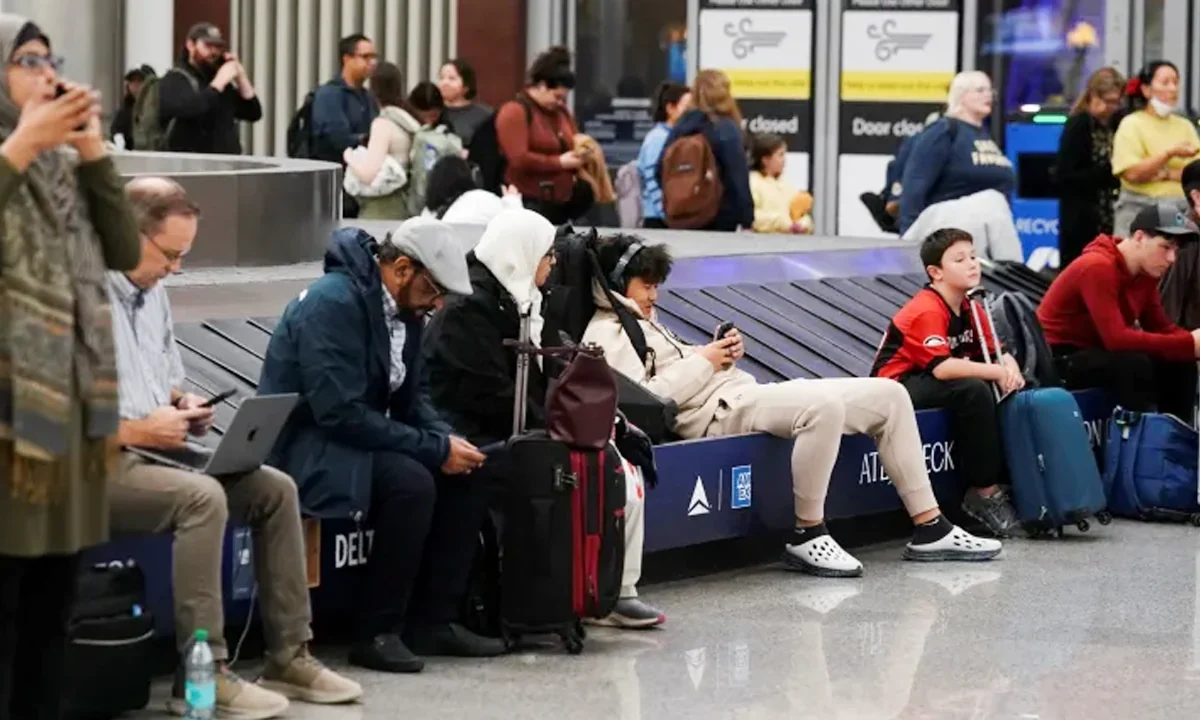
US officials have stated that there is no evidence of a cyberattack, nor was there any threat to public safety. However, the suspension of flight operations left thousands of passengers stranded at airports, with a large number of flights either cancelled or delayed. Officials have cautioned that even though the technical issue has been resolved, it may take several more days for air travel to return completely to normal.
US Representative Markwayne Mullin stated, “Everyone is safe,” adding that this was “not another 9/11.” There is no suspicion of any cyberattack in connection with this incident.
Based on a report by Al Jazeera, here are the details regarding how the incident unfolded, why flights across the country had to be grounded, and when the situation is expected to return to normal.
What Happened That Day
On Friday, at 3:54 PM local time in the United States (1:54 AM Saturday, Bangladesh Standard Time), the FAA issued a nationwide ground stop. This decision was made following a malfunction in the telecommunications system used for air traffic control. Air Route Traffic Control Centers manage the flight paths of aircraft traveling between different regions of the country. As communication with these centers was disrupted, flight departures were halted to manage the situation. The FAA later announced that the nationwide ground stop had been lifted. U.S. Secretary of Transportation Sean Duffy stated that the airspace was reopened at 8:15 p.m. local time (6:15 a.m. Saturday, Bangladesh time). Prior to this, air travel had been disrupted for more than four hours.
However, the reopening of the airspace did not mean that all flights resumed immediately. Sean Duffy noted that it would take time for the situation to return to normal, and he advised passengers to contact their respective airlines for the latest updates on their flights.
He added that the resumption of flights would depend on the availability of pilots and cabin crew. Authorities were working to get as many flights as possible back in the air on Friday night.
According to Cirium, an aviation analytics firm, approximately 11,000 flights were scheduled to depart from U.S. airports after 4:00 p.m. local time on Friday, carrying more than 1.5 million passengers.
Data from Cirium indicates that by 7:05 p.m. on Friday, at least 827 flights had to be diverted; 670 of these returned to their departure airports, while 157 were forced to land at alternative airports.
Nevertheless, aircraft already in the air during the ground stop were permitted to continue to their destinations. Regarding international flights, each case was evaluated individually, and some were granted permission to take off despite the restrictions.
How many flights were affected?
According to FlightRadar24, more than 4,700 flights were canceled in the United States on Friday, and 10,000 were delayed. Additionally, about 700 flights scheduled for Saturday had already been canceled.
Aviation analysts warn that it could take several days for flight schedules to fully return to normal.
Reporting from Los Angeles International Airport, Al Jazeera journalist John Hendren spoke with passengers who had been inconvenienced by the situation. Among them was Nicholas Erdodi, a traveler arriving in the U.S. from New Zealand, whose final destination was Chicago. He was scheduled to attend a conference there.
Erdodi stated that after 16 to 18 hours of travel, he had to wait an additional six hours at the airport. At one point, passengers were asked to disembark from the plane.
He told Al Jazeera, “There is no one here to ask about what should be done.”
He added, “The lack of information regarding what is happening is what frustrates me the most. On top of that, there is the hassle of finding a hotel for the night and the additional expenses involved.”
Erdodi mentioned that a new departure time has been set for his flight, but there remains uncertainty as to whether it will actually take off.
He said, “I work in the tech sector; I understand the kinds of issues that can arise. But someone needs to keep the passengers informed.”
He further remarked, “It would be fine if they simply said they didn’t know what was happening—but we should at least be kept informed about the situation.”
What is a nationwide “ground stop”?
A “ground stop” is a temporary directive that requires aircraft waiting to depart from an airport to remain on the ground for a specified period. These planes cannot take off until they receive authorization from the authorities.
However, aircraft that were already in the air before the directive was issued are generally permitted to continue their journeys to their destinations. No new aircraft are allowed to enter the airspace.
The primary purpose of this measure is to prevent an increase in the number of aircraft in the sky while addressing safety-related issues. This provides air traffic control authorities with the time needed to manage the existing situation.
Why flight operations had to be halted
The FAA stated that the situation arose due to a malfunction in the telecommunications network of the air traffic control system. According to Sean Duffy, an overload of data caused several switches and routers to fail, which disrupted the communication system.
However, he noted that the entire communication network or radar capability did not shut down completely.
Tony Stanton, a former senior official at Australia’s Civil Aviation Safety Authority, told Al Jazeera that a U.S. government report had highlighted vulnerabilities in the country’s aviation infrastructure well before this recent disruption.
A report released last September by the Government Accountability Office (GAO)—a federal agency—noted that the U.S. air traffic control system still relies on copper wiring dating back to the 1960s. It warned that delays in modernizing this infrastructure could lead to further disruptions in the future.
The report further stated that while the FAA is working to modernize the system, the necessary planning and schedules are not being strictly followed in the rush to implement changes. Consequently, multiple switches are often replaced simultaneously, placing excessive strain on the system.
On Friday, officials acknowledged that the integration of new technology into the air traffic control system placed undue stress on the aging infrastructure, resulting in intermittent disruptions to communication and radar systems.
Where the problems were most severe
Todd Curtis, an aviation safety expert and CEO of AirSafe.com, told Al Jazeera that the issues primarily occurred within the U.S. Air Route Traffic Control Centers.
He explained that there are 21 such control centers in the United States—one located in Alaska, and the remaining 20 situated across the 48 contiguous states. According to Curtis, these centers manage the movement of aircraft traveling between different regions of the country. In this process, control of an aircraft must be handed over from one controller to another multiple times.
Before Sean Duffy provided further details, Ron Bartsch, a professor of international aviation law at the University of the South Pacific, raised questions regarding the effectiveness of the backup systems.
He told Al Jazeera, “The entire aviation infrastructure relies on multiple redundant systems. The fact that the backup system did not kick in immediately raises many questions—questions that remain unanswered.”
However, Secretary of the Interior Markwayne Mullin stated that the nationwide grounding of flights was not linked to any cyberattack, and that the public was never in any danger.
Meanwhile, Secretary of Transportation Sean Duffy acknowledged that thousands of passengers had been left stranded. He called for a $50 billion investment to modernize the nation’s air traffic control system to prevent such disruptions in the future.
When will flight operations return to normal?
Markwayne Mullin noted that approximately 3,000 aircraft landed safely following the “ground stop” order.
However, Secretary of Transportation Sean Duffy indicated that it would take some time for flight operations to return to full capacity. He expressed hope that the situation would normalize before the busy Thanksgiving travel season, which begins in less than two weeks.
In the United States, air travel demand surges significantly during the Thanksgiving holiday period, making it crucial for authorities to restore normal operations before then.
Aviation safety expert Todd Curtis warned that even once the technical issues are fully resolved, the inconvenience faced by passengers will not end immediately.
He explained, “Even after the problem is completely fixed, it will take more than a day to reschedule flights and get everything back to normal.”
Curtis further explained that many airlines operate through interconnected networks, often requiring passengers to change planes at major hub airports to reach their final destinations. In this situation, airlines will need to devise new plans to ensure passengers reach their intended destinations—a process that could lead to further inconvenience.
Therefore, passengers are advised to contact their respective airlines directly to check the latest status of their flights, as cancellations and delays may persist even after the ground stop is lifted.
Could such a disruption happen again?
Experts fear that the aging air traffic control system in the United States remains prone to significant technical flaws, meaning similar disruptions could occur in the future.
Transportation Secretary Sean Duffy has acknowledged the vulnerabilities in the nation’s infrastructure. “Our switches and routers are outdated,” he stated. “We are still using copper wiring from the 1980s. The entire system is old. It becomes overwhelmed by the volume of data, causing the system to fail and the problem to spread throughout.”
Aviation expert Tony Stanton has questioned why officials failed to anticipate such a crisis, despite prior warnings about these risks.
“I find it truly astonishing,” Stanton remarked, “because a report released just last September highlighted the very risks we are now facing.”
According to Stanton, the Federal Aviation Administration (FAA) needs to develop more robust contingency plans to prevent similar technical failures from causing major disruptions to air travel in the future.
He stated, ‘It is possible to anticipate such incidents in advance, and one can remain vigilant about the risks. There should be plans in place to ensure that, should any problem arise, it does not lead to a major catastrophe for the entire system. Yet, in this instance, we have witnessed the exact opposite.’