






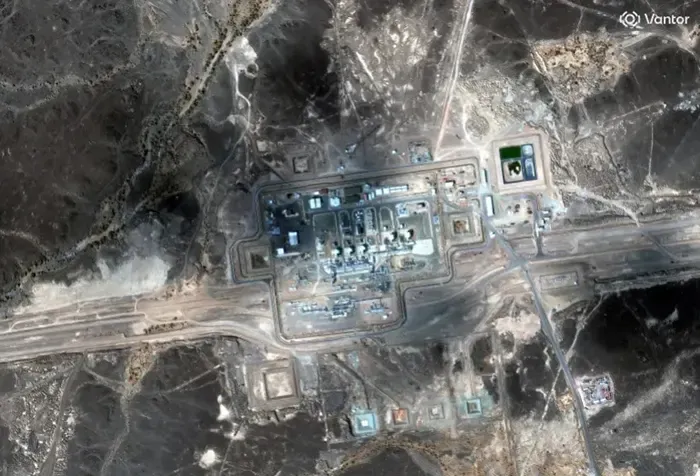
An investigation suggests that Houthi rebels in Yemen may be receiving intelligence via Russian satellites. It is believed that this information is being used to facilitate attacks on Saudi Arabia’s military and energy infrastructure, further destabilizing the global energy market. A conflict has been ongoing since July between the internationally recognized, Saudi-backed Yemeni government and the Houthi rebels. The situation intensified in September when the Houthis gained full control over Yemen’s Red Sea coastline. Last month, the Houthis carried out a precise strike on Saudi Arabia’s critical ‘East-West Pipeline.’ An investigation by the Geneva-based private firm Aurora Geosignal Intelligence indicates that a Russian satellite had been monitoring the area for days, gathering data on the pipeline.
Nawaf Obaid, founder of Aurora Geosignal Intelligence, told Al Jazeera that their monitoring of Russian military satellite movements revealed correlations with military activities across Saudi Arabia, Jordan, Bahrain, Kuwait, Qatar, the United Arab Emirates, and Yemen. The satellites identified include Russia’s Bars-M military mapping satellite, the Persona optical reconnaissance satellite, the Lotos-S1 electronic intelligence satellite, the Pion-NKS maritime reconnaissance system, and the Kondor-FKA radar-imaging satellite. They also examined the EKS/Tundra infrared early-warning satellite constellation. Obaid further confirmed that, according to their investigation, Russian military satellites are assisting the Houthis in their operations in Yemen, with this information reaching the Houthis via Iranian intelligence networks.
However, Brussels-based military analyst Elijah Magnier suggests that the findings by Aurora may not present the full picture. He notes that it remains unclear whether Russia intentionally provided the data to Iran, or if Iran acquired the Russian satellite imagery through commercial channels—though such Russian military satellite imagery is generally not available for commercial purchase. He adds that the information could potentially have reached Iran through a third party, though no evidence of this has surfaced yet. Obaid also agrees that further scrutiny is required to substantiate the link between Russian-supported intelligence infrastructure and specific attacks carried out by the Houthis.
Last week, Saudi Arabia’s Deputy Foreign Minister, Rayed Krimly, informed journalists that the Houthis are receiving intelligence from Russia and China. He stated that they are in regular dialogue with both China and Russia regarding these matters and intend to continue these discussions. Meanwhile, the Houthis have claimed responsibility for attacks on several locations within Saudi Arabia. Houthi spokesperson Yahya Saree stated that they targeted the Ras Tanura oil refinery, Aramco facilities in Abqaiq, King Khalid International Airport in Riyadh, and King Fahd International Airport in Dammam. These attacks resulted in numerous casualties in Saudi Arabia and forced authorities to temporarily close the airport in Riyadh, which led to the cancellation of a major investment conference scheduled in the country. Although the airport has since reopened, the Houthis have declared it a “military target” and issued a warning to travelers.