



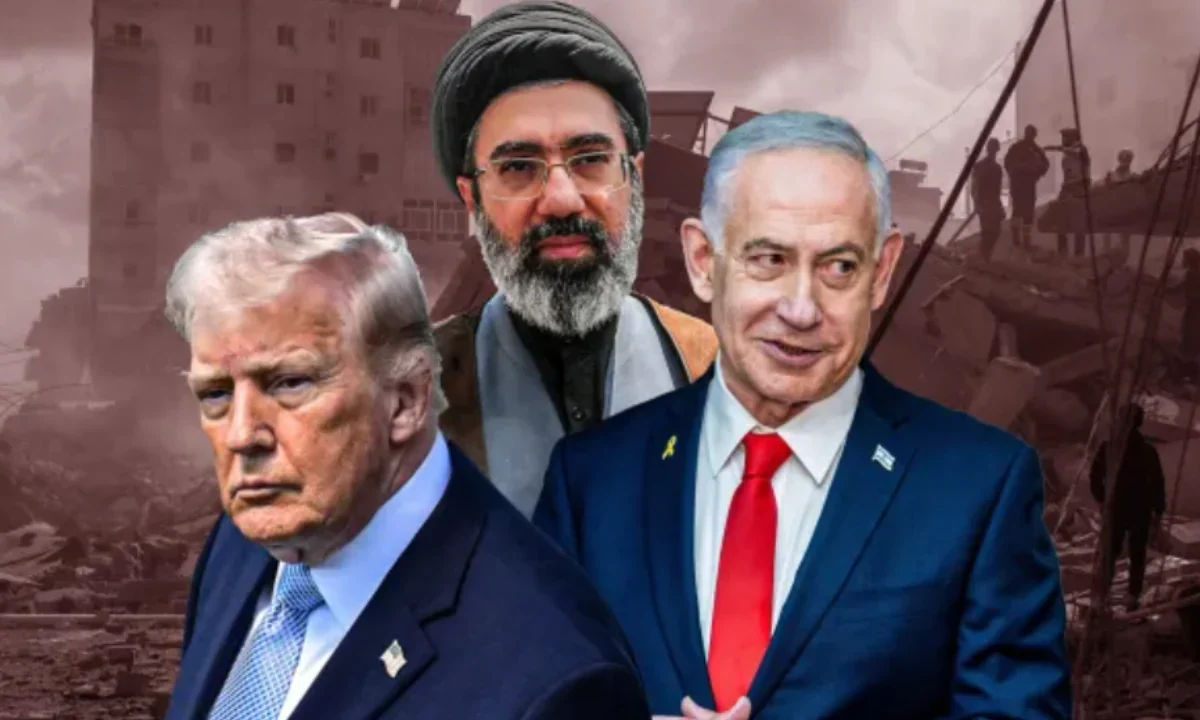
Iran’s Supreme Leader, Ayatollah Mojtaba Khamenei, has warned that any fresh attacks by the United States or Israel will be met with an immediate and powerful response, unconstrained by any geographical boundaries. Recent statements by U.S. President Donald Trump and Israeli Prime Minister Benjamin Netanyahu have heightened fears of a major new conflict in the Middle East. There is particular concern that a new offensive against Iran could be launched following the U.S. midterm elections on November 3.
Mojtaba Khamenei issued this warning during a meeting with top Iranian military officials on Saturday. A statement released following his remarks noted, “The response to any threat—of any scale or nature—must be immediate, effective, and not limited by geography.”
Present at the meeting were the Chief of the Armed Forces, Major General Ali Abdollahi; Defense Minister Amir Hatami; and the commander of the Islamic Revolutionary Guard Corps (IRGC), Ahmad Vahidi.
This marks the first public meeting between Mojtaba Khamenei and senior military leadership since he assumed the role of Supreme Leader. He had not been seen in public since taking office last March, following the death of his father—the then-Supreme Leader, Ayatollah Ali Khamenei—in a U.S.-Israeli strike on February 28.
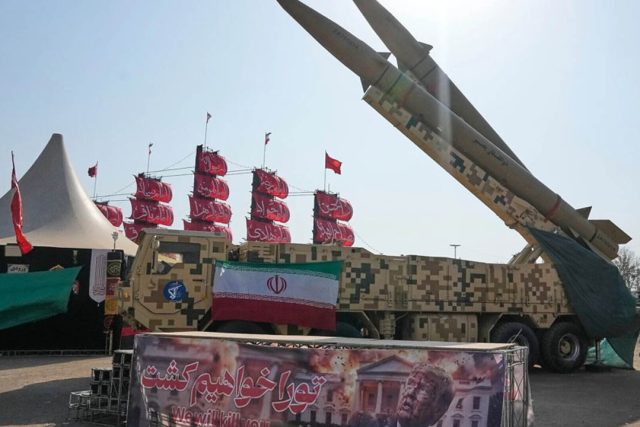
During the meeting, Mojtaba Khamenei instructed military officials to update the list of targets in Iran, specifying that it should include “all visible and invisible assets of the American-Zionist enemy.” According to the Pakistani news outlet *Dawn*, the military has also been ordered to maintain a state of maximum readiness along the Persian Gulf coast, the Strait of Hormuz, the Gulf of Oman, and Iran’s border regions.
Trump Hints at New Attacks
U.S. President Donald Trump has repeatedly alluded to the possibility of launching further military operations against Iran. His remarks suggest that a decision on this matter could be taken following the U.S. midterm elections on November 3. Speaking to reporters in Florida on Saturday, Trump claimed that the United States has destroyed a significant portion of Iran’s military capabilities. He further asserted that the country’s nuclear program has also been effectively dismantled, though he noted that one or two targets remain to be addressed.
“We have destroyed their nuclear capabilities,” Trump said. “There are still one or two facilities left, but we could take care of those within 10 minutes.”
He also referred to a suspected underground Iranian nuclear facility known as “Pickaxe Mountain,” stating, “You could think of Pickaxe Mountain—that’s another one that would need to be dealt with. We could handle these things very quickly.”
The Iranian government, however, has consistently denied that any nuclear activities are being conducted at that facility.
Previously, while not explicitly stating whether he would initiate a war against Iran, Trump had hinted that he was considering the option of “wiping out” the country. On Saturday, he remarked that negotiations with Iran are progressing well, though he added that the country cannot be fully trusted.
Netanyahu calls for the overthrow of the Iranian government
Israeli Prime Minister Benjamin Netanyahu has also hinted at potential new military action against Iran. In a recent statement, he suggested that a “historic, once-in-a-lifetime opportunity” has emerged to topple the Iranian government.
Speaking at an event for Israeli military officials on October 22, Netanyahu argued that there is no way to eliminate the threat posed by Iran other than by definitively overthrowing its current regime. He alleged that Iran’s Supreme Leader, Mojtaba Khamenei—following in his father’s footsteps—is once again attempting to develop nuclear weapons.
Earlier, on October 14, Netanyahu stated that he was not in favor of launching a preemptive strike on Iran before Israel’s elections. However, he warned that any attack on Israel by Iran or its proxies would be met with a severe response. Although elections were held in Israel last Tuesday, the political coalition led by Netanyahu failed to secure a majority in parliament. Consequently, the formation of a new government remains uncertain.
The United States has warned its allies in the Middle East of the possibility of new attacks.
Washington has alerted several countries and regional allies in the Middle East regarding the potential for new U.S.-led attacks. These nations have been advised not only to prepare for such strikes but also to take measures to counter any potential retaliatory action from Iran.
Citing two diplomats, reports indicate that U.S. officials and defense representatives have informed several Middle Eastern nations that new military operations could commence following the U.S. midterm elections next week. However, President Trump has yet to reach a final decision regarding these potential new attacks.
According to the diplomats, allies have been informed that any new operation could last for several days. There is a risk that the conflict could be further prolonged if Iran and its regional proxies choose to launch retaliatory strikes.
Iran’s response could potentially target energy facilities and other critical infrastructure. For this reason, the United States has advised regional nations to take precautionary measures to strengthen the security of such installations.
Meanwhile, towards the end of last month, the Pentagon deployed the aircraft carrier USS Theodore Roosevelt—carrying approximately 9,000 personnel—along with several amphibious assault ships transporting Marines, from San Diego to the Persian Gulf region. This move could further expand the U.S. military presence in the Middle East.
However, it remains unclear how quickly U.S. forces might launch new operations following the election. Both the White House and U.S. officials have declined to comment on the matter.
Rubio: Trump Has Not Yet Decided on Military Action
U.S. Secretary of State Marco Rubio stated that Donald Trump has not yet reached a final decision regarding new attacks on Iran. He made these remarks to journalists on the sidelines of the G20 foreign ministers’ meeting in Atlanta on Saturday.
“We are capable of achieving our military objectives if necessary,” Rubio said. “I have no announcements to share with you today, but we are certainly not taking this matter lightly.”
At the same time, he emphasized keeping the door open for a diplomatic resolution, adding, “If a diplomatic solution is possible, we would be interested in pursuing it.”
Rubio’s comments reflect a dual approach: preparing for potential military action while simultaneously keeping the possibility of negotiations open.
Talks Mediated by Qatar; Tehran Rejects Direct Meetings
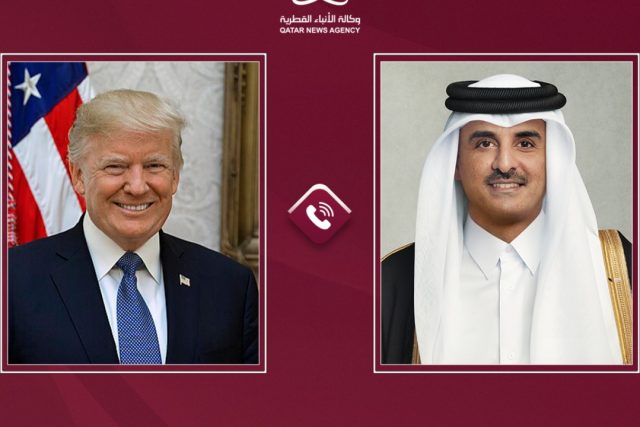
Diplomatic efforts are also underway to prevent the outbreak of a new conflict. Attempts are being made to facilitate indirect talks between Iran and the United States through Qatari mediation. On Friday, Iranian officials held discussions lasting over 12 hours with Qatari representatives in Tehran. Subsequently, on Saturday, Iranian negotiators met with the Qatari mediators in Doha.
A source familiar with the process indicated that Washington is also in communication regarding these discussions.
Meanwhile, U.S. Vice President JD Vance has sent a letter to Mohsen Rezaei, an Iranian official involved in national security matters. According to various media reports, the letter—sent at the direction of Trump—aimed to restart negotiations and pave the way to avoid further U.S. attacks. Iranian Foreign Minister Abbas Araghchi stated that the letter has been reviewed at the highest levels in Tehran. However, there are currently no plans for direct meetings with U.S. officials.
In an interview, Araghchi remarked, “We view the American side’s initiative to begin a dialogue and pursue a broader agreement as a positive step.” He cautioned, however, that if the U.S. intends to use this letter to sow division within Iran, it would be yet another error, compounding their past mistakes.
He added, “At this moment, we see no need for a meeting with the Americans. Our conditions are clear, and intermediaries are continuing discussions regarding them.”
Qatar and Pakistan are currently acting as mediators between the two nations, though no lasting agreement has been reached thus far.
**Conflicting Conditions Regarding the Strait of Hormuz**
Control over the Strait of Hormuz and the regulation of maritime traffic remain major obstacles to negotiations between Iran and the United States. Approximately one-fifth of the world’s oil supply passes through this vital waterway. Since the onset of the conflict, Iran has imposed restrictions on vessel movement in the area, which has led to an increase in global energy prices.
Qatari mediators previously proposed a seven-day plan aimed at building trust, but Tehran deemed it insufficient.
Meanwhile, since September, Iran has put forward its own seven-day proposal. This plan stipulates that, prior to normalizing maritime traffic through the Strait of Hormuz, the U.S. must lift its blockade of Iranian ports, release frozen assets, and recognize a maritime management system supported by Iran. U.S. President Trump has already rejected this proposal.
Araghchi noted that discussions have been held with Qatar regarding shortening the implementation timeline for Iran’s proposal—concerning the opening of the Strait of Hormuz—from five days to two. Iran’s other conditions include the lifting of sanctions imposed following the Islamabad agreement, a reduction in the U.S. military presence in the Middle East, the restoration of waivers for Iranian oil exports, and the release of Iranian funds currently held in various countries, including Qatar. Tehran has also demanded recognition of the shipping lanes in the Strait of Hormuz, which it discusses in the context of its relations with Oman. In a message posted on social media, Araghchi stated that there are no longer any “red lines” for Iran, and that the country will not surrender.
Fears of a widening conflict; regional nations express concern
On Saturday, Iranian military spokesperson Mohammad Akraminia warned that any new outbreak of conflict would lead to a significant expansion of the war. On social media, he remarked, “The flames of war will undoubtedly spread across a much wider geographical area.”
Iranian Foreign Minister Araghchi also issued a warning, stating that if anyone dares to harm the Iranian people, the nation’s powerful armed forces will deliver an “earthquake-like” blow.
Meanwhile, at the Manama Dialogue—an international security conference held in Bahrain—Egyptian Foreign Minister Badr Abdelatty expressed deep concern over the prospect of a new conflict. He stated, “A second round of war would be far more dangerous and destructive, and it would offer no solution. We must learn from the past.”
At the same conference, Saudi Deputy Foreign Minister Waleed El-Khereiji noted that efforts are underway at the regional level to curb military tensions and bring an end to the crisis.
New tensions surrounding shipping in the Strait of Hormuz
Alongside the threat of war, maritime tensions persist in the Strait of Hormuz. Iranian state television reported that two fishermen from Qeshm Island—who had gone missing after their fishing vessel was damaged in an attack by the “American enemy” on Saturday morning—have been found. Earlier, a provincial official had stated that two other fishermen were injured in the same incident.
Meanwhile, the Iranian Navy reported that an oil tanker caught fire after striking a naval mine in a restricted area east of the Strait of Hormuz. Prior to this, on Friday, Iran’s Revolutionary Guard Corps had announced that the movement of three oil tankers had been halted due to various unspecified incidents or mine strikes.
Previously, Iran had also warned that it might consider cutting the communication cables running along the seabed of the Strait of Hormuz.
The impact of the war is also being felt in the U.S. elections.
The economic consequences of a war with Iran have created pressure within U.S. domestic politics. Restrictions on shipping through the Strait of Hormuz have driven up global fuel prices, affecting nearly every sector of the economy in the United States and other nations.
The U.S. midterm congressional elections are scheduled for November 3. According to the Associated Press, public discontent over rising fuel costs and the expenses of the war has placed pressure on Republican candidates. According to the latest Pentagon estimates, the cost of a war with Iran for U.S. taxpayers has reached $47.1 billion.
Furthermore, if the Democrats perform well in the elections, it could limit President Trump’s ability to implement his policy decisions through Congress. Consequently, the U.S. elections have become a significant factor in determining the future of the conflict.
Fariba, a housewife in Tehran, noted that ordinary Iranians have been living in a state of prolonged uncertainty since the U.S. and Israeli attacks in February. However, Ebrahim—a sales worker in his forties, also a resident of the capital—remarked, “We do not fear another war.” ‘We have been in a state of war for 48 years.’
Taken together—the potential for military action surrounding the U.S. midterm elections, the uncertainty regarding the formation of a government in Israel, and the dispute over control of the Strait of Hormuz—a risk of renewed conflict has emerged in the Middle East. Although diplomatic discussions are underway, the gap between the positions of the two sides remains clear.