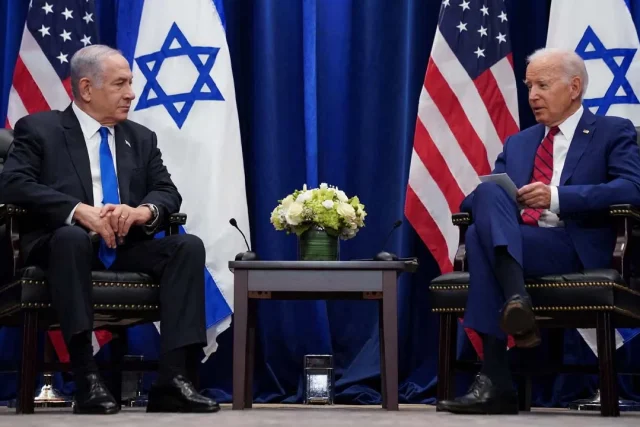







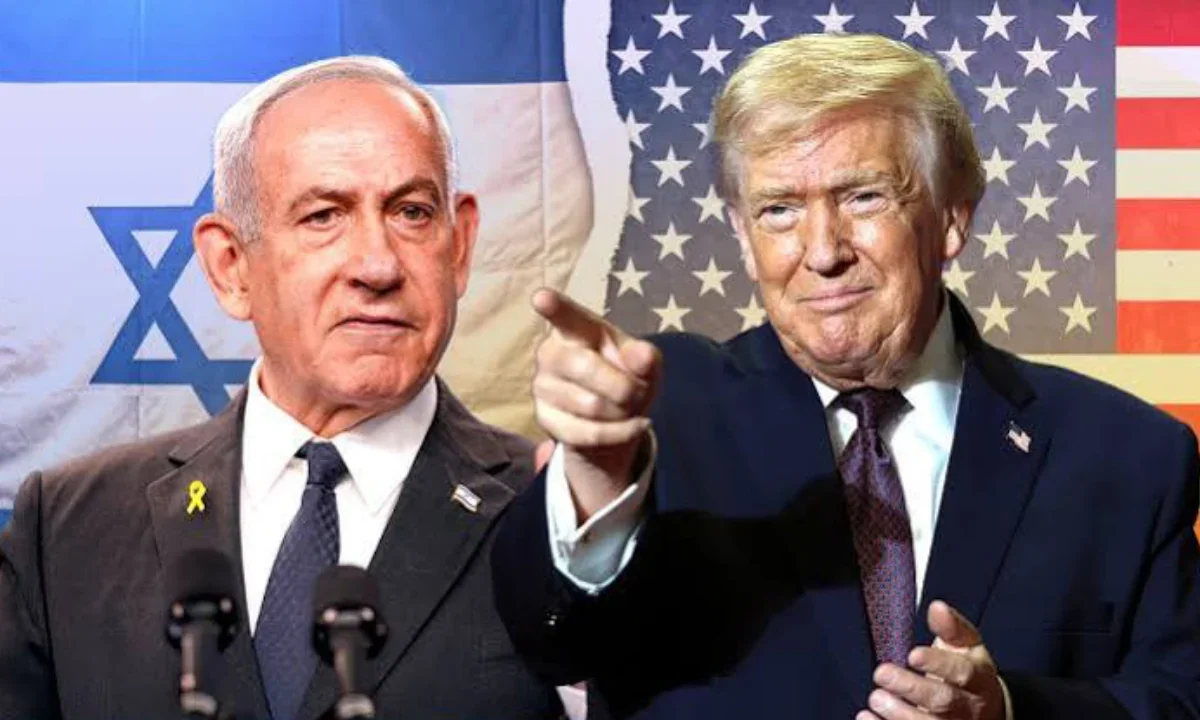
The long-standing, close relationship between the United States and Israel is currently facing significant strain. The bipartisan support for Israel that has characterized U.S. politics for decades is gradually weakening. Factors such as Israel’s military operations in Gaza, the potential for U.S. involvement in a conflict with Iran, and the political stance of Israeli Prime Minister Benjamin Netanyahu have all contributed to growing discontent regarding Israel within American public opinion and politics. Furthermore, the announcement by U.S. President Donald Trump to halt annual military aid to Israel serves as a clear indicator of the widening rift between the two nations.
A Major Shift in Public Opinion
Evidence of a rapid shift in American attitudes toward Israel can be found in a 2026 survey conducted by the Pew Research Center. The survey, released on April 7, reveals that 60 percent of American adults hold a negative view of Israel—an increase from 53 percent in 2025 and 42 percent in 2022.
The same survey also highlights a growing lack of confidence in Israeli Prime Minister Benjamin Netanyahu. Fifty-nine percent of Americans stated that they have little to no confidence in Netanyahu’s ability to make sound decisions regarding international affairs—up from 52 percent in 2025.
Anti-Israel sentiment is particularly pronounced among the younger generation. The Pew survey indicates that a majority of Americans under the age of 50—across both major political parties—hold negative views toward Israel and Netanyahu. This suggests that dissatisfaction with Israel is not limited to Democrats; it is also affecting younger Republicans.
A 2026 Gallup poll further underscores this shift. The survey, released on February 27, shows that 41 percent of Americans express greater sympathy for the Palestinians regarding the situation in the Middle East, while 36 percent express greater sympathy for the Israelis. By 2025, the situation had completely reversed—at that point, 46 percent expressed greater sympathy for Israelis, while 33 percent expressed more sympathy for Palestinians.
For a long period starting in 2001, Israelis held a clear lead in American public opinion. By 2026, not only had that gap narrowed, but the number of people expressing sympathy for Palestinians had actually surpassed those favoring Israelis.
Benjamin Netanyahu in the background, among others. Photo: Financial Times
Majority in favor of reducing military aid
The shift in public opinion regarding Israel is now influencing U.S. policy on military aid. A survey by the Chicago Council on Global Affairs, released on October 5, shows that the average favorability score for Israel among U.S. citizens is 44 out of 100—the lowest level since such polling began in 1978.
According to the survey, 56 percent of Americans favor either reducing or completely ending military aid to Israel; specifically, 21 percent support a reduction, while 35 percent advocate for a total halt. Conversely, 35 percent favor maintaining aid at current levels, and 8 percent support an increase.
There are significant differences in opinion based on political affiliation. Support for reducing or ending military aid is higher among Democrats and independent voters, whereas a large portion of Republicans remains in favor of providing aid to Israel. Nevertheless, the overall trend of declining support for Israel within American public opinion is clear.
Trump’s announcement to end aid
Amidst this shift, Donald Trump announced on November 3 that, starting in 2027, the United States would cease providing approximately $4 billion in annual military aid to Israel. He noted, however, that the sale of weapons to Israel would continue.
Currently, under a 10-year agreement signed in 2016, the U.S. is committed to providing Israel with a total of $38 billion in military aid between 2019 and 2028. That is, an average of $3.8 billion per year. Trump’s announcement suggests that this aid could be terminated before the end of its designated term.
However, there is uncertainty regarding the implementation of this announcement, as the authority to allocate U.S. military aid lies with Congress. Questions have also been raised as to whether a presidential declaration alone is sufficient to cancel existing allocation agreements. Furthermore, there are discussions about restructuring military cooperation between the two nations—shifting away from direct financial aid toward joint partnerships in the production of defense technology and weaponry.
Netanyahu’s political strategy is also a factor.
The deterioration of the U.S.-Israel relationship is not solely due to the war in Gaza or recent conflicts with Iran; Benjamin Netanyahu’s long-standing political strategy has also contributed to this growing rift. At one time, both major U.S. political parties—the Democrats and the Republicans—held a nearly identical, supportive stance toward Israel. Over time, however, Netanyahu cultivated closer ties with the Republicans. In 2015, he addressed the U.S. Congress—without coordinating with then-President Barack Obama—to voice his opposition to the Iran nuclear deal. By openly criticizing the policies of a Democratic president during that speech, he turned the issue into a point of partisan contention within American politics.
Consequently, divisions regarding Israel have deepened among Democrats. Observers believe that Netanyahu’s alignment with right-wing, hardline nationalist coalitions, combined with his heavy reliance on the Republican Party, has weakened the long-standing bipartisan support for Israel. Netanyahu’s pro-Republican strategy is a key reason for the erosion of the American consensus on Israel.
Questions also arise regarding the influence of AIPAC.
Fresh debate has emerged regarding the political influence of the American Israel Public Affairs Committee (AIPAC), one of the most prominent pro-Israel lobbying organizations in the United States. During the 2026 midterm elections, AIPAC and its affiliated political organizations spent vast sums of money in support of various candidates. However, while the organization helped elect many, approximately two-thirds of the funds spent throughout the electoral cycle ultimately went toward candidates who were defeated. According to estimates by the Quincy Institute, $55 million of the $84 million spent by AIPAC and its associated groups was directed toward the campaigns of losing candidates.
A significant setback for pro-Israel lobbying occurred, in particular, during the Senate race in Michigan. Candidates backed by AIPAC—despite having substantial financial backing—were defeated by Abdul El-Sayed. El-Sayed has been a vocal critic of Israel’s military operations and has advocated for an end to U.S. military aid.
At one time, receiving AIPAC’s endorsement was considered a near-guaranteed advantage for Republican candidates. Today, however, there is growing opposition—even among younger Republicans who align with the “America First” agenda—to the use of U.S. funds and military power in foreign conflicts. Consequently, accepting money from AIPAC has become a political liability for some candidates.
Democratic Victories and the Potential for Policy Shifts
In the 2026 midterm elections, the Democrats secured majorities in both the House of Representatives and the Senate. Many of the winning candidates have opposed providing military aid to Israel and have criticized U.S. involvement in conflicts involving Iran.
With the Democrats now in control of the new Congress, there is a strong possibility of more rigorous debate and investigation in Washington regarding military aid to Israel, violence in the West Bank, and the situation in Gaza. Nevertheless, given the President’s veto power, achieving a majority in Congress does not guarantee that significant changes to the Trump administration’s policies will be easily implemented.
A generational divide regarding the issue of Israel is also becoming apparent within the American Jewish community. A survey by J Street reveals that 49% of American Jews aged 18 to 34 are more sympathetic toward Palestinians than toward Israelis, while 20% in the same age group express greater sympathy for Israelis.
The same survey shows that among those aged 50 to 64, 53% are more sympathetic toward Israelis, while only 9% hold such sentiments toward Palestinians. This indicates that divisions regarding Israel are not limited to American political parties; they are also widening across different generations within the American Jewish community.
Will the relationship ever return to its former state?
Analysts are divided on whether this deterioration in U.S.-Israel relations is merely temporary or the beginning of a long-term shift. Some believe that the formation of a new government in Israel could provide an opportunity to rebuild ties with the United States. If such a government were to curb settlement expansion in the West Bank, show a renewed commitment to the peace process with the Palestinians, and restore a balanced relationship with both major U.S. political parties, it might be possible to recover some of the previous closeness.
Conversely, others fear that the shifts currently underway in American public opinion and the political landscape will not easily be reversed. In particular, the growing negative sentiment toward Israel among the younger generation—coupled with demands to reduce military aid—could exert an even greater influence on future U.S. policymaking.
The relationship between the United States and Israel is no longer just a matter of diplomatic understanding between two governments. Issues such as the conflicts in Gaza and involving Iran, the use of American taxpayer funds, electoral politics, and the attitudes of a new generation have all combined to call the very foundation of this relationship into question. Having lost the bipartisan support it enjoyed for decades, Israel is now becoming a contentious issue within American domestic politics.
Sources: Financial Times, Pew Research Center, Gallup, Chicago Council on Global Affairs, Reuters, The Washington Post, Al Jazeera, and The Times of Israel