

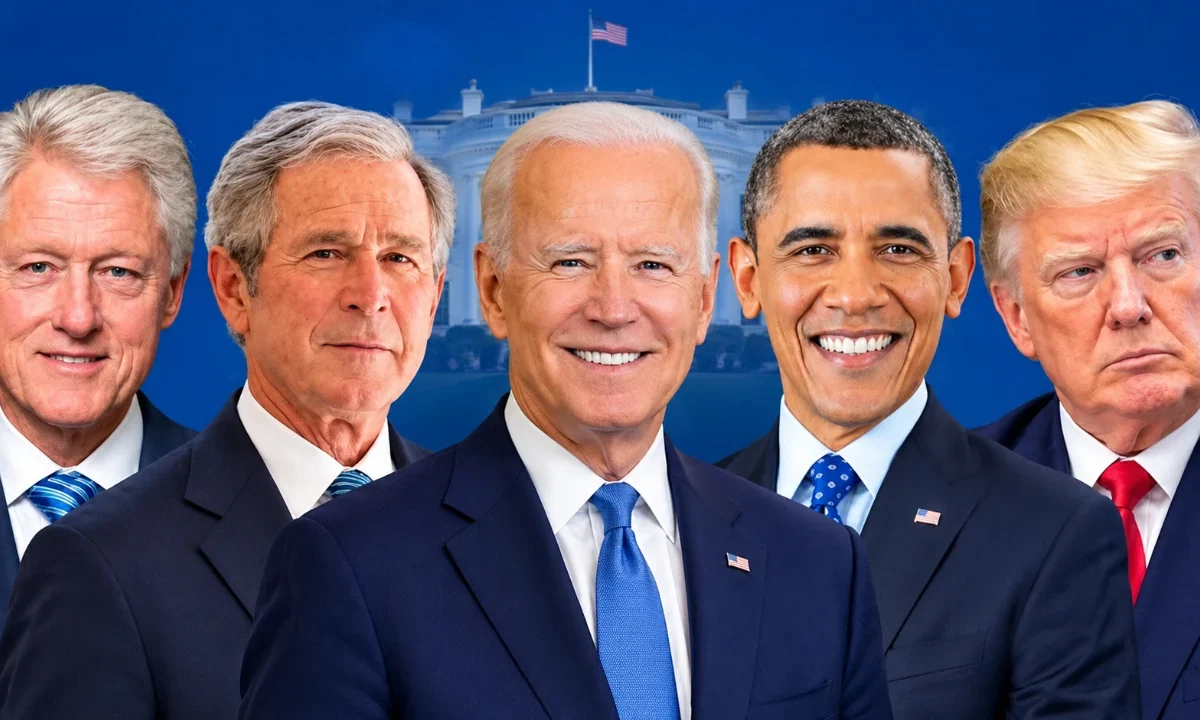
From Bill Clinton to Donald Trump, the long history of U.S. military operations, the “war on terror,” and strategic interventions in the Middle East has posed an uncomfortable question for international politics: if a non-state group is labeled “terrorist” for inflicting horrific violence upon civilians, by what standard should we judge similar humanitarian catastrophes caused by the military operations of a state?
In international politics, the term “terrorism” is not merely a description of violence; it is deeply intertwined with issues of power, legitimacy, international law, and political positioning. Whether it involves designating a group as “terrorist,” framing a military operation as a “war on terror,” or deploying military force across the borders of another sovereign state—each instance raises significant legal and ethical questions. Yet, the extent to which international accountability actually governs the military decisions of powerful states remains a subject of intense debate.
Therefore, analyzing U.S. foreign policy over the last 25 years requires looking beyond simply which president initiated a conflict and where. One must examine the legal justifications cited for these military operations, the extent of the harm inflicted upon civilians, the degree to which international law was upheld, and who, if anyone, has taken responsibility for the consequences of these actions.
The Clinton Era: The Context of Counter-Terrorism Operations
While the “war on terror” gained a new dimension in global politics following the September 11, 2001, attacks, its military and strategic foundations were laid much earlier. During the 1990s, under President Bill Clinton, there were several instances of U.S. military presence and strikes in the Middle East. In 1998, following Al-Qaeda’s bombings of U.S. embassies in Kenya and Tanzania, the United States launched missile strikes against targets in Afghanistan and Sudan. In December of that same year, “Operation Desert Fox” was launched against Iraq, centered on disputes regarding United Nations weapons inspections. These events demonstrate that the concepts of counter-terrorism operations, the exertion of military pressure in the Middle East, and the unilateral use of force by the United States were already part of the international discourse well before 9/11. Post-9/11 Wars: The Expansion of Counter-Terrorism Operations
On September 11, 2001, nearly 3,000 people were killed in terrorist attacks in the United States. Following the attacks, President George W. Bush declared a “War on Terror.” In October of the same year, a military campaign was launched in Afghanistan. The stated objectives of the United States were to destroy Al-Qaeda and remove the Taliban government—which provided them with sanctuary—from power. United Nations Security Council Resolutions 1368 and 1373 condemned the 9/11 attacks and acknowledged the right to self-defense. However, neither resolution provided an open-ended mandate for an indefinite military campaign in Afghanistan. Even in the exercise of the right to self-defense, principles such as necessity, proportionality, and adherence to international law remained relevant.
The U.S.-led intervention in Afghanistan resulted in the ouster of the Taliban government. Yet, the withdrawal of U.S. forces in 2021—after two decades of war—and the subsequent return of the Taliban to power demonstrated that while military force can topple a government, building a stable state and effective political institutions is a far more complex challenge. Throughout the conflict, the loss of civilian lives, mass displacement, the destruction of infrastructure, and persistent insecurity inflicted profound damage on Afghan society.
The 2003 U.S.-led military intervention in Iraq sparked even greater controversy. A primary justification for the war was the allegation that Saddam Hussein’s regime possessed weapons of mass destruction (WMDs). However, subsequent investigations led by the United States found no evidence of the active stockpiles of WMDs that had been claimed. In a 2004 interview with the BBC, then-UN Secretary-General Kofi Annan stated that the invasion of Iraq, lacking Security Council authorization, was inconsistent with the UN Charter; he explicitly termed it “illegal.”
The consequences of the Iraq War extended well beyond the fall of the Saddam regime. The collapse of state institutions, the eruption of sectarian conflict, the rise of insurgent groups, and the eventual emergence of the Islamic State (IS) created a volatile environment. The resulting political vacuum and insecurity in Iraq also fundamentally altered the balance of power across the Middle East. However, the rise of IS cannot be attributed solely to US aggression; Iraq’s internal sectarian politics, the Syrian civil war, rivalries among regional powers, and the organizational structures and tactics of the militant groups themselves also played a role.
The Obama Era: Shifting the Nature of Warfare and the Expansion of Drone Strikes
Upon taking office, Barack Obama altered the strategies for the wars in Iraq and Afghanistan. He initiated the withdrawal of US troops from Iraq, while simultaneously increasing troop levels in Afghanistan to intensify operations against the Taliban. During his administration, drone strikes and long-range aerial attacks became key instruments in counter-terrorism operations. Drone strikes were carried out in Pakistan, Yemen, and Somalia, targeting suspected militants. While these operations reduced the direct risk to US personnel, they raised critical questions regarding target selection, the accuracy of intelligence, civilian casualties, and extrajudicial killings.
According to research on drone policy by the Stimson Center and data from various independent monitoring organizations, hundreds of drone strikes were conducted in Pakistan, Yemen, and Somalia during the Obama administration. These strikes resulted in both the deaths of individuals identified as militants and casualties among the civilian population.
However, there are significant discrepancies among the figures provided by various organizations; this is due to limited access for independent journalists and investigators at the sites of these attacks, as well as the fact that the information released by the U.S. government has not always been comprehensive. Consequently, it would be inaccurate to present any single figure as definitive.
The 2011 NATO military intervention in Libya also represents a significant chapter in this debate. In response to the Muammar Gaddafi government’s repression of civilians, the United Nations Security Council adopted Resolution 1973. This resolution authorized the use of “all necessary measures” to protect civilians and populated areas, though it did not sanction the deployment of a foreign occupying force. The operation was initiated under the leadership of the United States, the United Kingdom, and France, with NATO subsequently assuming control.
While the stated objective of the intervention was the protection of civilians, the aftermath—marked by the collapse of the Gaddafi regime, the weakening of state institutions, the rise of militia groups, and persistent political divisions—left Libya in a state of instability. A central question arises here: to what extent does an international mandate to protect civilians justify the expansion of a military operation’s objectives? The gap between the language of Security Council resolutions and their practical implementation remains a subject of debate within the fields of international relations and international law.
The Trump Era: The War Against IS, Syria, and Iran
During Donald Trump’s first term (2017–2021), although the “America First” doctrine took center stage in U.S. military policy, military operations in the Middle East did not cease. Instead, the campaign against IS, missile strikes in Syria, the U.S. presence in Iraq, and military activities in Yemen continued.
In response to allegations of chemical weapons use in Syria in 2017 and 2018, the United States launched missile strikes. In 2019, IS leader Abu Bakr al-Baghdadi was killed during a U.S. operation. In January 2020, Qasem Soleimani—commander of the Quds Force of Iran’s Islamic Revolutionary Guard Corps—was killed in a U.S. drone strike near Baghdad Airport. The United States characterizes this killing as an act of self-defense, whereas Iran labels it as state-sponsored terrorism and a violation of its sovereignty. International legal experts have raised questions regarding the validity of invoking self-defense to justify the killing of a high-ranking military official from another nation while he was on the territory of a third country—specifically, whether the evidence of an “imminent threat” was sufficiently robust.
A military operation does not automatically become lawful under international law simply because the United States labels it “counter-terrorism.” Conversely, an operation does not become an act of “terrorism” in a legal sense merely because an opposing party characterizes it as such. Each incident must be evaluated in light of the UN Charter, the criteria for self-defense, international humanitarian law, and applicable human rights law.
The Biden Era: Withdrawal, but Not an End to Military Presence
The withdrawal of U.S. forces from Afghanistan was a major development during Joe Biden’s presidency. Following the completion of the U.S. withdrawal in August 2021, the Taliban regained control of the country. After two decades of war, fresh questions emerged regarding the outcome of the U.S. military project in Afghanistan. The U.S. had aimed to dismantle terrorist networks and establish a stable government; however, the eventual return of the Taliban underscored the limitations of those objectives.
Meanwhile, the U.S. maintained a military presence in Iraq and Syria as part of operations against the Islamic State (IS). Following attacks on U.S. bases in the Middle East after October 2023, the United States launched retaliatory strikes against positions held by Iranian-backed armed groups in Iraq and Syria. In February 2024, after a deadly drone strike on U.S. troops in Jordan, the United States conducted extensive airstrikes in Iraq and Syria. While Washington justified these actions as necessary for self-defense and the protection of its personnel, significant questions remain concerning the sovereignty of the affected nations, the safety of civilians, and the proportionality of these retaliatory strikes.
2025–26: The New Geopolitics of the War on Terror
With Donald Trump returning to power for a second term in 2025, the role of the U.S. military in the Middle East has once again become a subject of intense discussion. During this period, U.S. strikes against the Houthi group in Yemen, alongside military tensions involving Iran, have reignited international debate. Washington has framed these operations as measures to ensure regional security, uphold freedom of navigation, and protect U.S. interests. However, the legitimacy of using military force cannot be determined solely by stated objectives; one must also consider factors such as the consent of the state concerned, authorization from the UN Security Council, or whether the conditions for self-defense under Article 51 of the UN Charter have been met.
In this context, attacks by armed groups, state-led military operations, and international armed conflicts cannot all be categorized under the same legal framework. Even an operation conducted for counter-terrorism purposes may result in violations of international humanitarian law. Furthermore, even if a military operation is part of a legitimate act of self-defense, it does not automatically render every individual strike within that operation lawful.
The Human Cost of War: How Many Lives Lie Behind the Numbers?
One of the most significant studies on the human cost of the U.S.-led post-9/11 wars has been conducted by the “Costs of War” project at the Watson Institute of Brown University in the United States. According to the project’s estimates, more than 940,000 people were killed as a result of direct violence in wars across Iraq, Afghanistan, Syria, Yemen, and Pakistan between 2001 and 2023. Of these, over 432,000 were civilians. Researchers estimate that an additional 3.6 to 3.8 million people may have died due to the indirect consequences of these wars—such as the destruction of healthcare systems, economies, food security, and infrastructure. Combining both direct and indirect fatalities, the total death toll is estimated to be between 4.5 and 4.7 million, if not higher.
These statistics do not imply that every single death was caused directly by U.S. forces. Numerous parties were involved in these conflicts, including state militaries, insurgent groups, militant organizations, local militias, and regional powers. The study assesses the overall direct and indirect human toll within these war zones; therefore, it would be inaccurate to characterize these figures as the number of people killed by the United States. Nevertheless, these data are crucial for evaluating the overall human cost of these conflicts and the long-term impact of U.S. military intervention.
A separate study by Brown University, focusing on Iraq and Syria, estimates that between 550,000 and 580,000 people died in these two countries from 2003 to 2023. The research notes that the direct and indirect costs of these wars were also immense for the United States. The 2023 study further highlights that there are over 7 million refugees and approximately 8 million internally displaced persons from Iraq and Syria.
The U.S. Department of Defense has also released data on civilian casualties. In its own assessment, the Pentagon reported that 132 civilians were killed and 91 were injured in 2019 as a result of U.S. military operations in Iraq, Syria, Afghanistan, and Somalia. However, there are discrepancies between official government figures and those provided by independent monitoring organizations.
What is terrorism—is there a single, universally accepted definition under international law? This is the central question of the report. In international law, there is no universally accepted, comprehensive, and singular definition of terrorism. The United Nations Office on Drugs and Crime (UNODC) has noted that states hold differing views on how to define terrorism. While various international conventions identify specific acts—such as aircraft hijacking, hostage-taking, terrorist financing, bombings, and certain forms of violence—as crimes, a unified definition applicable to all circumstances has yet to be reached.
These definitional disagreements carry political implications. A state might label an internal opposition group as “terrorist,” while another state might view the same group as part of a political resistance movement. Conversely, an armed organization might frame its own acts of violence as a “liberation struggle” or “resistance.” However, neither a political identity nor a stated objective can legitimize attacks against civilians. Similarly, the status of being a state force does not automatically render all of its actions lawful.
The UNODC has warned that vague or overly broad definitions of terrorism are susceptible to political abuse. Such definitions could be used to unjustly categorize legitimate political activity, freedom of expression, dissent, or the work of human rights defenders as terrorism. Therefore, counter-terrorism laws must be clear, precise, and consistent with international human rights law.
Are war and terrorism the same thing?
This is where International Humanitarian Law (IHL) becomes relevant. The International Committee of the Red Cross (ICRC) has stated that while IHL does not provide a comprehensive definition of terrorism, it explicitly prohibits certain acts during armed conflict—such as deliberate attacks on civilians, indiscriminate attacks, hostage-taking, and the use of violence intended to spread terror among the civilian population. Even in the context of war, a distinction must be made between combatants and civilians, as well as between legitimate military targets and civilian infrastructure.
In other words, if a state’s military attacks a legitimate military target belonging to an adversary, that act does not, in itself, constitute terrorism. However, if such forces deliberately target civilians, carry out indiscriminate attacks, or employ the spreading of terror among the civilian population as a military strategy, this may constitute a serious violation of international humanitarian law. Depending on the circumstances and the evidence, such actions could even amount to war crimes or other international offenses.
Caution is advised regarding the use of the term “state terrorism.” While this concept is employed in political and academic discourse, there is no universally recognized, distinct crime defined as “state terrorism” under international law. To address unlawful violence by state forces, one must instead rely on established legal frameworks—such as those concerning aggression, war crimes, crimes against humanity, genocide, unlawful killings, and the international responsibility of states.
The UN Charter: What are the limits on the use of military force?
The 1945 UN Charter establishes fundamental limits on the use of force in international relations. Under Article 2(4) of the Charter, no state may use force against the territorial integrity or political independence of another state, nor may it issue military threats in a manner inconsistent with the purposes of the United Nations.
However, there are two significant exceptions to this prohibition. First, the UN Security Council may authorize military action under Chapter VII of the UN Charter to maintain international peace and security. Second, under Article 51, a member state may exercise its inherent right to self-defense if it becomes the target of an armed attack; such measures must be reported to the Security Council and remain in effect only until the Council takes the necessary action.
Yet, the right to self-defense is not unlimited. The fact that a state has been attacked does not automatically legitimize military operations of any scale within the territory of another state. Any response must be guided by the principles of necessity and proportionality. Furthermore, the obligation to protect civilians and adhere to international humanitarian law remains binding.
Events such as the Iraq War, the intervention in Libya, military involvement in Syria, and the killing of Qasem Soleimani in Iraq highlight different facets of these legal issues. Each case rests on a distinct legal basis; labeling them all simply as “legal” or “illegal” would result in an overly simplistic analysis. Nevertheless, one principle applies universally: no state, regardless of its power, stands above international law.
Allegations of Double Standards: One Law for the Weak, Another for the Powerful?
Accusations of double standards in international politics are nothing new. When the United States and its allies condemn attacks on civilians by non-state actors as “terrorism,” it is argued that attacks on civilians by state forces should be judged by the same standard. Conversely, critics of the United States question why powerful states justify their own military operations through the lens of self-defense, security, and stability, while similar justifications are rejected when invoked by weaker states or non-state actors.
The answer to this question cannot be found in political rhetoric alone. One must also examine the effectiveness of the international legal system, the UN Security Council, the International Criminal Court, and the framework of mutual accountability among states. The veto power held by the five permanent members of the Security Council creates an inherent imbalance of power within the international system, often making it difficult to take effective action against powerful states or their close allies. However, it is not entirely fair to place the blame for all failures solely on the United Nations. There are inherent limitations regarding the collection of evidence for the investigation of international crimes, the scope of judicial jurisdiction over the accused, the necessity of state cooperation, and the defined powers of the courts themselves. Even the International Criminal Court cannot automatically exercise universal jurisdiction over every state. Consequently, while prosecuting crimes committed by powerful states remains difficult, this does not render international law ineffective or redundant.
Who has the authority to define terrorism?
The simple answer is: no single state possesses this right. While a state may define terrorism and terrorist offenses within its own domestic legal framework, such definitions must remain consistent with international law, human rights, and the rule of law. Various United Nations charters, Security Council resolutions, international humanitarian law, and the judicial principles established by international courts provide a crucial framework in this regard.
Furthermore, a group’s self-designation as “freedom fighters,” “revolutionaries,” or “resistance fighters” does not automatically legitimize its actions. Conversely, a government’s declaration that an individual or group is “terrorist” does not grant it the right to take any action it chooses against them. Deliberate attacks on civilians, hostage-taking, indiscriminate killings, or the use of violence to incite terror among the public—regardless of the perpetrator—are reprehensible and prohibited under applicable law.
Therefore, the core question is not merely “who is a terrorist,” but rather: who is labeling whom as a terrorist, on what evidence and legal basis, and whether the same standards are applied consistently to all parties.
The Authority of Law Transcends Mere Power
Over the past 25 years, the history of U.S. military interventions has been framed by various justifications—such as self-defense against terrorist attacks, the preservation of international security, the ousting of authoritarian regimes, the protection of civilians, and the promotion of regional stability. Some interventions carried international authorization, others were justified on the grounds of self-defense, while some sparked intense debate regarding their legality and legitimacy under international law. Yet, one reality remains clear across almost all these instances: while military force may succeed in defeating an adversary, achieving political stability, social reconstruction, and lasting peace is a far more complex and difficult challenge. If a state, in its efforts to combat terrorism, violates international law, disregards the lives of civilians, or seeks to evade accountability, the moral foundation of the war on terror is undermined. The actions of both state forces and non-state groups must be evaluated based on evidence, intent, targets, military necessity, and international law.
The credibility of the international system rests on the principle that the same humanitarian and legal standards must apply to everyone—the powerful and the powerless, allies and adversaries, states and non-state groups alike. If the definition of terrorism is altered to suit the political interests of a powerful state, international law ceases to be an instrument of justice and instead becomes a tool of power. The fundamental question, therefore, is not merely who is a terrorist; rather, when addressing acts of violence, are we prepared to apply the same standards of justice, law, and accountability to all parties?
Sources: United Nations, UNODC, ICRC, Brown University, U.S. Department of Defense, Stimson Center