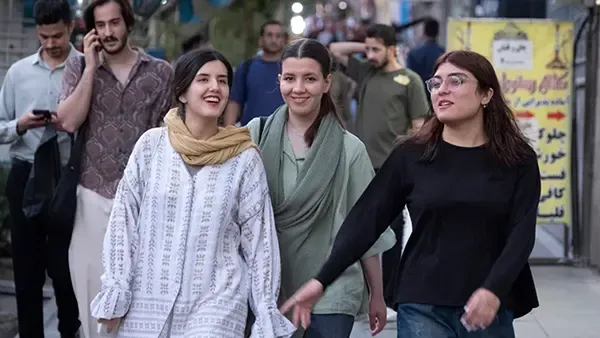
Amidst war and political instability in Iran, the issue of mandatory hijab-wearing for women has once again sparked a major debate. While hardline religious leaders and politicians demand strict enforcement of hijab laws, many women are openly defying the rules.
A CNN report indicates that authorities are currently treading cautiously regarding any large-scale crackdown.
During periods of heightened tension with the United States, many women were seen without hijabs even at government rallies and on state media; at that time, the government and security forces prioritized the war effort and national security.
However, in recent weeks, demands for action against women not wearing hijabs have intensified. Iranian state media has been prominently reporting on the closure of cafes, restaurants, and other businesses accused of failing to enforce hijab laws.
According to the human rights organization HRANA, at least seven cafes and restaurants in Tehran were shut down on July 19 for failing to enforce mandatory hijab laws. Several social media accounts have also been blocked for allegedly violating dress codes.
The Tehran Prosecutor’s Office has announced that strict measures will be taken against cafes and restaurants where “indecency” occurs or approved dress codes are violated. Action has also been threatened against shops accused of selling unconventional or inappropriate clothing.
The Mehr News Agency reported that ten cafes in the South Khorasan province of eastern Iran were closed for violating “social norms and mandatory hijab laws.”
The “Woman, Life, Freedom” movement swept across Iran four years ago following the death of young Mahsa Amini in police custody; she had been detained for allegedly wearing “inappropriate” clothing. The movement was subsequently suppressed with a heavy hand.
Amnesty International reported in late 2024 that Iranian authorities were escalating violent crackdowns against women and girls who defied mandatory hijab laws.
Nevertheless, that movement has left a lasting impact on Iranian society. Despite warnings and sporadic enforcement of the law, a widespread tendency to defy hijab regulations—particularly among young women—has become evident. Videos circulating on social media show young women riding motorbikes in Tehran and other cities wearing helmets but without hijabs; in some places, women have even been seen riding in groups.
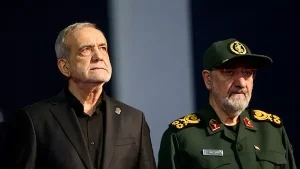
In one post, a group of women from Shiraz identified themselves as the “Motorbike Girls of Shiraz.” A video featuring around 20 women riding motorcycles in Isfahan was promoted as the “largest women’s motorcycle event in Isfahan.” Even the country’s president, Masoud Pezeshkian, has questioned the prioritization of the hijab issue amidst times of war and economic crisis. Citing remarks made by a conservative cleric, he asked whether legislation can truly alter human behavior.
He further noted that he holds differing views from his daughter on many matters, asking rhetorically whether he should force her to adopt his opinions.
Gholamali Jafarzadeh Imanabadi, a former member of parliament, has also urged officials to focus more on inflation and the challenges affecting people’s livelihoods rather than on the hijab issue.
However, hardliners in the country are intensifying pressure on the government to strictly enforce hijab laws. Hossein Shariatmadari, editor of the Kayhan newspaper, stated that enforcing the hijab law is both a legal and religious obligation for officials.
A television program titled “Park West,” produced by the Tehran Municipality, has also aired episodes discussing women’s attire and calling for action against those who violate the approved dress code.
The emphasis on women wearing the hijab in Iran began following the 1979 Islamic Revolution; prior to that, during the era of the monarchy, women were often portrayed as leading relatively secular, Western-style lives.
Currently, the government is navigating a cautious path amidst demands for strict enforcement of hijab laws and widespread reluctance among young women to comply.