The conflict between Ukraine and Russia, now in its fourth year, is becoming increasingly technology-driven. Faced with manpower shortages and the strain of a protracted war, Ukraine is now relying heavily on robots, drones, and remotely controlled combat vehicles. Instead of deploying soldiers to the front lines, the country is now conducting attacks from underground control bunkers, where the battlefield is monitored via live video feeds from drones.
Ukrainian President Volodymyr Zelenskyy recently claimed that, in April, a Russian base was captured for the first time using only robots and drones. He noted that, since January of this year, Ukraine’s unmanned combat vehicles have carried out more than 22,000 missions.
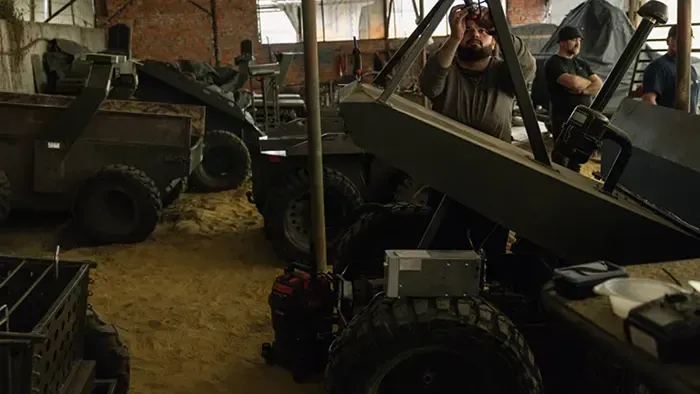
Ukrainian forces report that Russian soldiers have dubbed the explosive-laden, four-wheeled robots deployed on the battlefields of eastern Ukraine “Silent Death.” These robots approach so stealthily that the enemy only detects their presence when they are within 10 meters—a distance close enough to ensure a successful detonation.
Robots Have Saved the Lives of Thousands of Soldiers
According to estimates from the “NC-13” unit of Ukraine’s 3rd Assault Brigade, the results achieved using robots across 164 missions would have otherwise required the deployment of approximately 2,300 soldiers. In such operations, there would have been a risk of at least half of those soldiers being killed or wounded. Consequently, the unit claims that this technology-driven method of warfare has saved the lives of more than a thousand Ukrainian soldiers.
The unit’s deputy commander, “Bar,” remarked, “Had we possessed this technology during the intense fighting in the Donbas, many more of my fellow soldiers would have survived.”
According to the unit’s commander, Mykola “Makar” Zinkevych, the very nature of warfare has changed. “Previously, war was a test of a soldier’s skill and training,” he said. “Now, technology determines everything. There is no turning back.”
New Heroes for a New War
In this technology-centric conflict, a new generation of technologists is also playing a pivotal role. “Gora”—a 22-year-old engineer—was just 18 years old when the war began. After spending sleepless nights in terror of Russian drone attacks, he decided to make a technological contribution to the war effort.
Gora notes that the core issue is not merely the vehicles themselves; the true essence lies in human ingenuity and planning. The most critical factor is how to effectively coordinate operators, vehicles, and communication systems to function in unison.
Operations Conducted Without GPS
Due to the Russian forces’ electronic warfare tactics, GPS signals are frequently jammed or spoofed. In such instances, operators must rely on analyzing previous drone footage and detailed maps to navigate and control the robots.
In a recent operation, six explosive-laden robots were deployed. While several successfully struck Russian positions, one overturned in a trench, and another was destroyed by Russian forces.
Robotic Soldiers on the Battlefield
Beyond offensive strikes, Ukraine is now utilizing robots for tasks such as resupplying ammunition, evacuating wounded soldiers, and operating machine guns. One unit has even constructed a remote-controlled combat vehicle—essentially a heavy Browning machine gun mounted on tank tracks—capable of remaining concealed amidst the vegetation for days on end.
“Cyber,” a member of the unit, explains that the deployment of these robots often throws the enemy into a panic; they are left bewildered, unsure of how to react.
Leveraging Technology to Address Manpower Shortages
The war, now spanning over four years, has severely depleted Ukraine’s manpower. According to analysts, this critical situation has opened up new possibilities for Ukraine through the adoption of drone- and robot-centric warfare strategies. However, these technological advancements remain precarious, as Russia is simultaneously—and at an equal pace—bolstering its own unmanned combat capabilities.
Experts suggest that in the battlefields of the future, victory or defeat will ultimately hinge on whichever side can achieve the most rapid technological adaptation.
The Ukraine-Russia conflict has, in this regard, become a real-world laboratory for that very future.