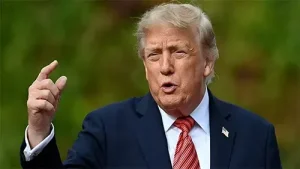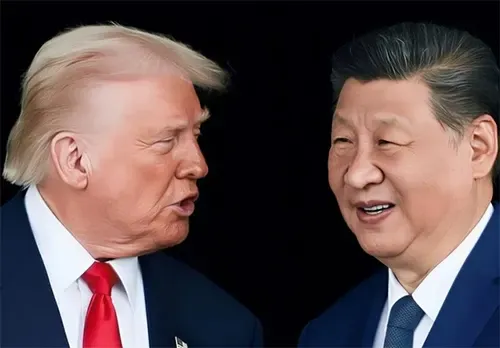
Amidst growing geopolitical uncertainty surrounding the U.S.-Israel-led campaign against Iran in the Middle East, U.S. President Donald Trump is set to visit China on May 14 and 15. During his visit, he is scheduled to hold a meeting with Chinese President Xi Jinping. Ahead of his trip, Beijing announced that it is prepared to work toward strengthening dialogue, expanding cooperation, and stabilizing bilateral relations with the United States. China’s top leaders have held meetings with a bipartisan delegation of U.S. senators currently visiting Beijing. This report was carried by the online publication, *The Express Tribune*.
Chinese Premier Li Qiang stated that China is ready to implement the significant consensus reached during the phone conversation between President Xi and U.S. President Trump in February. He noted that this consensus provides strategic guidance for the future development of relations between the two nations. During the meeting with the delegation led by Senator Steve Daines, Li emphasized the need to enhance communication, foster a conducive environment for exchanges at all levels, and achieve tangible results through pragmatic cooperation across various sectors.
Li affirmed that China is committed to working for the well-being of the people of both countries and seeks to contribute stability and positive energy to the global landscape. He observed that past experiences demonstrate that mutual respect, peaceful coexistence, and mutually beneficial cooperation constitute the correct path for major global powers. He urged Washington to follow this same path. In his view, priority should be given to dialogue and mutually beneficial cooperation—rather than confrontational conflict and zero-sum competition—and efforts must be made to maintain stable and predictable economic and trade relations.
Reiterating Beijing’s stance on the Taiwan issue, Li stated that it constitutes one of China’s core interests and serves as a “red line” in China-U.S. relations. He expressed hope that the U.S. Congress would exercise prudence regarding China-related matters and play a constructive role in maintaining stable relations.
Meanwhile, Chinese Foreign Minister Wang Yi conveyed a similar message. During his meeting with the U.S. delegation, he noted that this marks the first visit to China by a bipartisan Senate delegation since President Trump assumed office. Wang remarked that the key to stable coexistence between the two nations lies in how they perceive one another. He urged the United States to adopt an objective and rational approach toward China, respect China’s core interests, and manage differences constructively.