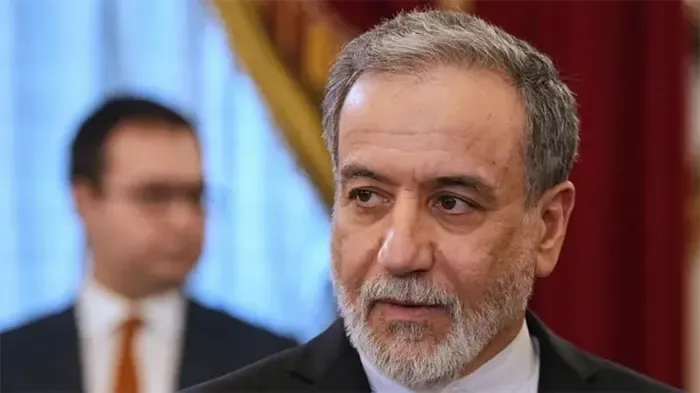
Iranian Foreign Minister Abbas Araqchi has accused the United States of engaging in “reckless military adventurism.” He stated that whenever a “diplomatic solution appears on the horizon,” Washington invariably chooses the military path. In a post on the social media platform X, Araqchi asserted that Iranians would never bow to pressure. This came just a day after both sides blamed each other for attacks in the Strait of Hormuz, and the U.S. fired upon several more Iranian vessels. The BBC Online reported this news.
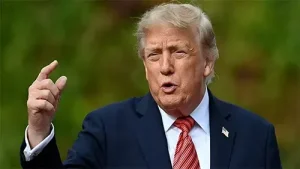
Abbas Araqchi raised the question: Is this merely a crude tactic of applying pressure? Or is someone once again misleading U.S. President Donald Trump and pushing him into yet another complex crisis?
Despite the clashes, Trump has claimed that a ceasefire remains in effect. The objective of this ceasefire is to advance negotiations aimed at ending the conflict that the U.S. and Israel initiated in February. According to U.S. Secretary of State Marco Rubio, Iran may respond to the U.S. proposal on Friday. President Trump also designated the night of Friday as a “red line.” However, as of the time of writing this report, it remains unclear whether Iran has issued any response.
In retaliation for attacks by the U.S. and Israel, Iran has seized control of the Strait of Hormuz and is conducting attacks against U.S. allies in the Gulf region. Approximately 20 percent of the world’s oil and liquefied natural gas is transported through this vital maritime route. The closure of this route has caused energy prices to skyrocket. Earlier this week, Trump launched a U.S. military operation to facilitate the free passage of nearly 2,000 vessels, though he subsequently suspended the operation. These vessels have been stranded in the area since February.
Meanwhile, in an effort to intensify pressure on Tehran, the U.S. has also maintained a naval blockade against Iranian ports, aiming to compel Iran to accept U.S. terms. Iran has expressed outrage over this measure. On Friday, the U.S. Central Command (CENTCOM) announced that it had disabled two empty, Iranian-flagged oil tankers in the Gulf of Oman. It was alleged that the two vessels were attempting to enter Iranian ports in violation of the ongoing U.S. blockade. A statement from CENTCOM noted that U.S. forces utilized precision-guided munitions to strike the exhaust stacks of the vessels, thereby preventing them from entering Iran. CENTCOM further stated that U.S. forces are currently preventing more than 70 tankers from entering or exiting Iranian ports. Prior to this latest U.S. strike, an exchange of hostilities took place between the two sides in the Strait of Hormuz on Thursday—an incident for which both parties blamed one another.
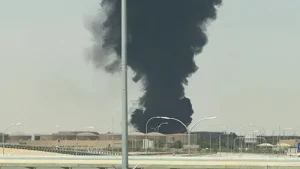
CENTCOM alleged that Iran launched an unprovoked attack against three of its warships, employing missiles, drones, and small boats. Conversely, Iran’s supreme military command claimed that the United States targeted and attacked an Iranian oil tanker and another vessel that were proceeding toward the Strait of Hormuz. Additionally, airstrikes were reportedly carried out in several coastal areas. Citing Mohammad Radmehr, an official from the southern province of Hormozgan, Iran’s state-run news agency, Mehr, reported that a cargo vessel struck near the Minab coast had caught fire. Radmehr stated that 10 injured sailors have been transported to a hospital, while local teams and rescue workers are currently working to ascertain the fate of the remaining crew members.