US stockpiles of key weapons have significantly depleted. If strikes against Iran continue at the current rate, the pressure on these reserves will intensify further. This information has emerged at a time when President Donald Trump has declared that the truce with Iran is effectively over.
Experts fear that this weapons shortage could negatively impact the US military’s ability to handle potential future conflicts with China or North Korea.
Mark Cancian, a defense analyst at the Center for Strategic and International Studies (CSIS) and a retired US Marine Corps colonel, stated, “If this conflict continues at the same pace as the last five days, it will deplete weapons stockpiles to such an extent that it creates new and high-level risks in the Asia-Pacific region.”
According to analysts, the US military utilized thousands of key missiles during the initial phase of the Iran conflict for long-range precision strikes and to intercept hostile air and missile attacks.
Michael O’Hanlon, Director of Foreign Policy Research at the Brookings Institution, said, “There is no doubt that weapons stockpiles have fallen well below expected levels.”
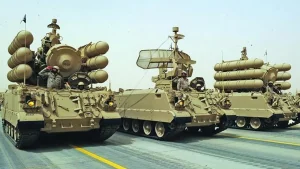
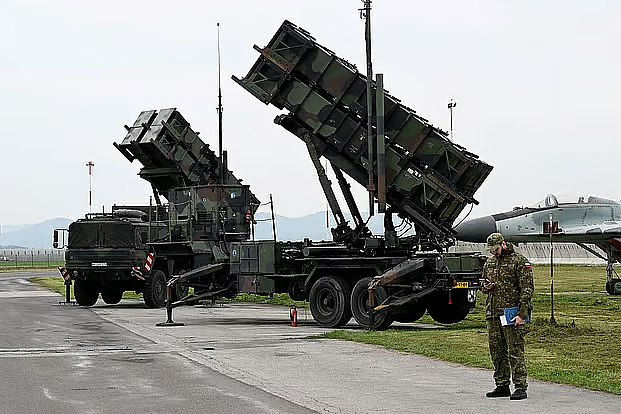
CSIS analysis indicates that by the time the full-scale hostilities between the US and Iran subsided last April, the Pentagon had already expended at least half of its THAAD ballistic missile defense systems, nearly half of its Patriot air defense systems, and approximately 30 percent of its Tomahawk land-attack missiles. Three individuals familiar with the US Department of Defense’s internal inventory figures confirmed this information.
Cancian noted that the production and replenishment rates for these key missiles are quite slow. Based on current fiscal year delivery schedules, the Pentagon receives only about 15 new Tomahawk missiles and 20 new Patriot missiles per month. There are no projected deliveries of THAAD missiles for 2026. According to CSIS estimates, it would take three years or more to replenish these weapon stockpiles to pre-conflict levels.
John Ferrari, a defense procurement expert affiliated with the American Enterprise Institute, stated, “Since the conflict began, the US Congress has not allocated a single dollar to replenish missile stocks.” Consequently, the matter relies solely on the “normal, slow-paced annual peacetime process.”
Recently, the White House formally requested supplemental funding from lawmakers to cover the costs associated with the conflict involving Iran. However, passing this proposal in Congress is expected to be quite difficult.
A Pentagon official stated that the Department of Defense is “committed to rapidly expanding the defense industrial base.” Last June, Trump invoked the Defense Production Act to accelerate missile manufacturing and eliminate bureaucratic hurdles. Additionally, the Department of Defense has entered into contracts with manufacturers to expand production lines.
The official added, “The Department of Defense is leveraging the best of US innovation to ensure large-scale production and enhance supply chain capabilities.”
Cancian noted that while invoking the Defense Production Act is “helpful,” its “impact will be limited.” Furthermore, increasing production capacity will take time.
Cancian warned that if the US military continues to expend key missiles at a high rate, the Pentagon would face risks beyond just a potential conflict with China. Analysts believe that war plans involving North Korea would require vast quantities of US missiles—not only to strike enemy targets but also to protect US troops and Seoul from massive counter-attacks by Pyongyang’s forces.