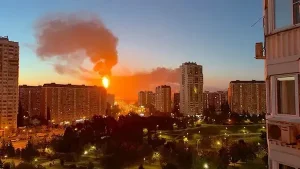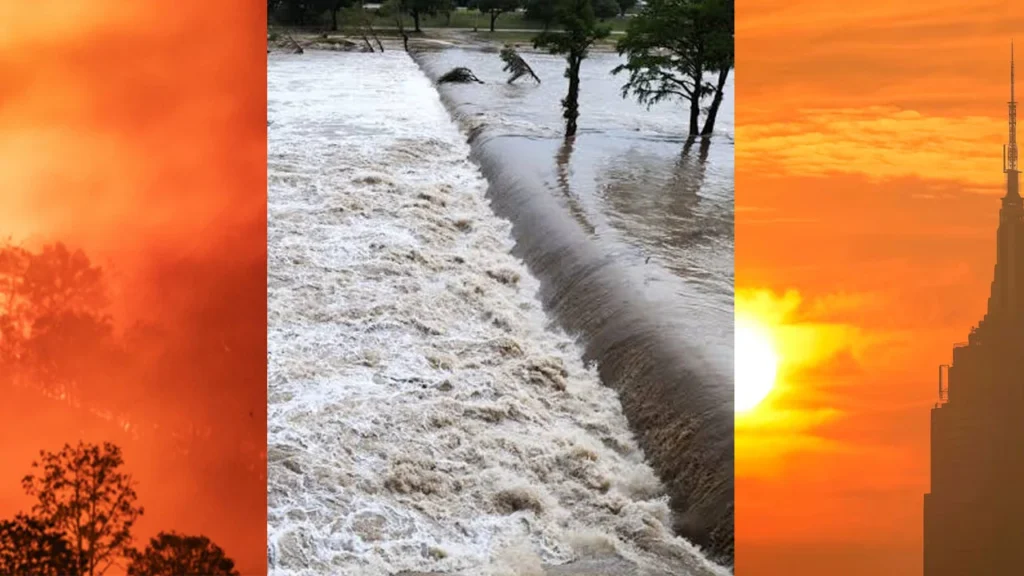
The United States is simultaneously facing a triple threat of extreme weather conditions: wildfires, floods, and pollution caused by wildfire smoke. Smoke from wildfires has blanketed the sky in the East, flood conditions persist for a third day in Texas in the South, and new wildfires are spreading across the West. This report comes from Reuters.
On Friday, the National Interagency Fire Center (NIFC) reported that 68 large wildfires are currently burning across 15 states. Lightning strikes have ignited 17 new fires in the Pacific Northwest alone, making it the region currently most at risk.
Meanwhile, a vast area stretching from the Great Lakes region to the capital, Washington D.C., has been shrouded in wildfire smoke. Simultaneously, floodwaters continue to wreak havoc in the Hill Country area of Texas for the third consecutive day.
To tackle the situation, more than 17,400 firefighters, 140 helicopters, and four military C-130 air tankers have been deployed across the country.
So far this year, approximately 3.72 million acres (1.51 million hectares) of forestland have burned in the US—an increase of over one million acres compared to the same period last year.
Jesse Berman, a professor of public health at the University of Minnesota, noted that the combined impact of multiple simultaneous disasters is far more severe. “These are compound disasters,” he said. “When multiple disasters occur together, the overall damage far exceeds the sum of their individual impacts.”
According to Michael Mann, a climatologist at the University of Pennsylvania, unusual wave patterns—or “resonance”—in the jet stream are driving these extreme weather events. This phenomenon causes large jet stream waves to stall over a specific location for extended periods, resulting in prolonged extreme weather conditions in the affected region. He stated that research shows the incidence of such stalled jet streams has tripled compared to the 1950s due to human-induced climate change.
Jonathan Overpeck, Dean of the School for Environment and Sustainability at the University of Michigan, noted that global warming is simultaneously increasing the risks of both drought and extreme rainfall.
As he put it, “A warmer atmosphere rapidly sucks moisture from the soil and vegetation, making forests drier and increasing the risk of wildfires. At the same time, that same warm atmosphere can hold more water vapor, which subsequently leads to torrential rainfall.”
He added, “Climate change is creating conditions where disasters such as drought and wildfires occur alongside extreme rainfall with increasing frequency.”