Observers and members of local communities report that discrimination and hostile behavior toward foreign residents in Japan are on the rise. According to them, while Korean and Kurdish communities were previously the primary targets, the Muslim community has now been added to that list. This is reported by the South China Morning Post.
It is estimated that the Muslim population in Japan has nearly doubled in recent years. Concurrently, misinformation and hate speech are spreading rapidly across social media platforms. Many mosques are now regularly receiving abusive and threatening phone calls and emails from anonymous individuals.
Consequently, many Muslims are now asking why they have suddenly become targets. Some are even afraid to leave their homes due to concerns for their safety.
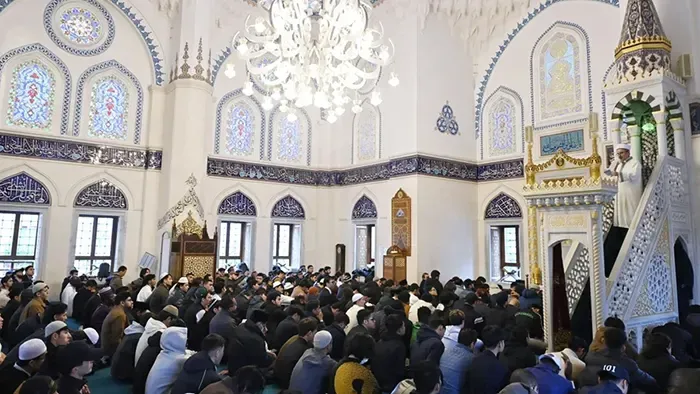
According to Hirofumi Tanada, a retired professor at Waseda University, the Muslim population in Japan stood at approximately 420,000 by the end of 2024. In 2019, this figure was around 230,000. Currently, there are more than 160 mosques across the country.
Recent incidents have further heightened these concerns. Last year in Osaka, a rumor circulated that a mosque was broadcasting the Adhan (call to prayer) at high volume early in the morning. This sparked tension among local residents.
In February of this year, in Ebetsu, Hokkaido (northern Japan), a mosque and a used-car showroom—both operated by Pakistani nationals—were the targets of multiple suspicious fires.
Allegations of protests and harassment have also surfaced in Fujisawa, Kanagawa Prefecture (near Tokyo), centering on the construction of a mosque.
Ali (a pseudonym used for security reasons), the leader of a mosque in a city within the North Kanto region, stated that the harassment began quite suddenly. He noted that since last year, he has been receiving 5 to 10 hateful phone calls and emails every day—messages telling them to “go back to your own country” or asserting that “Japan has no need for mosques.”
According to Ali, their mosque was established nearly 30 years ago. Although there were some initial difficulties with local residents, relations subsequently improved with the assistance of local authorities and the police. They also educated new immigrants on Japanese social norms and regulations, such as waste management and the pension system.
Ali stated that the mosque has always strived to serve as a bridge connecting with the local community. However, the situation has recently taken a sudden turn for the worse.
A Pakistani student who attends the mosque for prayers remarked that the situation is becoming increasingly volatile due to tensions stoked by strangers on social media. He asked, “My Japanese friends respect my religion; so why this hatred?”
A 30-year-old Japanese citizen of Pakistani descent also expressed concern, warning that this animosity could escalate into violence in the future.
Within Japan’s Muslim community, the demand for Islamic cemeteries and halal school meals is on the rise. However, in accordance with the country’s prevailing customs, cremation remains the standard practice.
Michito Ohashi, a researcher at Aichi Prefectural University, noted that when minor local incidents are circulated on social media, they often trigger unnecessary panic. He believes that while anti-hate laws do exist, they are not yet sufficiently effective.
In his view, the most crucial step is for locals to look beyond Muslims’ religious identities, view them as individuals, and build relationships on that basis.