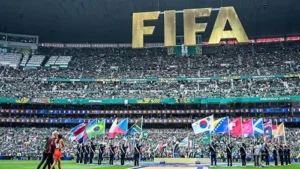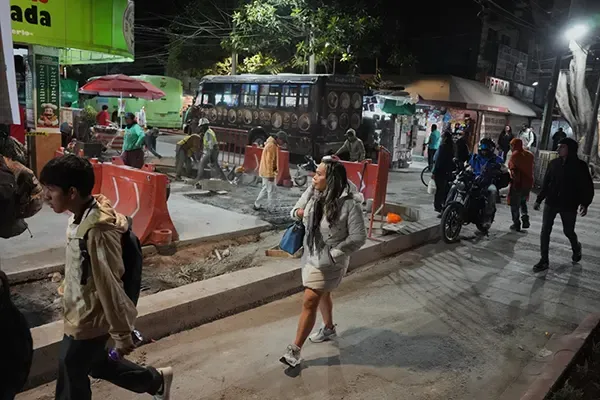
Mexico is one of the co-hosts of this year’s World Cup. Capitalizing on this occasion, nine out of the country’s ten major drug cartels and criminal syndicates are intensifying their involvement in forced sex trafficking. Concerns had already been raised that human trafficking and the sex trade could surge further in Mexico surrounding the hosting of the World Cup matches. Mexico is set to host a total of 13 matches during this tournament; five of these will take place in Mexico City, while Guadalajara and Monterrey will each host four matches. Reports from local media indicate that the market for sex trafficking has expanded significantly in all three of these cities throughout the duration of the tournament. This surge is attributed to the powerful influence that criminal organizations exert over these illicit markets. According to experts, a portion of the economic windfall generated by the influx of tourists could ultimately end up in the hands of these criminal groups. This information was reported by the online publication, The Latin Times.
According to a report by Animal Político—a Mexican investigative news outlet—a significant portion of the sex trade in Monterrey is controlled by the Northeast Cartel (Cartel del Noreste), a distinct faction that splintered off from the notorious Los Zetas cartel. The report further notes the presence of another criminal group known as Los Beltrán, which has deep-seated ties to the Beltrán Leyva Organization. The Sinaloa Cartel is also active in certain districts of Monterrey, particularly in the nightlife district known as Barrio Antiguo, an area characterized by a high concentration of bars and escort services.
In Guadalajara, the trade is primarily controlled by the Jalisco New Generation Cartel (CJNG). Individuals involved in the sex trade in this region are required to pay regular protection fees to the cartel’s leadership. The report describes the situation in Mexico City as even more complex, as multiple criminal organizations have carved up the city into distinct territories, each controlling its own specific zone. It is alleged that in the southern sector of the city, the Venezuelan gang Tren de Aragua and the Tláhuac Cartel are jointly vying for influence. Meanwhile, the CJNG remains active in the central districts—specifically in the Lindavista and Vallejo neighborhoods. The presence of the Sinaloa Cartel in eastern Mexico City has also been noted.
Various reports from Mexico indicate that human trafficking and forced sex trade have now become a significant source of revenue for drug cartels. These reports claim that approximately nine out of every ten criminal groups profit from these illicit activities. Citing the research organization ILO (International Labour Organization), it is stated that the global scale of this illegal market amounts to approximately $99 billion annually.
Citing the news outlet Milenio, reports suggest that these criminal activities serve not merely as a means of generating revenue, but also as a way to exert influence over local drug distribution networks. Víctor Sánchez Valdés, a security researcher at the Autonomous University of Coahuila, notes that by controlling the sex trade, criminal organizations utilize victims to sell drugs or to gather intelligence on rival groups. According to experts, while major international events—such as the World Cup—may lead to an influx of tourists, criminal syndicates can exploit these circumstances as opportunities, thereby further heightening the risks of human trafficking.