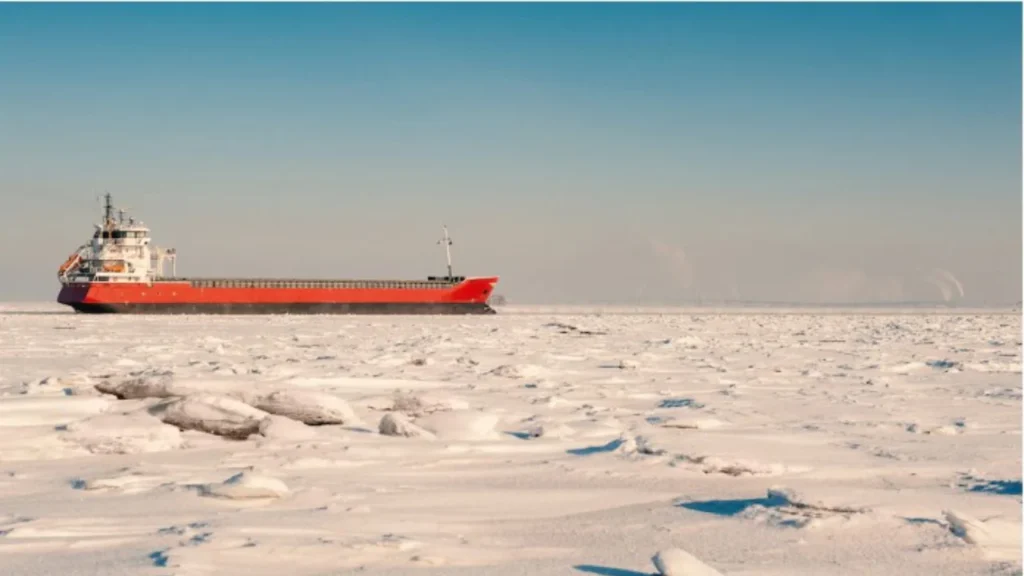
China is moving forward with plans to establish a new maritime trade route to Europe via the Arctic Ocean. Known as the “Arctic Silk Road,” this route could significantly reduce the time required for transporting goods between Asia and Europe in the future.
Chinese vessels have initiated efforts to transport goods to Europe using the Northern Sea Route along Russia’s northern coast. This route could take considerably less time compared to the Suez Canal route.
Recently, the Chinese shipping company Sea Legend launched an initiative for regular container ship operations. According to the plan, ships will travel from China’s Ningbo Port to the UK’s Port of Felixstowe via Russia’s northern coast. Under favorable conditions, the travel time on this route could be cut nearly in half.
Analysts believe that the melting of Arctic ice is gradually creating opportunities for the commercial use of this new maritime route. Compared to conventional routes, the Northern Sea Route could reduce the time taken to transport goods from Asia to Europe by approximately 30 to 40 percent.
This route is also strategically important for China. It offers a viable alternative should key maritime passages—such as the Suez Canal and the Red Sea—face risks due to war, political tensions, or security crises.
International maritime trade has been disrupted in recent years, particularly due to tensions in the Red Sea and various parts of the Middle East. Consequently, interest is growing among nations in finding alternative and secure maritime routes.
Russia is also seeking to increase the use of the Northern Sea Route. Russian oil exports to Asia via this route have risen significantly this year. Russia has intensified its efforts to ship oil to Asia using this route since early 2026.
However, this new maritime route faces several challenges. The weather in the Arctic region is extremely harsh, and the sea remains ice-covered for a large part of the year. Safe navigation requires specialized vessels, advanced navigation systems, and rescue infrastructure.
Environmentalists have also expressed concerns. Climate change is causing Arctic ice to melt, opening up new shipping routes. However, the resulting increase in shipping traffic in the region could place new strains on the environment and biodiversity.
Despite these challenges, China’s “Arctic Silk Road” initiative is viewed as a significant step toward reshaping the future map of global trade. Experts believe that if Arctic shipping routes become more accessible, it will create new opportunities for commercial connectivity between Asia, Europe, and other parts of the world.
If this initiative succeeds, reliance on the traditional shipping routes centered on the Suez Canal could diminish somewhat. At the same time, the Arctic region could evolve from being merely a focal point of climate change into a key arena for global politics and international trade.