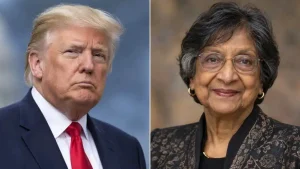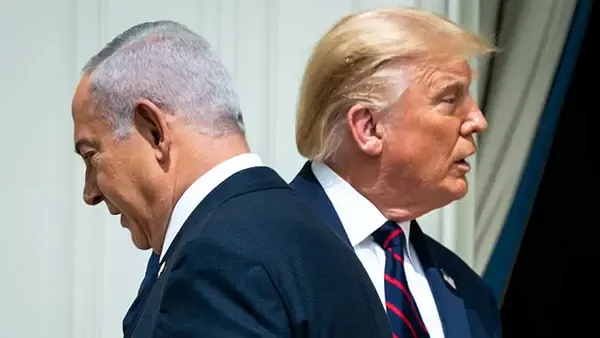
Israeli Prime Minister Benjamin Netanyahu’s political gamble—aiming to weaken Tehran’s theocratic regime and position himself as a new architect of the Middle East through a joint war with US President Donald Trump against Iran—has now backfired.
A Reuters report indicates that while the United States is moving towards a ceasefire and an agreement with Iran, Netanyahu is heading toward a policy clash with Trump.
The stated objectives of both leaders remain unfulfilled. Meanwhile, Israel’s military operations in Lebanon are ongoing. Although Israeli officials maintain a cautious stance publicly, they are expressing deep dissatisfaction in private discussions regarding the interim US-Iran deal.
Speaking to Reuters on condition of anonymity, a senior Israeli official described the deal as disastrous for Israel. No one within the Israeli leadership—from the Prime Minister down to the army chief—views it positively.
Washington claims that negotiations on the terms of a comprehensive agreement will take place within 60 days of the ceasefire, at which point US and Israeli concerns regarding Iran’s nuclear program will be addressed.
However, Israeli officials have expressed fears to Reuters that the negotiation timeline could be extended. This would tie Israel’s hands regarding military action without resolving their core concerns.
Trump and Netanyahu have clashed repeatedly over the refusal to limit operations against the Iran-backed armed group Hezbollah in Lebanon, as a ceasefire in Lebanon is one of Iran’s key demands.
Earlier this month, during a phone call, an angry Trump called Netanyahu “crazy.” At that time, he had ordered Netanyahu not to attack Beirut.
Although Netanyahu halted the attack that day, Israeli forces launched strikes on southern Beirut a week later. In the wake of this, Iran fired missiles at Israel, and Trump publicly rebuked both sides.
Additionally, just hours before the announcement of the interim agreement between the US and Iran, Israel launched an attack on Beirut on Sunday in response to rockets fired from Lebanon.
However, Trump dismissed the attack as a “small and trivial” incident.
Reuters reports that Netanyahu, fearing defeat in Israel’s upcoming elections, might adopt a tougher stance against Trump. Meanwhile, recent opinion polls indicate that confidence in Trump among Israelis is also waning.
Dan Shapiro, a former US ambassador to Israel and current researcher at the Atlantic Council, described this as a moment of clear divergence in the interests of the two nations. Netanyahu is unlikely to openly clash with Trump by opposing the deal, but he will likely signal that Israel is not bound by its terms.
The US-Iran memorandum of understanding is scheduled to be signed in Switzerland this coming Friday. Pakistan, acting as a mediator, claims the agreement will include a permanent cessation of military operations across all fronts, including Lebanon.
However, Israeli Defense Minister Israel Katz stated on Monday (June 15) that troops would remain deployed indefinitely in the buffer zones Israel has secured in Lebanon, Syria, and Gaza.
He warned that if Iran attacks Israel due to the events in Lebanon, Israel would retaliate with full force.
Reuters reported that while the interim agreement includes provisions for reopening the Strait of Hormuz, the future of Iran’s nuclear program will depend on a 60-day negotiation period. However, two key issues cited by Trump and Netanyahu at the onset of the conflict—limiting Iran’s missile program and halting support for regional armed groups—are reportedly not on the agenda.
Israeli officials speaking to Reuters indicated that Israel believes the 60-day timeframe could be extended to 90 days. At the same time, they acknowledged that Israel’s success in influencing the negotiations with Iran had been very limited.
Jonathan Rynhold, a political analyst and professor at Bar-Ilan University, stated that Netanyahu would not be able to make this deal acceptable to the Israeli public. His best hope might be that the talks collapse within 60 days and hostilities resume in a manner favorable to Israel.
According to a recent survey, only 41 percent of Jewish Israelis believe that Trump prioritizes their security; in March, this figure stood at 64 percent.
Most recently, Israeli Energy Minister Eli Cohen stated that if Iran attempts to restart its nuclear and ballistic missile programs, Israel would be prepared to take action on its own.