





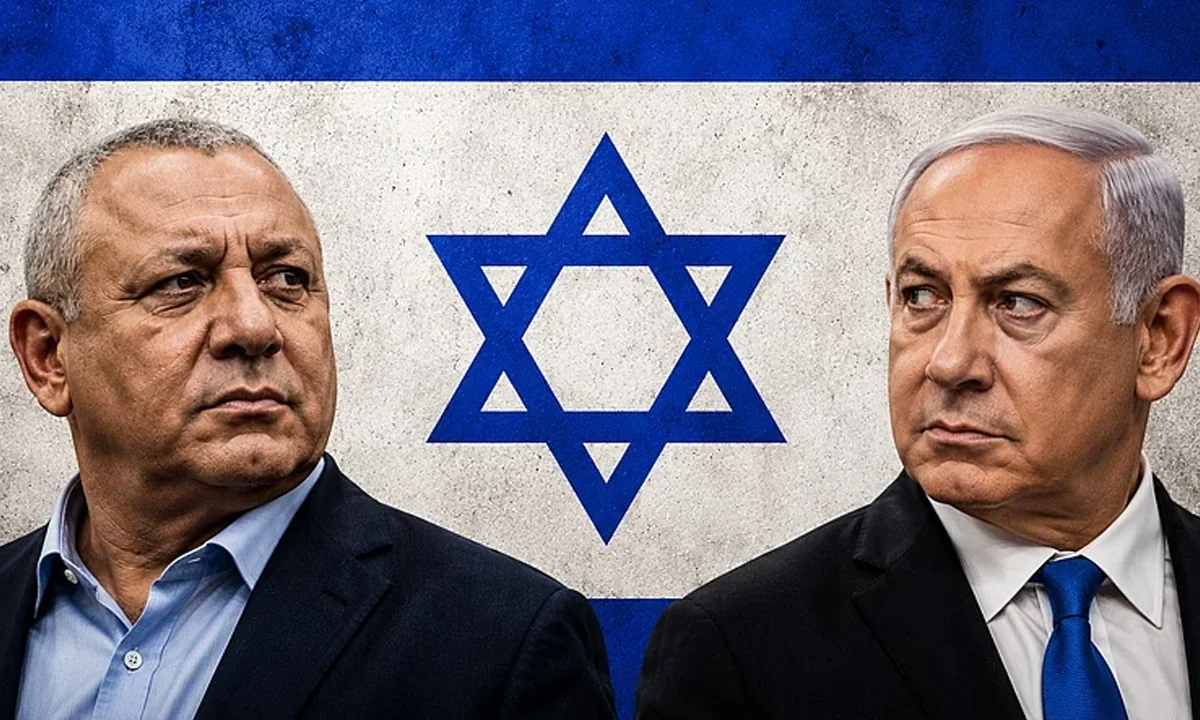
Outgoing Israeli Prime Minister Benjamin Netanyahu has reiterated his call for the formation of a national unity government with his political rival, Gadi Eisenkot. At the same time, he expressed a firm resolve to eliminate the threat posed by Iran.
In last week’s elections, neither the coalition led by Netanyahu nor the one led by Eisenkot secured a majority in the Knesset, Israel’s parliament. Given this situation, President Isaac Herzog held consultations with various political parties. Subsequently, Eisenkot was tasked with forming a new government; he has been granted 28 days to do so, a period that could be extended by another 14 days if necessary.
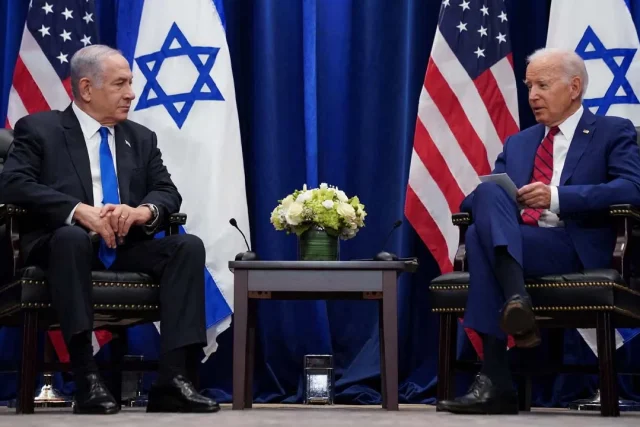
In the interim, Netanyahu met with Gadi Eisenkot. In a video message released following the meeting, Netanyahu stated that he is now more convinced than ever that a national unity government is essential to ensure Israel’s security.
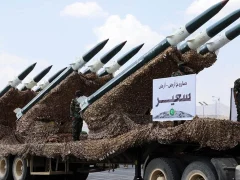
“Such a government,” Netanyahu asserted, “could put an end to the Iranian threat once and for all.” He specified that the proposed government would include only those parties that recognize Israel as a Jewish state.
Netanyahu further noted that a national unity government would address Israel’s security-related challenges—foremost among them being Iran.
According to him, Iran “would not hesitate to use nuclear weapons against Israel.”
Eisenkot was tasked with forming the government.
Netanyahu has reportedly sought the support of Arab parties in secret.
Netanyahu’s right-wing Likud party, along with its far-right and ultra-Orthodox Jewish allies, secured 53 seats in the 120-member Knesset. Meanwhile, Eisenkot’s centrist Yeshar party and three other allied parties won 48 seats. Two Arab-led alliances—the United Arab List and the Joint List—secured a record 19 seats, a success driven by an increased voter turnout among the Arab population.
Prior to the election, all but one of the Jewish political parties had pledged not to form a coalition government with the Arab parties.
Following last month’s election, Gadi Eizenkot garnered the support of 67 members of parliament, leading President Herzog to task him with forming a new government last week. This has sparked international discussion regarding the potential complexities involved in forming a government in Israel.
In his proposal for a national unity government—put forward following a meeting with Eizenkot—Netanyahu suggested including major Jewish parties, ranging from the center to the right, while explicitly excluding the Arab parties.
The election results pointed to three potential paths for government formation: first, a national unity government comprising both Netanyahu and Eizenkot; second, a right-wing coalition led by Netanyahu, potentially joined by some members defecting from Eizenkot’s alliance; and third, a government led by Eizenkot with the support of the Arab parties.
With the exception of one member, Eizenkot and his alliance had previously ruled out forming a government with the Arab parties; however, there is speculation that a compromise could be reached. He might also attempt to reach an understanding with ultra-Orthodox Jewish parties, though that path would likewise be far from easy.
Eizenkot has dismissed Netanyahu’s proposal for a national unity government as a “sham.”
Israel has seen national unity governments in the past.
Upon being tasked with forming a government, Gadi Eizenkot wrote on the social media platform X: “Now is the time to form a national emergency government. I will do everything in my power to ensure that we are capable of fulfilling this responsibility.”
No political party in Israel has ever managed to secure an absolute majority in parliament on its own. Consequently, every government formed in the country to date has been a coalition government.
Israel also has a precedent for forming a government of national unity. In 2020, following a political stalemate that emerged after three consecutive elections, Benjamin Netanyahu and his centrist rival, Benny Gantz, agreed to a power-sharing deal. Under this agreement, the two were to take turns leading the government.
During discussions with political parties, President Herzog expressed his hope that, in order to avoid another election and establish a stable government, the political parties and their representatives would come to realize that not all promises and commitments can be fulfilled.
The period from 2019 to 2022 is considered one of the most polarized eras in Israeli politics. During this time, Netanyahu and his rivals repeatedly failed to reach an agreement, which led to five separate elections.
A statement from the President’s office last week indicated that both Netanyahu and opposition leader Eizenkot had been informed of the decision to task Eizenkot with the formation of a new government.
The statement further noted that, following consultations with delegations from the newly elected members of the Knesset, Eizenkot had received 67 recommendations to become Prime Minister, while Netanyahu had received 46. It was from this point that the possibility of forming a coalition government emerged.