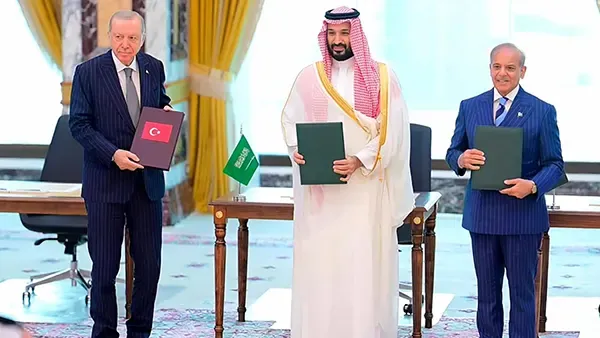
After establishing itself as a key player in regional diplomacy by mediating talks between Washington and Tehran, Pakistan achieved a major milestone in its expanded diplomatic efforts last month. Islamabad signed a trilateral defense pact with Saudi Arabia and Turkey in Mecca, Islam’s holiest city.
The joint defense agreement, signed in Mecca on August 7, stipulates that an attack on any one party to the pact will be considered an attack on all parties. Consequently, this clause began to be compared to NATO’s Article 5.
Subsequently, this commitment was quickly put to the test. On September 8, Iran-backed Houthi rebels in Yemen launched massive drone and missile attacks on Saudi Arabia.
However, neither Islamabad nor Ankara participated in Riyadh’s military counter-operation; instead, they opted to issue strong diplomatic statements.
The major question facing Pakistan now is: how can Islamabad honor its security pledge to Saudi Arabia while simultaneously avoiding entanglement in a broader Middle East war?
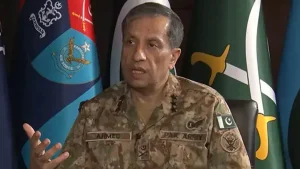
Immediately following the Houthi attack, Pakistan’s Defense Minister Khawaja Muhammad Asif told reporters that Pakistan was “bound” by the terms of the agreement and would abide by them if necessary.
However, Foreign Ministry spokesperson Sajjad Haider Khan clarified that there were no ongoing discussions regarding direct military action against the Houthis.
Speaking at a weekly press briefing in Islamabad on September 10, he stated that while the signing of the joint defense pact was a reality, there were no such discussions taking place at the moment.
This response highlights the widening gap between political solidarity and direct military action. As a result, Pakistan finds itself in a difficult position, trying to balance its alliance with Saudi Arabia against its sensitive relationship with neighboring Iran.
Pakistan’s Delicate Balancing Act
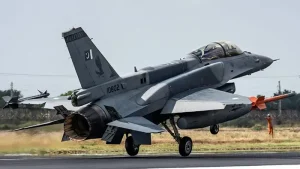
Pakistan has long maintained a military presence in Saudi Arabia, and defense cooperation with Riyadh has deepened significantly in recent years. Earlier, under a separate bilateral defense framework signed in September 2025, Saudi authorities confirmed in April of this year that Pakistan Air Force fighter jets and support aircraft—alongside Pakistani army personnel—had arrived at Saudi Arabia’s King Abdulaziz Air Base.
A Pakistani official familiar with Gulf affairs remarked that Islamabad’s current stance is, to some extent, a repeat of the 2015 crisis.
At that time, Pakistan’s parliament voted to remain neutral rather than join the Saudi-led coalition in Yemen. That decision caused significant strain in relations between Islamabad and Riyadh.
Qamar Cheema, head of the Islamabad-based think tank Sanobar Institute, stated that this coalition would engage in combat against state actors and serve as a deterrent. He described it as a clear example of the “strategic depth” that Saudi Arabia is seeking.
The Houthi Factor
The situation remains volatile for Pakistan, largely due to Houthi activities.
The Pakistani official warned that if Houthi missile attacks intensify or if there are heavy casualties among Pakistani troops deployed at strategic Saudi installations, public opinion and political pressure in Islamabad could compel the government to take action.
Should such a situation arise, the current ambiguous stance could turn into a direct test of the trilateral defense agreement.
Cheema noted that, at this stage, launching attacks against the Houthis is not an option for Pakistan.
The Iran Factor
The most complex element of this strategic equation for Pakistan is Iran. Sharing an unguarded border stretching nearly 900 kilometers, the two nations regularly strive to keep mutual tensions in check.
A Pakistani military operation against the Houthis could risk a direct confrontation with Tehran.
Experts fear that direct military involvement against an Iranian proxy could severely damage bilateral relations between Pakistan and Iran, while simultaneously creating new security pressures along Pakistan’s western border.
Beyond Iran, Pakistan is home to one of the world’s largest Shia populations. A significant portion of this community looks to Tehran for religious guidance under the doctrine of Wilayat-e-Faqih. Although Pakistan’s military leadership managed to bring under control the violence and internal unrest that erupted following the death of Supreme Leader Ayatollah Ali Khamenei in a US-Israeli airstrike on February 28, sectarian sensitivities remain a major constraint should relations with Tehran deteriorate.
The risk of economic loss is also immediate; Pakistan relies heavily on Middle Eastern energy supplies and critical maritime routes such as the Strait of Hormuz and the Red Sea.
Regional instability could rapidly spill over into the country’s domestic market.
Three Nations, Three Distinct Security Priorities
The alliance faces another profound challenge: a lack of a shared perception regarding threats from Pakistan, Saudi Arabia, and Turkey.
India remains Pakistan’s primary military concern. Tensions with Afghanistan’s Taliban government over cross-border militant activities have further complicated Pakistan’s security calculus.
Saudi Arabia’s priorities differ. Riyadh’s main concern is safeguarding its territory, energy infrastructure, and maritime routes. Simultaneously, countering threats from Iran and armed non-state actors like the Houthis—particularly along its southern border—is a key objective.
Turkey’s security scope is broader, encompassing Syria, Iraq, the Eastern Mediterranean, and the Caucasus.
These divergent priorities raise a fundamental question: if a member faces a conflict that another member does not view as its own, would each member be prepared to pay the significant economic and geopolitical price required to defend it?