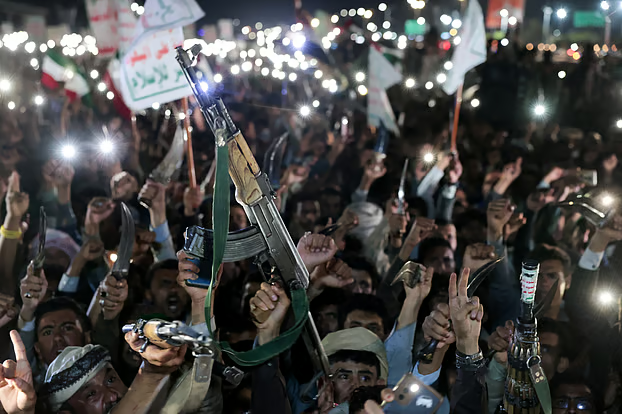
Houthi supporters protest against Saudi Arabia's attack on Sanaa International Airport in Yemen. July 13, 2026, Sanaa. Photo: Reuters
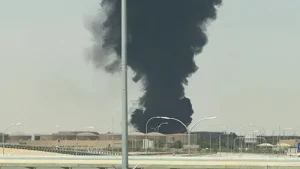
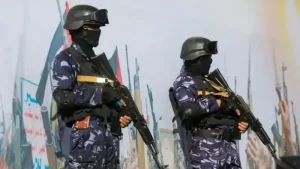
Houthi rebels launched a missile attack on Saudi Arabia, alleging that the Kingdom had struck an airport under their control in Yemen. This move marks the end of a four-year truce between Saudi Arabia and the Houthis. The Houthis are backed by Iran.
A spokesperson for the Saudi-led military coalition stated on the social media platform X that Saudi forces intercepted a missile fired by the Houthi group targeting the southern region of the Kingdom.
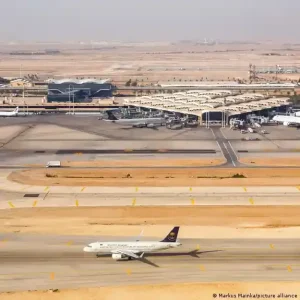
Houthi military spokesperson Yahya Saree said they targeted Saudi Arabia’s Abha International Airport. Many Saudi citizens visit this mountainous region near the Yemeni border to escape the intense heat.
An informal truce had been in effect since March 2022, following Houthi attacks on Saudi energy infrastructure. This marks the first time since then that the group has claimed responsibility for an attack on Saudi Arabia.
Following the Iran-US truce last April, Iranian drone and missile attacks on Saudi Arabia’s eastern region and Riyadh had subsided. However, Monday’s violence has raised fears of renewed conflict along Saudi Arabia’s southern border.
Due to its vast size compared to other smaller Gulf nations, Saudi Arabia has managed the strain of the war relatively well. The country has maintained oil exports by bypassing the Strait of Hormuz and utilizing a pipeline that runs from the east to the western coast of the Red Sea. However, a major conflict with the Houthis—who have previously attacked ships in the Red Sea—could pose a challenge to these oil exports.
Trump Gives Green Light to Saudi Crown Prince
A report by the US media outlet Axios states that US President Donald Trump has expressed support for Saudi Crown Prince Mohammed bin Salman (MBS) regarding military action against Houthi rebels. Two US officials confirmed this information.
Last week, Saudi Arabia conveyed its concerns regarding the Houthis to the United States and requested support for a potential attack. Last Thursday, the Saudi ambassador to Washington met with US Secretary of State Marco Rubio. The following day, Rubio spoke with Saudi Foreign Minister Prince Faisal bin Farhan Al Saud.
According to a US official, President Trump spoke by phone with the Saudi Crown Prince shortly thereafter, on Friday. During the conversation, Mohammed bin Salman sought Trump’s support for military action against the Houthis, and Trump granted it.
Iranian Aircraft
Earlier, on Monday, the Houthis—who control northern Yemen—alleged that Saudi Arabia had carried out an airstrike on Sana’a International Airport. Vowing retaliation, the Houthis declared that this attack marked the end of the phase of de-escalation.
At the same time, the Houthis warned airlines to avoid Saudi airspace until the “blockade” on Sana’a airport was lifted.
Yemen’s internationally recognized government claimed responsibility for the attack on Sana’a airport. Many members of this government, which receives extensive support from Riyadh, reside in Riyadh.
The Yemeni government’s Ministry of Defense stated that the attack on the Sana’a International Airport runway was carried out to prevent an Iranian aircraft from landing, an act they described as a violation of Yemen’s sovereignty. They stated that government forces would counter any hostile aircraft violating Yemeni airspace “by all means necessary” and held Iran responsible for the incident.
Subsequently, a spokesperson for the country’s armed forces announced that the aircraft had landed at the Houthi-controlled Hodeidah airport. It remains unclear whether any attempt was made to prevent the plane from landing in Hodeidah, which is located on the Red Sea coast, approximately 150 kilometers southwest of Sana’a. Long-standing conflict reignites
Another Yemeni minister has alleged that the Houthis are detaining an International Committee of the Red Cross (ICRC) aircraft at Sanaa airport. Hashem Oseiran, the ICRC spokesperson for the Middle East, stated that all Red Cross staff and flight crew members are safe.
In recent days, an ICRC-brokered prisoner exchange deal between the Houthis and Yemen’s internationally recognized government collapsed. Both sides are blaming each other for the failure, signaling escalating tensions.
A civil war and a proxy conflict involving foreign powers have been ongoing in Yemen for over a decade, ever since the Houthis seized the capital and forced the internationally recognized government to flee to the south.
A Saudi-led coalition intervened against the Houthis in 2015, triggering one of the world’s worst humanitarian crises.
The conflict reignited late last year when a separatist movement backed by the United Arab Emirates (UAE) seized control of southern regions, causing rifts within the Saudi-led coalition formed to fight the Houthis. Despite this—and notwithstanding regional tensions surrounding the Israel-Gaza war and Houthi attacks on numerous ships in the Red Sea—the ceasefire between Saudi Arabia and the Houthis largely held throughout 2022.