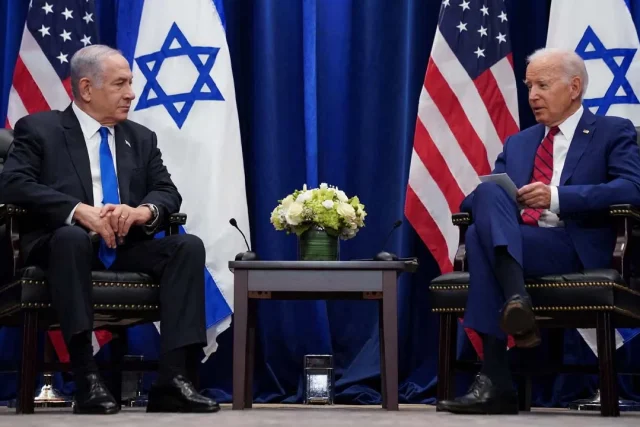








Ronen Bar, a former Israeli intelligence chief, has filed a lawsuit against Prime Minister Benjamin Netanyahu. Bar alleges that Netanyahu ignored repeated warnings issued prior to the Hamas attack on October 7, 2023. Furthermore, Bar claims that Netanyahu is attempting to shift the responsibility for the security failure onto others. Consequently, Bar has initiated a defamation suit against the Prime Minister, as reported by the online outlet RT. At the time of the attack, Bar was serving as the head of Shin Bet, Israel’s internal security agency. On Wednesday, he filed the lawsuit, seeking three million shekels—approximately $1 million—in damages. Netanyahu has accused Bar of withholding critical intelligence and failing to alert soldiers or evacuate attendees from the Nova music festival. Ronen Bar has rejected these allegations, asserting that Netanyahu is leveling these accusations to evade responsibility for the October 7 attack.
The Hamas attack resulted in the deaths of approximately 1,200 Israelis, with 251 individuals taken hostage. In the subsequent Israeli military campaign in Gaza, more than 74,300 Palestinians have been killed. According to court documents, late on the night of October 6, Shin Bet officials began sharing intelligence regarding unusual Hamas activity with the military. A warning was issued at 3:03 AM on October 7, and by 3:55 AM, Netanyahu’s military secretariat had been briefed on the situation. Shortly after 6:00 AM, Ronen Bar’s chief of staff informed the Prime Minister’s military secretary of the developments.
Ronen Bar has denied speaking directly with the Israeli Chief of Staff or the head of military intelligence that night—a point that contradicts claims made by Netanyahu. Ronen Bar has acknowledged that the Shin Bet failed to anticipate the scale and timing of the attack or to provide adequate warnings. He has accepted responsibility for these failures—shortcomings that ultimately led to his resignation. Bar maintains, however, that Benjamin Netanyahu was repeatedly warned about the risks of such an attack. In this context, he points to a letter sent in February 2023, which cautioned that internal divisions within Israel and instability in the Palestinian territories could embolden the country’s adversaries.
According to Bar, he also personally briefed Netanyahu in July 2023 regarding the potential for an attack, warning at the time that it might be difficult for intelligence agencies to predict such an event. Case documents also cite multiple warnings issued in September and early October concerning Hamas’s growing capabilities. Bar alleges that Netanyahu repeatedly rejected proposals to target senior Hamas leaders or delayed making such decisions, further claiming that Netanyahu pursued a policy of maintaining “calm at any cost” in Gaza.
The case further notes that despite warnings that humanitarian aid funds could reach Hamas’s military wing, Netanyahu continued to permit the entry of Qatari funds into Gaza. Netanyahu has rejected these allegations, asserting that Bar could have contacted him via a secure phone line designated for urgent communications. Bar, in response, stated that Netanyahu never provided him with his personal phone number. Contradicting Bar’s account, Netanyahu claims to have submitted approximately one thousand documents.
In March 2025, citing a crisis of confidence, Netanyahu’s government decided to remove Bar from his position. At that time, the Shin Bet was investigating whether any of Netanyahu’s associates had acted to advance Qatari interests. Netanyahu’s office has denied these allegations. Subsequently, the Supreme Court of Israel ruled the decision to dismiss Bar to be unlawful. Following this, Bar resigned in June.