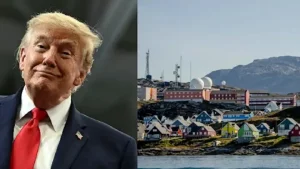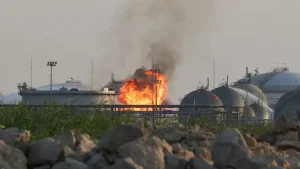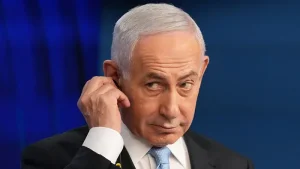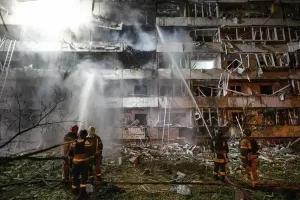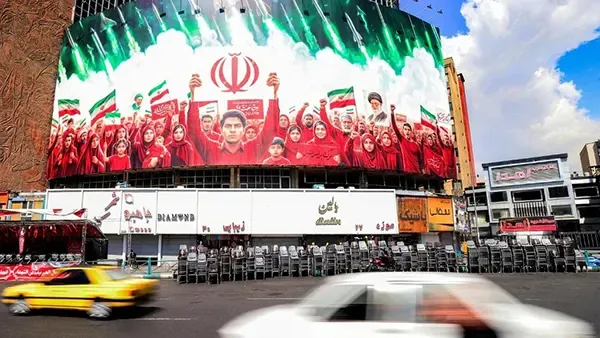
US and Israeli military aggression against Iran has not succeeded. Beyond merely repelling attacks, Iran has adopted an offensive posture, and the regime has managed to retain power. Khurram Hussain, an analyst specializing in economics and trade, believes this has paved the way for Iran’s unstoppable rise as a major power in the Gulf region. He notes that the conflict initiated last February by US President Donald Trump and Israeli Prime Minister Benjamin Netanyahu has effectively ended, evolving instead into a standoff centered on the Strait of Hormuz.
According to Khurram, Iran had remained isolated from the world since the 1979 Islamic Revolution, grappling with decades of sanctions and threats of war. However, with the US failing to achieve its military objectives in the recent conflict, the barriers of long-standing sanctions are crumbling, allowing the country to emerge as a regional power. He likens this situation to China’s return to the global stage through a historic détente or rapprochement. Yet, Iran’s resurgence could prove far more chaotic and conflict-ridden than China’s, as the nation is emerging from prolonged isolation through a bloody conflict.
He points out that two powerful currents currently exist within Iran. One faction seeks to halt hostilities and focus on national reconstruction and economic progress. The other aims to inflict a defeat on US forces in the Middle East akin to the one suffered at the hands of the Taliban in Afghanistan. The analyst asserts that once US forces fully withdraw, Iran will turn its attention toward the wealthy monarchies of the Gulf. Tehran has already staked a claim for $270–$300 billion in war reparations—a sum that these Gulf states may ultimately be compelled to pay. He further believes that, short of completely destroying Iran’s infrastructure, it is impossible to prevent the country’s emergence as a regional power.