Iran is facing mounting internal pressure alongside its ongoing conflict with Israel and the United States. On one hand, economic hardship is fueling public discontent and raising the specter of fresh protests. On the other, active Kurdish and Baluch armed groups along the borders are heightening concerns regarding Tehran’s security.
Compounding this situation is the US strategy of fomenting internal pressure. Washington has openly expressed support for Iranian protesters, and US officials have hinted that the combined strain of war, sanctions, and naval blockades could potentially trigger an internal uprising.
In response, Iranian authorities have intensified operations against small armed cells within the country and armed groups along the borders. They regularly report arrests and clashes, using these actions to frame the conflict as a battle for national security while signaling their determination to maintain control both domestically and abroad.
Most recently, on Sunday, state media announced the arrest of an eight-member network linked to “counter-revolutionary” and “pro-monarchy” groups.
In the southern province of Fars, the Islamic Revolutionary Guard Corps (IRGC) alleged that the arrested individuals had engaged in violence—including the use of Molotov cocktails and the burning of tires—during the nationwide protests in January.
The leadership of the Islamic Republic of Iran anticipates the possibility of new protests amidst the deteriorating economic situation and has voiced concern over this in recent weeks.
The Shadow of Monarchy and Fear of Protests
The monarchy in Iran was overthrown during the 1979 Islamic Revolution. However, during the January protests and on social media, some Iranians advocated for the restoration of the monarchy.
Reza Pahlavi, son of Iran’s last Shah, Mohammad Reza Pahlavi, currently lives abroad and is a prominent opposition figure. In January, he called on Iranians to join nationwide strikes and protests; it is estimated that thousands of people lost their lives during that period of unrest.
Although slogans in support of Reza Pahlavi have been heard within Iran, there are currently no major, organized pro-monarchy armed groups active in the country. Furthermore, the restoration of the monarchy has not been the primary driver of the major protests seen in recent years; these movements have largely been fueled by economic hardship and government repression. Nevertheless, since the outbreak of the conflict, Iran has intensified its crackdown on monarchists. On March 18, the country’s Ministry of Intelligence announced the arrest of members belonging to 111 alleged “monarchist cells” across 26 provinces.
Iranian authorities view the January protests as a “coup” orchestrated by armed agents of the United States and Israel. They claim that monarchists were also part of these activities.
However, the United Nations and international human rights organizations have condemned the security forces’ “brutality” in suppressing the protests. Since the conflict began, the country’s judiciary has executed numerous prisoners, including individuals who had participated in the January protests.
In recent months, many others—including students, artists, businesspeople, journalists, and healthcare workers—have been arrested on charges of acting against national security.
Kurdish Fighters on the Western Border
Kurdish fighters along the western border currently pose the most significant non-state armed threat to Iran. Several of these groups, active in areas bordering Iraq, have long maintained bases in the semi-autonomous Kurdish region of northern Iraq.
Iran has designated these groups as “terrorists.” In recent years, Iranian forces have launched attacks on their bases in Iraq. Simultaneously, Tehran has sought security agreements with the Iraqi government to keep them in check.
The situation intensified further around the time the conflict began this year. The Trump administration believed that armed Kurdish groups might launch limited ground operations in western Iran. This would have added ground-based pressure to the extensive air and naval strikes planned by the United States and Israel.
In early March, Reuters reported that approximately 5,000 to 8,000 Iranian Kurdish fighters—belonging to groups such as the Kurdistan Free Life Party (PJAK), the Democratic Party of Iranian Kurdistan (PDKI), and the Kurdistan Freedom Party (PAK)—were preparing for a potential cross-border operation. They had also held discussions with representatives from the United States and Israel.
However, the plan did not materialize due to a lack of sufficient weaponry and the absence of a clear signal from Washington to launch the operation. By April, Iran’s IRGC had deployed additional troops to the border provinces. Later, US President Donald Trump claimed on several occasions that he had supplied weapons to Kurdish forces, but alleged that the group had kept the arms for themselves.
Baluch Insurgency in the Southeast
Alongside Kurdish groups, Iran’s volatile southeastern region is also a major source of concern for Tehran, as separatist Baluch fighters are active there.
In late August, security forces announced they had dismantled a cell belonging to Jaish al-Adl—the most prominent Baluch armed group. One insurgent was killed and six were arrested during the operation; authorities also reported the seizure of rifles, grenade launchers, and explosives.
However, attacks by Jaish al-Adl have not ceased entirely; police officers and members of the IRGC have also been killed in these sporadic attacks.
Iran has announced plans to further tighten border controls to curb the activities of armed groups amidst the ongoing conflict.
The Major Fear: External Support
According to Alex Vatanka, a senior fellow at the Washington-based Middle East Institute, Iran’s security crisis could intensify if external support for Kurdish and Baluch rebels increases.
He told Al Jazeera that the Iranian state might view any sign of external aid reaching these armed ethnic groups as an existential threat.
In his view, these groups could become significant factors in the conflict only if they operate as part of a broader, foreign-funded campaign designed to pressure Tehran. Iran already views such a possibility as a “foreign-led hybrid war.”
Trita Parsi, co-founder of the Quincy Institute, believes that separatist militias do not pose an existential threat to the Iranian government on their own. However, if a conflict with the United States escalates, they could create major problems for Tehran.
Parsi suggests that if the US were to take the risky step of deploying ground troops—particularly following the midterm elections—Washington might attempt to leverage armed groups operating within Iran.
Washington Signals Intent to Increase Pressure Within Iran
During the protests in January, US officials, including Trump, publicly supported the Iranian demonstrators and urged them to continue their movement aimed at overthrowing the Islamic Republic.
That stance has not changed significantly even after the outbreak of hostilities.
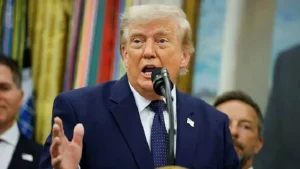
Last week, Trump stated that the combined pressure of war, sanctions, and a naval blockade of Iran’s southern ports could ultimately trigger a new uprising within the country. He remarked that this could even lead to the collapse of Iran’s current regime.
US Treasury Secretary Scott Bessent also noted that this pressure could drive Iranians back onto the streets and potentially create divisions within the IRGC.
“Perhaps the people will rise up,” he said.
He pointed out that inflation in Iran has reached 100 percent, long queues for goods have formed, military personnel are going unpaid, and the central bank governor had been gripped by panic.
Consequently, the battlefront for Iran is no longer confined to the skies or the borders; it faces a dual challenge of foreign attacks on one side and the threat of economic discontent and protests on the other. Coupled with the activities of armed groups along the border, multiple internal security fronts are emerging for Tehran.